Competition Clutch Stage 4 Clutch Kit for Honda S2000
- Designed for 2000-2009 Honda S2000.
- 250% increase in torque capacity.
- Performance pressure plate included.
- High torque six puck disc.
- Complete installation kit provided.
- Description
- Vehicle Fitment
- Technical Data
- Install Guide
-
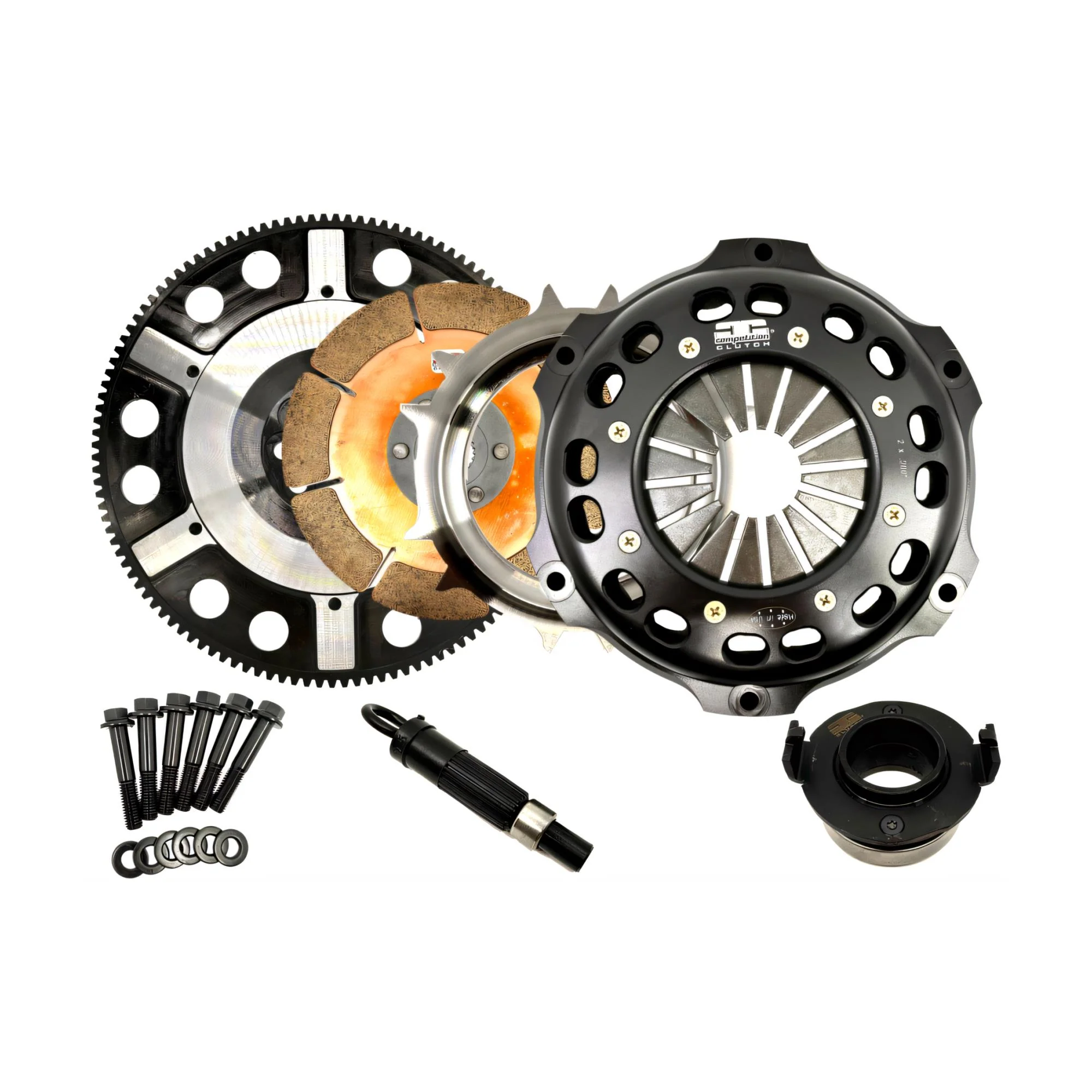
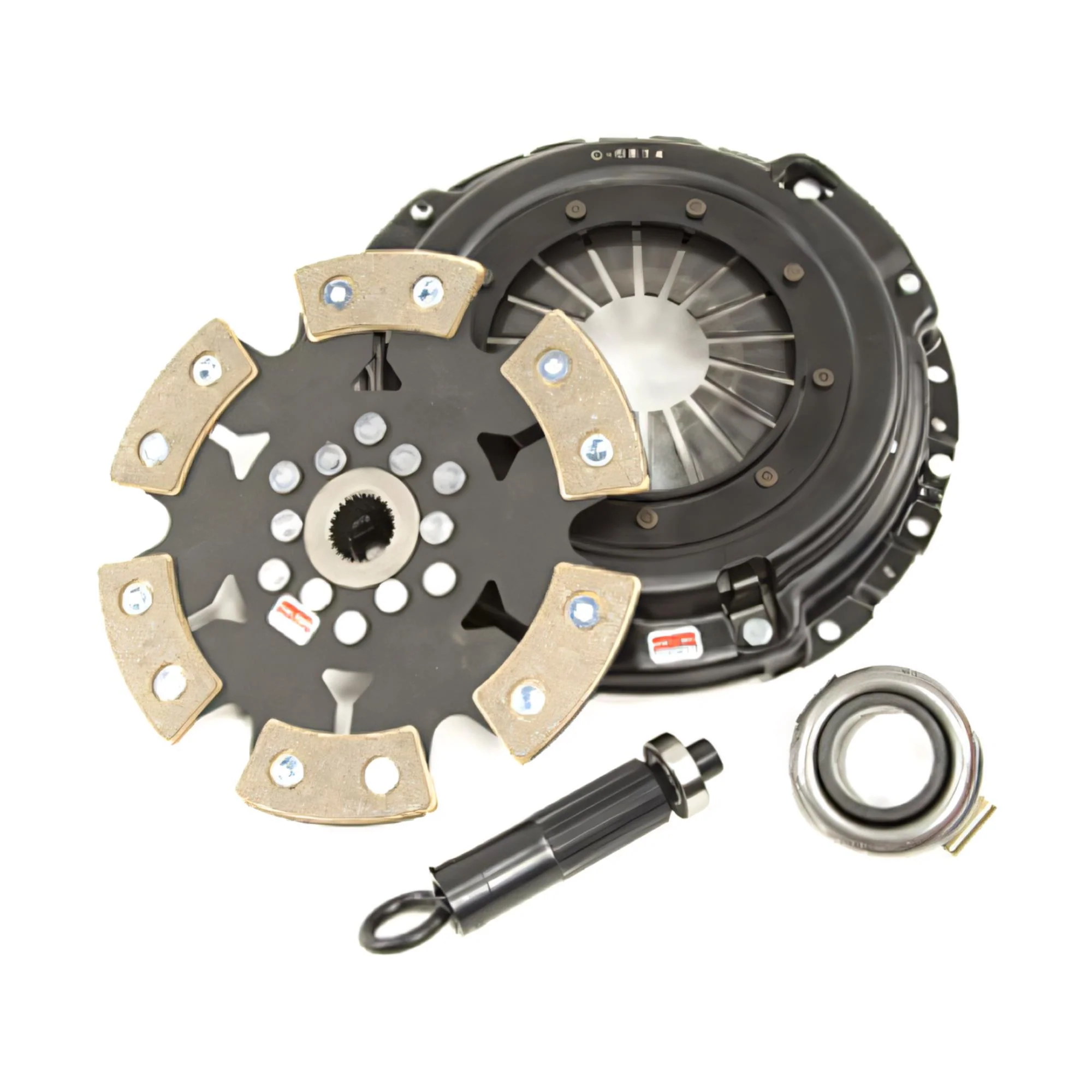
Competition Clutch Stage 4 Clutch Kit for Honda S2000 (6-Puck Ceramic)
The Competition Clutch Stage 4 (8023-1620) is a strip-oriented clutch kit built for forced induction and high-revving S2000 builds that have outgrown full-face discs. The 6-puck sprung ceramic disc with the CC performance pressure plate gives you up to 250% more torque capacity than the stock clutch. That puts real holding power somewhere around 340 ft-lbs at the wheels, which is enough for most turbo and supercharged S2000 builds making 400-500+ whp.
Let's be direct about what this clutch is: it's aggressive. Competition Clutch calls it the "Strip Series" for a reason. If you're building a turbo S2000 for the track, drag strip, or weekend pulls and you need something that won't slip under boost, this is the kit. If your S2000 is your daily driver and you sit in traffic, keep reading, because there's important context below about what daily driving this clutch actually feels like.
What's in the Kit
-
Competition Clutch Performance Pressure Plate
Higher clamping force than the stock unit. This is what gives you the increased torque capacity. The pedal will feel noticeably heavier than stock. -
6-Puck Sprung Ceramic Disc
Six ceramic friction pads on a sprung hub with a double-spring, six-rivet carriage. The ceramic material grabs hard and handles heat well, which matters under sustained high-RPM use. The sprung hub is important: it absorbs some of the engagement shock that makes unsprung puck clutches truly miserable on the street. This is still a puck clutch with all the trade-offs that come with it, but the sprung design takes the edge off compared to a rigid 6-puck. -
Throw-Out Bearing
Included where applicable. Replace it every time you do a clutch job on an S2000. The labor to get to the clutch on these cars is significant (the subframe usually needs to come down), so don't reuse old bearings. -
Pilot Bearing
Included where applicable. Same logic: replace it while you're in there. -
Alignment Tool
For centering the disc on the flywheel during installation.
Where This Clutch Fits in the Competition Clutch S2000 Lineup
Stage Disc Type Torque Capacity Increase Best For Stage 2 (2100 Series) Full-face brass/kevlar Up to 80% Bolt-ons, NA builds, street-friendly daily Stage 3 (2600 Series) Segmented ceramic, full-face Up to 150% Aggressive street, moderate FI, best street/strip balance Stage 4 (1620 Series) 6-puck sprung ceramic Up to 250% Strip, track, turbo/SC builds 400-500+ whp Stage 5 (1420 Series) 4-puck rigid ceramic Up to 300% Dedicated race, high HP, not streetable Twin Disc Dual ceramic discs 500+ HP capable 600+ whp builds, better street manners than Stage 4/5 The Stage 4 sits in a specific spot: it holds significantly more power than the Stage 3, but it trades away most of the street drivability that the full-face disc provides. If you're between stages, here's the honest breakdown: the Stage 3 (segmented ceramic) handles up to about 150% more torque and drives much closer to stock. If your build is in the 300-350 whp range, the Stage 3 is probably the smarter choice unless you're planning more power soon. The Stage 4 makes sense when you're already past what the Stage 3 can hold, or you're building toward 400+ whp and don't want to do this job twice.
What Daily Driving a 6-Puck Ceramic Actually Feels Like
The S2000 community has been arguing about this for 20+ years, so here's the honest reality from people who've lived with this clutch:
The first 300-500 miles will test your patience. Competition Clutch recommends a 300-mile break-in. During that period, expect aggressive clutch chatter, a harsh on/off engagement character, stalling at low speed, and a general feeling that something is wrong with your car. It's not. That's the ceramic pads bedding into the flywheel surface. Most owners report that things improve noticeably around 500-1,000 miles.
After break-in, opinions are split. Some S2000 owners daily drive this clutch with no complaints after learning the engagement point. Others switch back to a full-face disc after a few months because they can't deal with the grabby feel in stop-and-go traffic. The common thread: if you're a confident manual driver and don't mind relearning your car, you can make it work on the street. If smooth, OEM-like engagement matters to you, this isn't the clutch. The sprung hub helps compared to a rigid puck disc (which is genuinely awful on the street), but this is still a puck clutch and it drives like one.
Your passengers will notice. First-gear takeoffs require more RPM (many owners report needing 2,500-3,500 RPM for a smooth launch) and the clutch chatter is audible. If someone else drives your car, expect them to stall it at least a few times before finding the bite point.
Flywheel Pairing
This kit does not include a flywheel. If you're already pulling the transmission (and on an S2000, that's a 10+ hour job for most home mechanics), replace the flywheel at the same time. You don't want to do this labor twice.
For a Stage 4 clutch on a forced induction build, the Competition Clutch STU ultra-light flywheel (9.25 lbs, part 2-669-STU) is the best match. The lighter flywheel complements the aggressive disc by letting the engine rev faster between shifts, which is exactly what you want on a turbo car making power in the upper RPM range.
The CC ST lightweight flywheel (11.5 lbs, part 2-669-ST) also works, but it's designed more for Stage 1 and Stage 2 setups. It's a fine choice if you want slightly more flywheel mass for smoother low-speed behavior, but if you're running a Stage 4, you're probably past caring about smooth low-speed behavior.
You can also reuse your stock flywheel if it's in good condition and gets resurfaced, but community experience suggests that a heavier stock flywheel paired with an aggressive puck disc makes the engagement even choppier at low RPM because the flywheel stores more rotational energy that the puck disc has to absorb all at once.
AP2 Owners: Clutch Delay Valve
If you have a 2004-2009 S2000, your car has a clutch delay valve (CDV) built into the slave cylinder. Honda added it to soften clutch engagement for the heavier AP2 flywheel. With a Stage 4 puck clutch, the CDV makes the pedal feel vague and can cause the clutch to slip during fast, aggressive shifts, which defeats the purpose of running this setup.
Most AP2 owners running aftermarket clutches swap to the AP1 slave cylinder (Honda part 46930-S2A-003). It's a direct bolt-on replacement that eliminates the CDV and gives you a direct, mechanical clutch pedal feel. With a 6-puck ceramic, you want to feel exactly where the clutch grabs. The CDV works against that.
Installation Notes
- 300-mile minimum break-in. Competition Clutch requires it, and the community recommends 500 miles for best results. During break-in: no hard launches, no aggressive shifts, no sustained slipping. Drive it gently and let the ceramic pads seat.
- The S2000 clutch job is labor-intensive. Most shops charge 5-8 hours of labor. The top two bellhousing bolts near the firewall are notoriously difficult to access, and most approaches involve lowering the rear subframe ~3 inches to get a clear path with extensions and swivels. Factor this into your planning.
- Replace all bearings while you're in there. Throw-out bearing, pilot bearing, and inspect your rear main seal. If the seal is leaking oil onto the clutch, no amount of clamping force will save you.
- Resurface or replace the flywheel. A glazed, heat-checked, or warped flywheel surface will prevent the ceramic pads from bedding properly and can cause slip or chatter that never goes away.
- Torque the flywheel and pressure plate bolts to spec with thread locker. The S2000 revs to 8,800+ RPM (F20C) or 7,800+ RPM (F22C). Hardware failures at those speeds are catastrophic.
Who Should Buy This (And Who Shouldn't)
This clutch is built for: Turbo and supercharged S2000 builds making 400-500+ whp where a full-face disc can't hold the power. Track-focused builds where engagement smoothness doesn't matter. Drag cars, time attack, or weekend warriors who don't mind the aggressive pedal feel.
Consider the Stage 3 instead if: Your build is under 350 whp, you daily drive in traffic, or you want the most streetable clutch that can still handle moderate forced induction. The segmented ceramic full-face disc holds up to 150% more torque and drives much closer to stock.
Consider the CC twin disc if: You're making 500+ whp and want better street manners than a single-disc puck clutch can offer. Twin discs spread the clamping load across two friction surfaces, so they hold more power with less aggressive engagement. They cost more, but if you're building a high-power S2000 you still want to drive on the street, the twin disc is the right answer above 500 whp.
Don't buy this clutch if: Your S2000 is stock or lightly modified. A Stage 4 on a naturally aspirated S2000 making 200-240 hp is complete overkill. You'll hate driving it, and you'll gain nothing. The stock clutch or a Stage 2 handles NA power with zero issues.
Vehicle Fitment
Vehicle Years Engine Honda S2000 (AP1) 2000-2003 F20C (2.0L) Honda S2000 (AP2) 2004-2009 F22C1 (2.2L) Honda S2000 CR 2008-2009 F22C1 (2.2L) Part Number: 8023-1620 (Hybrid Racing SKU: COC-8023-1620)
Series: Stage 4 Sprung, Strip Series 1620
Disc: 6-puck sprung ceramic with double-spring, six-rivet carriage
Torque Capacity: Up to 250% increase over stock
Break-In: 300 miles minimum (500 recommended)
Flywheel: Not included. Sold separately.
Warranty: 90 days from retail purchase through authorized dealer -
Competition Clutch Performance Pressure Plate
-
2000-2005 Honda S2000
2006-2009 Honda S2000
Original: $540.00
-65%$540.00
$189.00
Description
- Designed for 2000-2009 Honda S2000.
- 250% increase in torque capacity.
- Performance pressure plate included.
- High torque six puck disc.
- Complete installation kit provided.
- Description
- Vehicle Fitment
- Technical Data
- Install Guide
-
Competition Clutch Stage 4 Clutch Kit for Honda S2000 (6-Puck Ceramic)
The Competition Clutch Stage 4 (8023-1620) is a strip-oriented clutch kit built for forced induction and high-revving S2000 builds that have outgrown full-face discs. The 6-puck sprung ceramic disc with the CC performance pressure plate gives you up to 250% more torque capacity than the stock clutch. That puts real holding power somewhere around 340 ft-lbs at the wheels, which is enough for most turbo and supercharged S2000 builds making 400-500+ whp.
Let's be direct about what this clutch is: it's aggressive. Competition Clutch calls it the "Strip Series" for a reason. If you're building a turbo S2000 for the track, drag strip, or weekend pulls and you need something that won't slip under boost, this is the kit. If your S2000 is your daily driver and you sit in traffic, keep reading, because there's important context below about what daily driving this clutch actually feels like.
What's in the Kit
-
Competition Clutch Performance Pressure Plate
Higher clamping force than the stock unit. This is what gives you the increased torque capacity. The pedal will feel noticeably heavier than stock. -
6-Puck Sprung Ceramic Disc
Six ceramic friction pads on a sprung hub with a double-spring, six-rivet carriage. The ceramic material grabs hard and handles heat well, which matters under sustained high-RPM use. The sprung hub is important: it absorbs some of the engagement shock that makes unsprung puck clutches truly miserable on the street. This is still a puck clutch with all the trade-offs that come with it, but the sprung design takes the edge off compared to a rigid 6-puck. -
Throw-Out Bearing
Included where applicable. Replace it every time you do a clutch job on an S2000. The labor to get to the clutch on these cars is significant (the subframe usually needs to come down), so don't reuse old bearings. -
Pilot Bearing
Included where applicable. Same logic: replace it while you're in there. -
Alignment Tool
For centering the disc on the flywheel during installation.
Where This Clutch Fits in the Competition Clutch S2000 Lineup
Stage Disc Type Torque Capacity Increase Best For Stage 2 (2100 Series) Full-face brass/kevlar Up to 80% Bolt-ons, NA builds, street-friendly daily Stage 3 (2600 Series) Segmented ceramic, full-face Up to 150% Aggressive street, moderate FI, best street/strip balance Stage 4 (1620 Series) 6-puck sprung ceramic Up to 250% Strip, track, turbo/SC builds 400-500+ whp Stage 5 (1420 Series) 4-puck rigid ceramic Up to 300% Dedicated race, high HP, not streetable Twin Disc Dual ceramic discs 500+ HP capable 600+ whp builds, better street manners than Stage 4/5 The Stage 4 sits in a specific spot: it holds significantly more power than the Stage 3, but it trades away most of the street drivability that the full-face disc provides. If you're between stages, here's the honest breakdown: the Stage 3 (segmented ceramic) handles up to about 150% more torque and drives much closer to stock. If your build is in the 300-350 whp range, the Stage 3 is probably the smarter choice unless you're planning more power soon. The Stage 4 makes sense when you're already past what the Stage 3 can hold, or you're building toward 400+ whp and don't want to do this job twice.
What Daily Driving a 6-Puck Ceramic Actually Feels Like
The S2000 community has been arguing about this for 20+ years, so here's the honest reality from people who've lived with this clutch:
The first 300-500 miles will test your patience. Competition Clutch recommends a 300-mile break-in. During that period, expect aggressive clutch chatter, a harsh on/off engagement character, stalling at low speed, and a general feeling that something is wrong with your car. It's not. That's the ceramic pads bedding into the flywheel surface. Most owners report that things improve noticeably around 500-1,000 miles.
After break-in, opinions are split. Some S2000 owners daily drive this clutch with no complaints after learning the engagement point. Others switch back to a full-face disc after a few months because they can't deal with the grabby feel in stop-and-go traffic. The common thread: if you're a confident manual driver and don't mind relearning your car, you can make it work on the street. If smooth, OEM-like engagement matters to you, this isn't the clutch. The sprung hub helps compared to a rigid puck disc (which is genuinely awful on the street), but this is still a puck clutch and it drives like one.
Your passengers will notice. First-gear takeoffs require more RPM (many owners report needing 2,500-3,500 RPM for a smooth launch) and the clutch chatter is audible. If someone else drives your car, expect them to stall it at least a few times before finding the bite point.
Flywheel Pairing
This kit does not include a flywheel. If you're already pulling the transmission (and on an S2000, that's a 10+ hour job for most home mechanics), replace the flywheel at the same time. You don't want to do this labor twice.
For a Stage 4 clutch on a forced induction build, the Competition Clutch STU ultra-light flywheel (9.25 lbs, part 2-669-STU) is the best match. The lighter flywheel complements the aggressive disc by letting the engine rev faster between shifts, which is exactly what you want on a turbo car making power in the upper RPM range.
The CC ST lightweight flywheel (11.5 lbs, part 2-669-ST) also works, but it's designed more for Stage 1 and Stage 2 setups. It's a fine choice if you want slightly more flywheel mass for smoother low-speed behavior, but if you're running a Stage 4, you're probably past caring about smooth low-speed behavior.
You can also reuse your stock flywheel if it's in good condition and gets resurfaced, but community experience suggests that a heavier stock flywheel paired with an aggressive puck disc makes the engagement even choppier at low RPM because the flywheel stores more rotational energy that the puck disc has to absorb all at once.
AP2 Owners: Clutch Delay Valve
If you have a 2004-2009 S2000, your car has a clutch delay valve (CDV) built into the slave cylinder. Honda added it to soften clutch engagement for the heavier AP2 flywheel. With a Stage 4 puck clutch, the CDV makes the pedal feel vague and can cause the clutch to slip during fast, aggressive shifts, which defeats the purpose of running this setup.
Most AP2 owners running aftermarket clutches swap to the AP1 slave cylinder (Honda part 46930-S2A-003). It's a direct bolt-on replacement that eliminates the CDV and gives you a direct, mechanical clutch pedal feel. With a 6-puck ceramic, you want to feel exactly where the clutch grabs. The CDV works against that.
Installation Notes
- 300-mile minimum break-in. Competition Clutch requires it, and the community recommends 500 miles for best results. During break-in: no hard launches, no aggressive shifts, no sustained slipping. Drive it gently and let the ceramic pads seat.
- The S2000 clutch job is labor-intensive. Most shops charge 5-8 hours of labor. The top two bellhousing bolts near the firewall are notoriously difficult to access, and most approaches involve lowering the rear subframe ~3 inches to get a clear path with extensions and swivels. Factor this into your planning.
- Replace all bearings while you're in there. Throw-out bearing, pilot bearing, and inspect your rear main seal. If the seal is leaking oil onto the clutch, no amount of clamping force will save you.
- Resurface or replace the flywheel. A glazed, heat-checked, or warped flywheel surface will prevent the ceramic pads from bedding properly and can cause slip or chatter that never goes away.
- Torque the flywheel and pressure plate bolts to spec with thread locker. The S2000 revs to 8,800+ RPM (F20C) or 7,800+ RPM (F22C). Hardware failures at those speeds are catastrophic.
Who Should Buy This (And Who Shouldn't)
This clutch is built for: Turbo and supercharged S2000 builds making 400-500+ whp where a full-face disc can't hold the power. Track-focused builds where engagement smoothness doesn't matter. Drag cars, time attack, or weekend warriors who don't mind the aggressive pedal feel.
Consider the Stage 3 instead if: Your build is under 350 whp, you daily drive in traffic, or you want the most streetable clutch that can still handle moderate forced induction. The segmented ceramic full-face disc holds up to 150% more torque and drives much closer to stock.
Consider the CC twin disc if: You're making 500+ whp and want better street manners than a single-disc puck clutch can offer. Twin discs spread the clamping load across two friction surfaces, so they hold more power with less aggressive engagement. They cost more, but if you're building a high-power S2000 you still want to drive on the street, the twin disc is the right answer above 500 whp.
Don't buy this clutch if: Your S2000 is stock or lightly modified. A Stage 4 on a naturally aspirated S2000 making 200-240 hp is complete overkill. You'll hate driving it, and you'll gain nothing. The stock clutch or a Stage 2 handles NA power with zero issues.
Vehicle Fitment
Vehicle Years Engine Honda S2000 (AP1) 2000-2003 F20C (2.0L) Honda S2000 (AP2) 2004-2009 F22C1 (2.2L) Honda S2000 CR 2008-2009 F22C1 (2.2L) Part Number: 8023-1620 (Hybrid Racing SKU: COC-8023-1620)
Series: Stage 4 Sprung, Strip Series 1620
Disc: 6-puck sprung ceramic with double-spring, six-rivet carriage
Torque Capacity: Up to 250% increase over stock
Break-In: 300 miles minimum (500 recommended)
Flywheel: Not included. Sold separately.
Warranty: 90 days from retail purchase through authorized dealer -
Competition Clutch Performance Pressure Plate
-
2000-2005 Honda S2000
2006-2009 Honda S2000