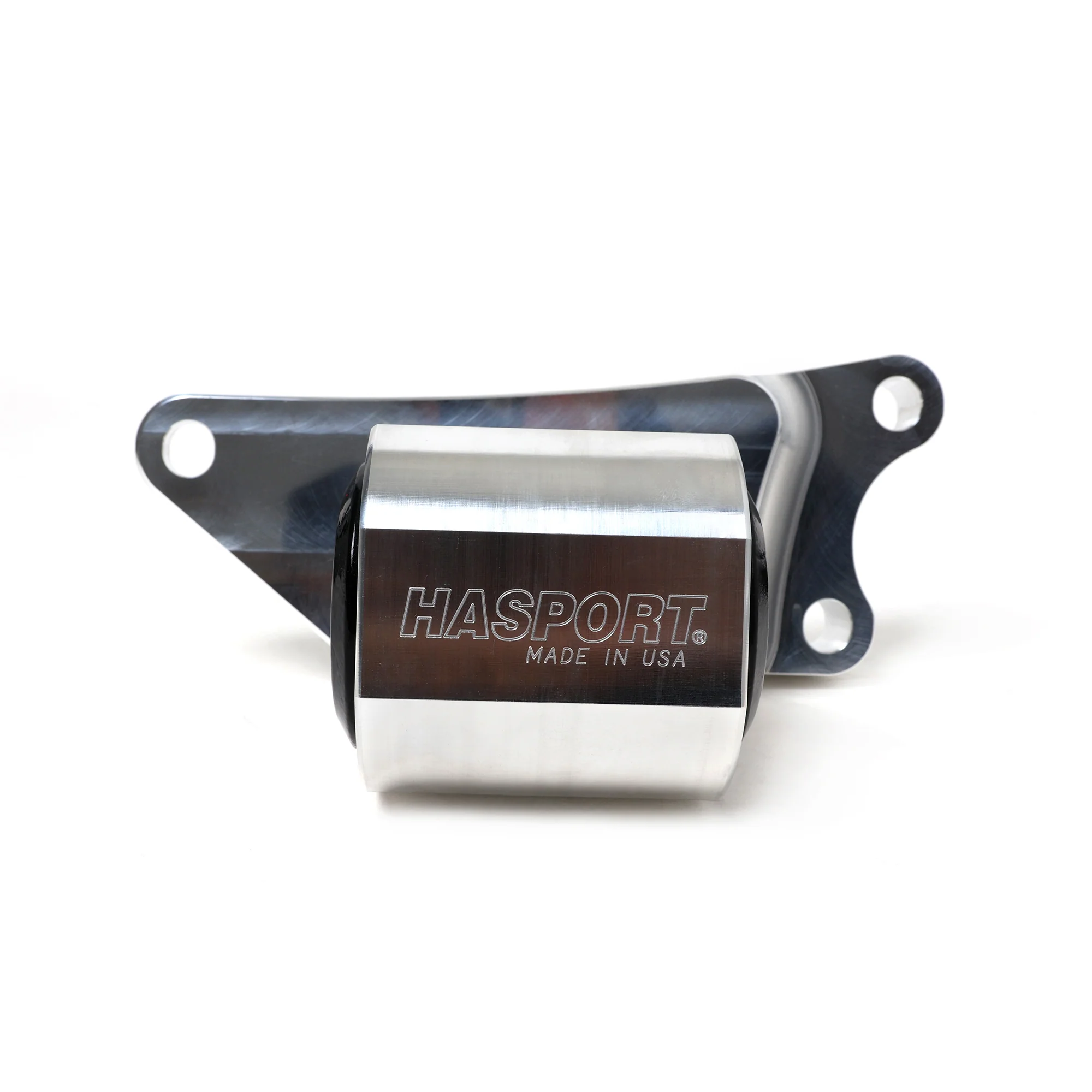
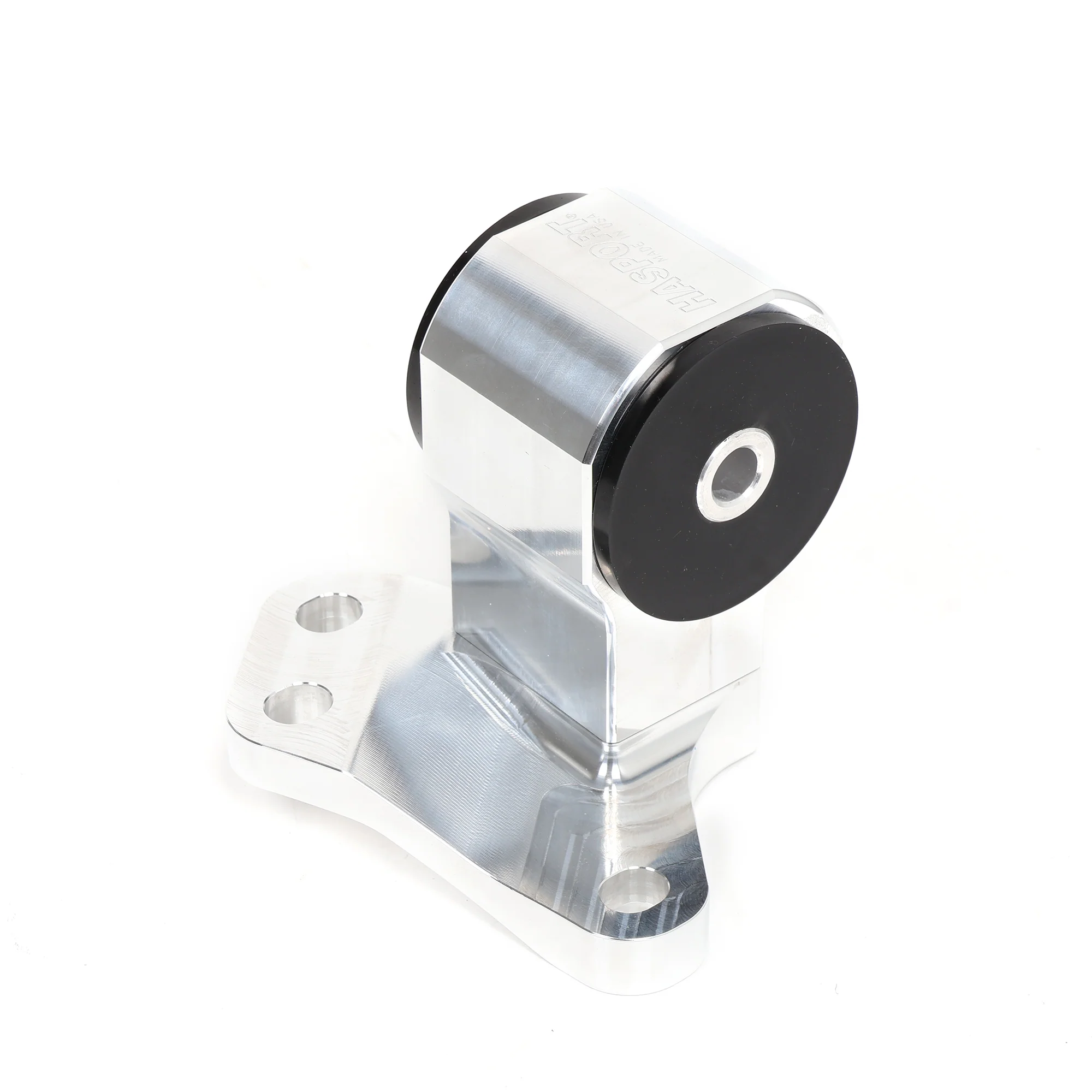
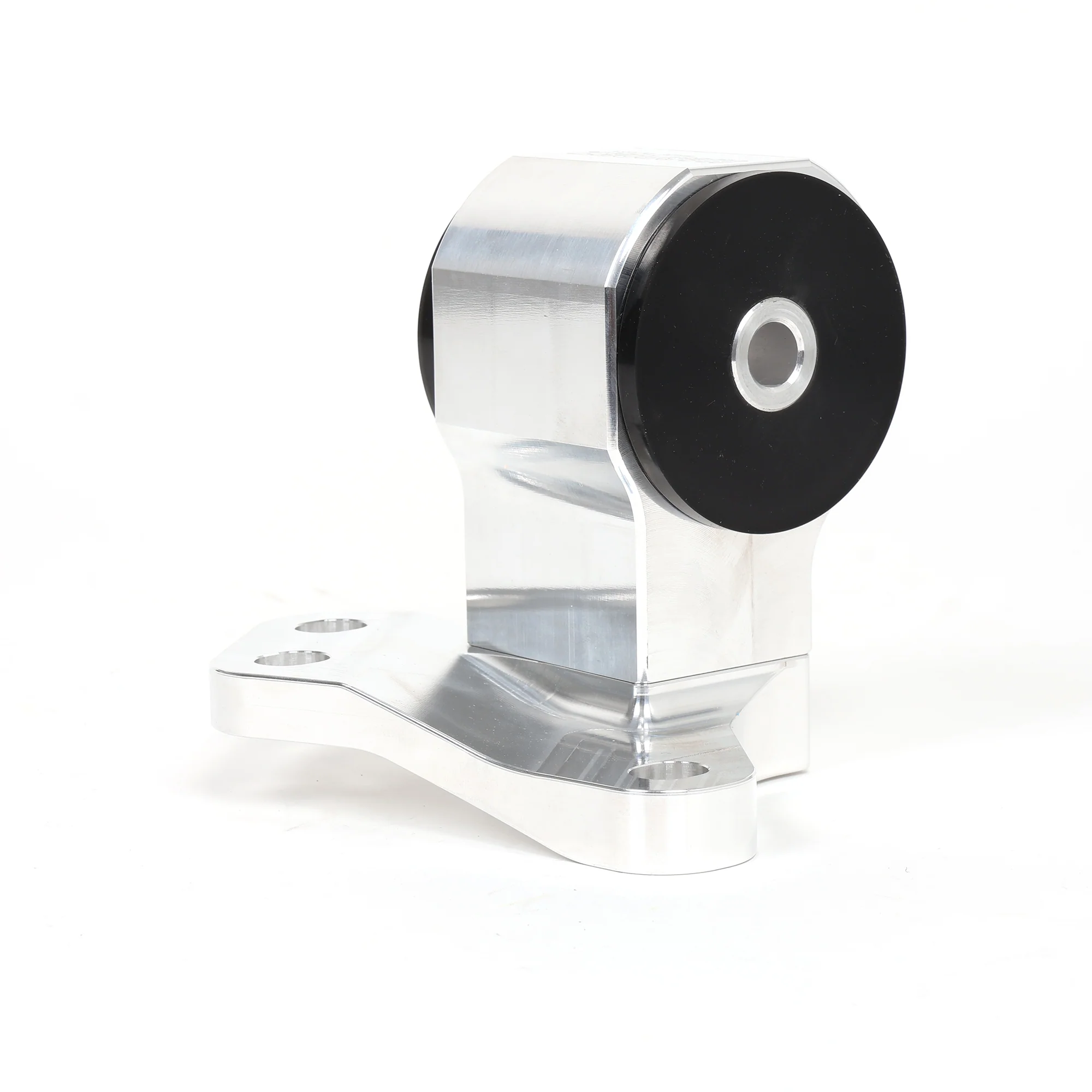
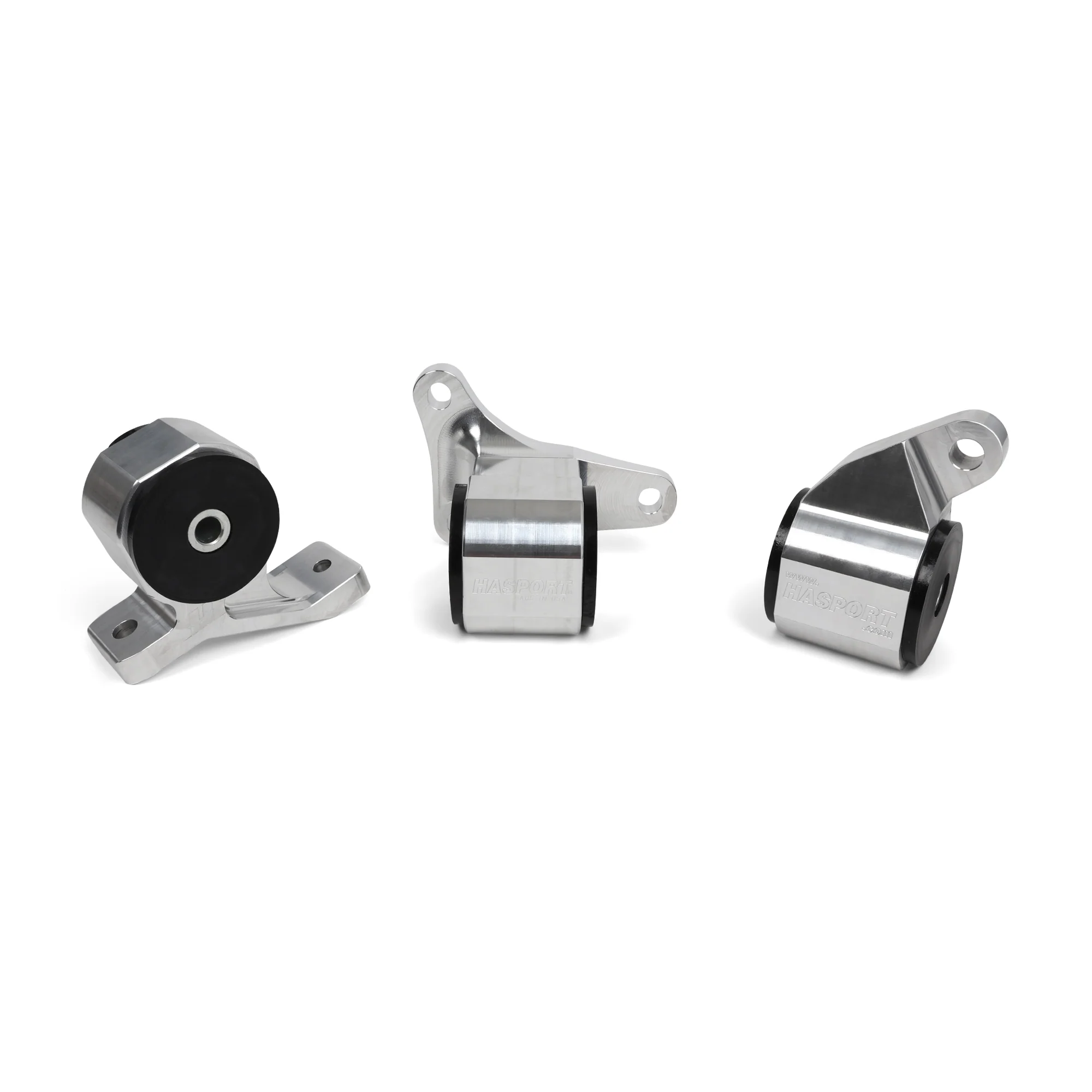
Fluidampr Street Series Harmonic Damper for B Series
- Reduces Parasitic Drag
- Direct Fit for B16, B17, B18, and B20 Engines
- Street Series Retains AC/Power Steering
- Increases Power and Reliability
- Description
- Vehicle Fitment
- Technical Data
- Included
- Install Guide
-
Fluidampr Harmonic Damper - B Series Engines (Street Series)
You're building a B series. You've spent money on forged pistons, forged rods, cams, springs, and a turbo. You're making 400 whp. Your stock crank pulley's still sitting there with 150,000 miles on it and 25-year-old rubber that's cracked and heat-cycled to hell. That rubber damper was designed for a stock B18 making 140 hp at the crank with factory balance shafts and a stock flywheel. Every modification you've made, from deleting the balance shafts to running 20 PSI of boost to installing a lightweight flywheel, has changed the torsional vibration characteristics of your crankshaft. The stock damper can't adapt to that. It was tuned for one specific frequency range and it's not the frequency range your modified engine's running at. Fluidampr's 590601 replaces it with a viscous damper that self-tunes in real time across your entire RPM range. It's not a lightweight pulley. It's not an underdrive pulley. It's a damper that actually works.
Here's What's Actually Happening Inside Your Engine
Every time a cylinder fires, the combustion event twists the crankshaft ahead of its normal rotation. Then the crank rebounds. That's torsional vibration. It's not a smooth rotation. It's a twist-and-rebound motion happening thousands of times per minute. When these vibration frequencies line up with the crankshaft's natural resonance, bad things happen. Main bearing wear accelerates. Timing accuracy suffers because the crank's flexing instead of rotating smoothly. Eventually the crankshaft fails. A harmonic damper absorbs those vibrations before they cause damage. The stock Honda damper uses rubber bonding between the hub and the outer ring. It's tuned to a single frequency and it degrades over time as the rubber ages, cracks, and loses its damping properties. We've seen stock dampers with the rubber so deteriorated that the outer ring's loose and you can see it wobbling on the crank. That's not damping anything. That's a disaster waiting to happen.
Fluidampr's Different and Here's Why That Matters
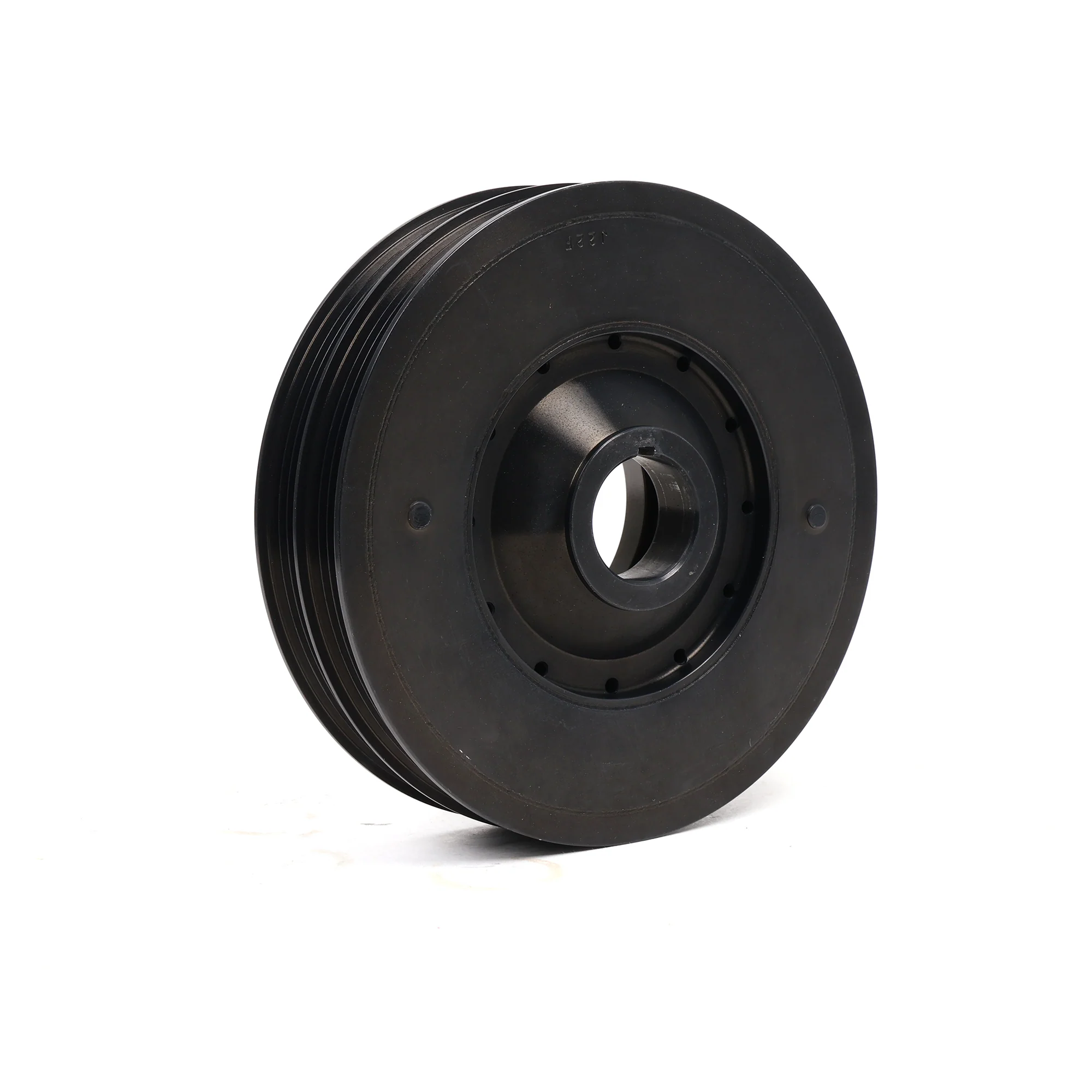
The Fluidampr uses a free-floating inertia ring suspended in viscous silicone fluid inside a sealed steel housing. The inertia ring's not bonded to anything. It's floating. As the outer housing spins with the crankshaft, the inertia ring's free to rotate at different speeds depending on what frequencies the crank's producing. The silicone fluid between the outer housing and the inner ring absorbs the harmonic vibrations through shear force and dissipates them as heat. Because the ring's not mechanically bonded to a specific frequency, it automatically responds to whatever frequency the crankshaft's producing at any given RPM. It's self-tuning. You're at 3,000 RPM? It's damping the frequencies at 3,000 RPM. You're at 8,500 RPM? It's damping the frequencies at 8,500 RPM. The stock rubber damper can't do that. It was tuned for one frequency and that's all it does. The Fluidampr works across the entire RPM range. It doesn't wear out. It doesn't need maintenance. It doesn't need rebuilding. The silicone's rated from -40°F to 300°F so it's not cooking in the heat or getting hard in the cold like rubber does.
This Isn't a Lightweight Pulley and That's the Point
Don't confuse this with a lightweight pulley. Lightweight pulleys delete the damper mass to reduce rotating weight. You gain maybe 2-3 hp from less rotational inertia and you lose all harmonic damping. That's a bad trade. We've seen guys run lightweight pulleys and swear they haven't had problems. What they don't see is the microfractures forming in the crankshaft from years of uncontrolled torsional vibration. They don't see the accelerated main bearing wear. They don't see the timing inconsistency from the crank flexing. They see it when the crank breaks or when they tear down the motor at 50,000 miles and the bearings are trashed. Engine builders who work with serious B series builds don't run lightweight pulleys. They run dampers. The Fluidampr weighs 7.8 lbs total but the rotating mass is only 5.2 lbs because the inner ring's free-floating. That's comparable to the stock damper's rotating mass while providing way better damping across the RPM range.
Street Series Keeps All Your Accessories
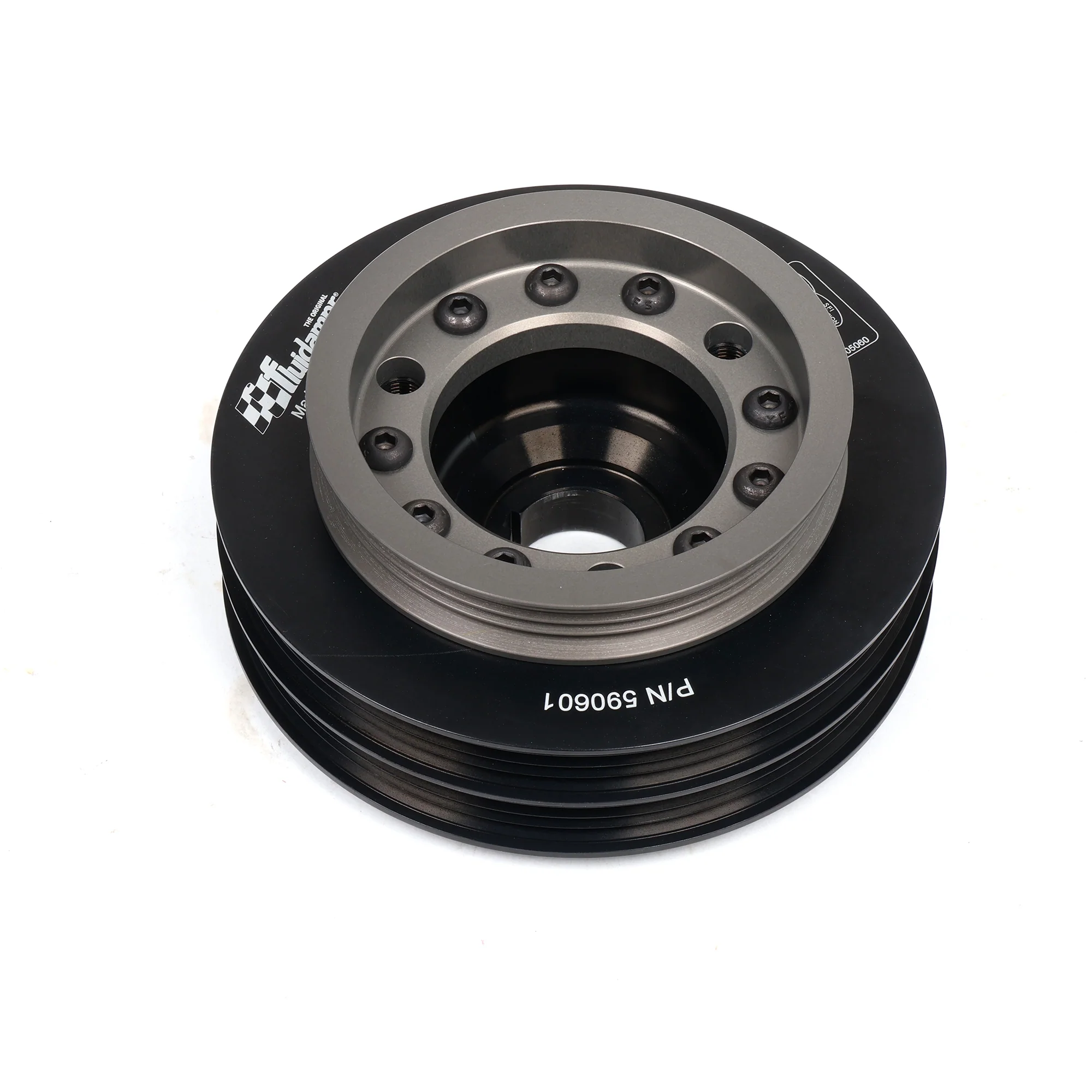
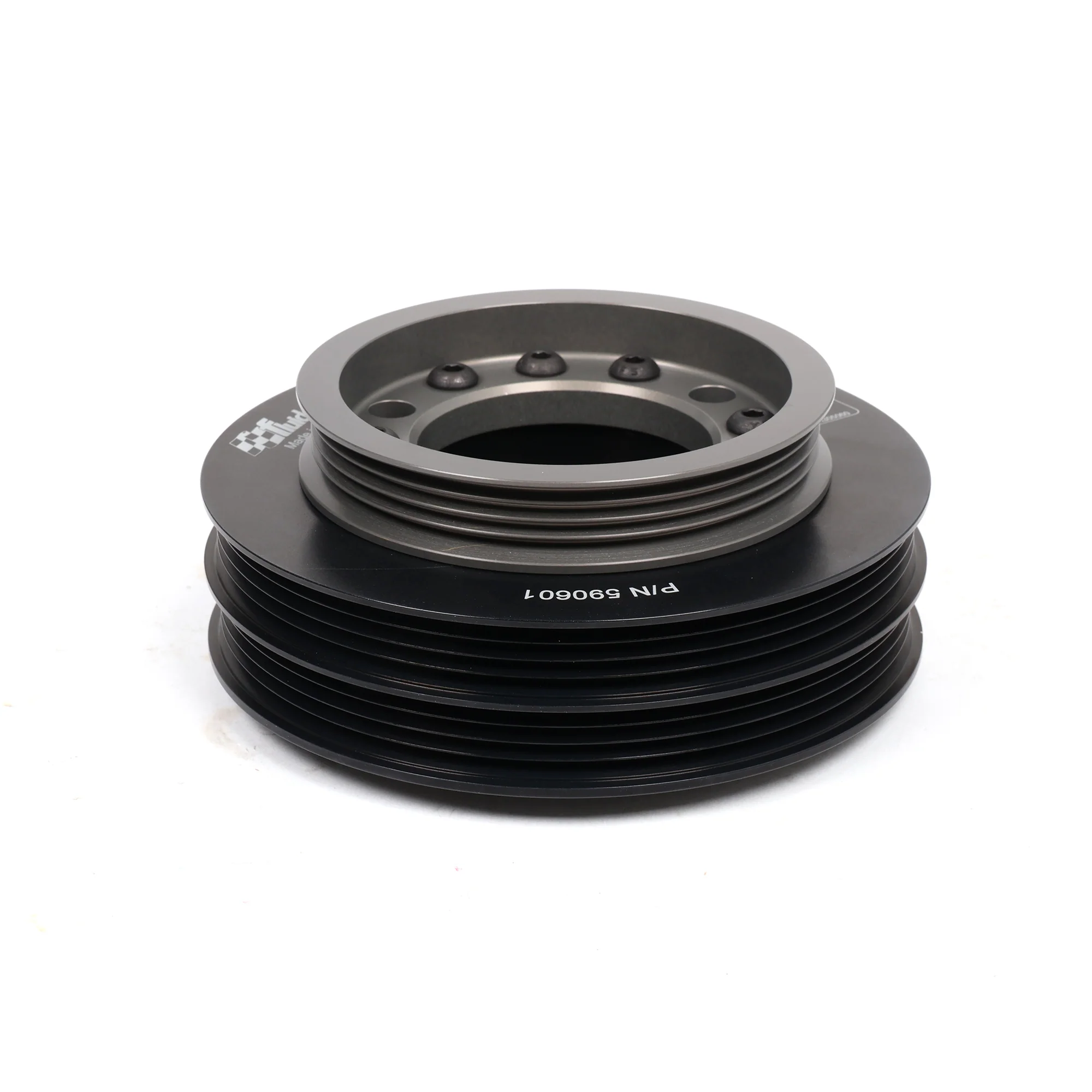
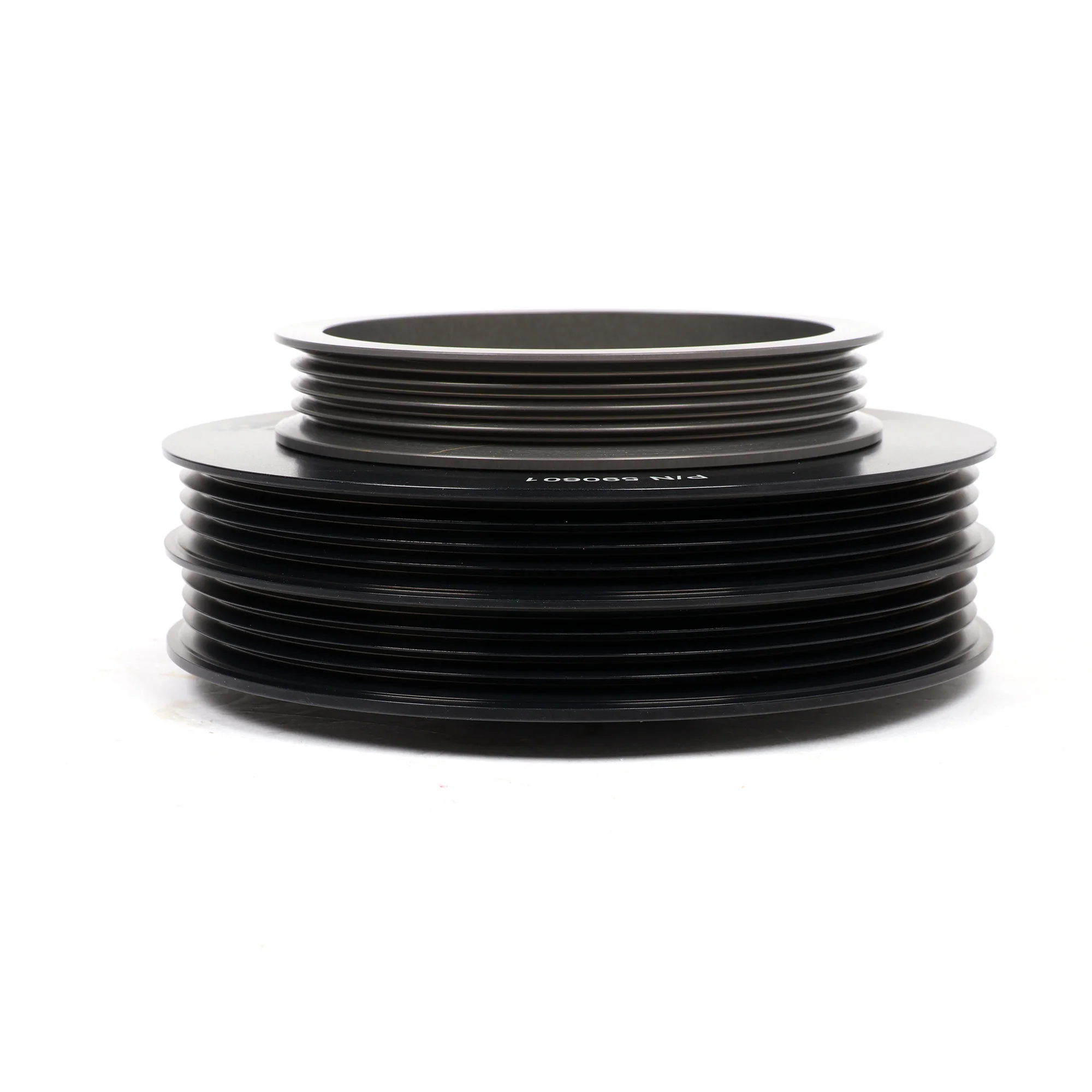
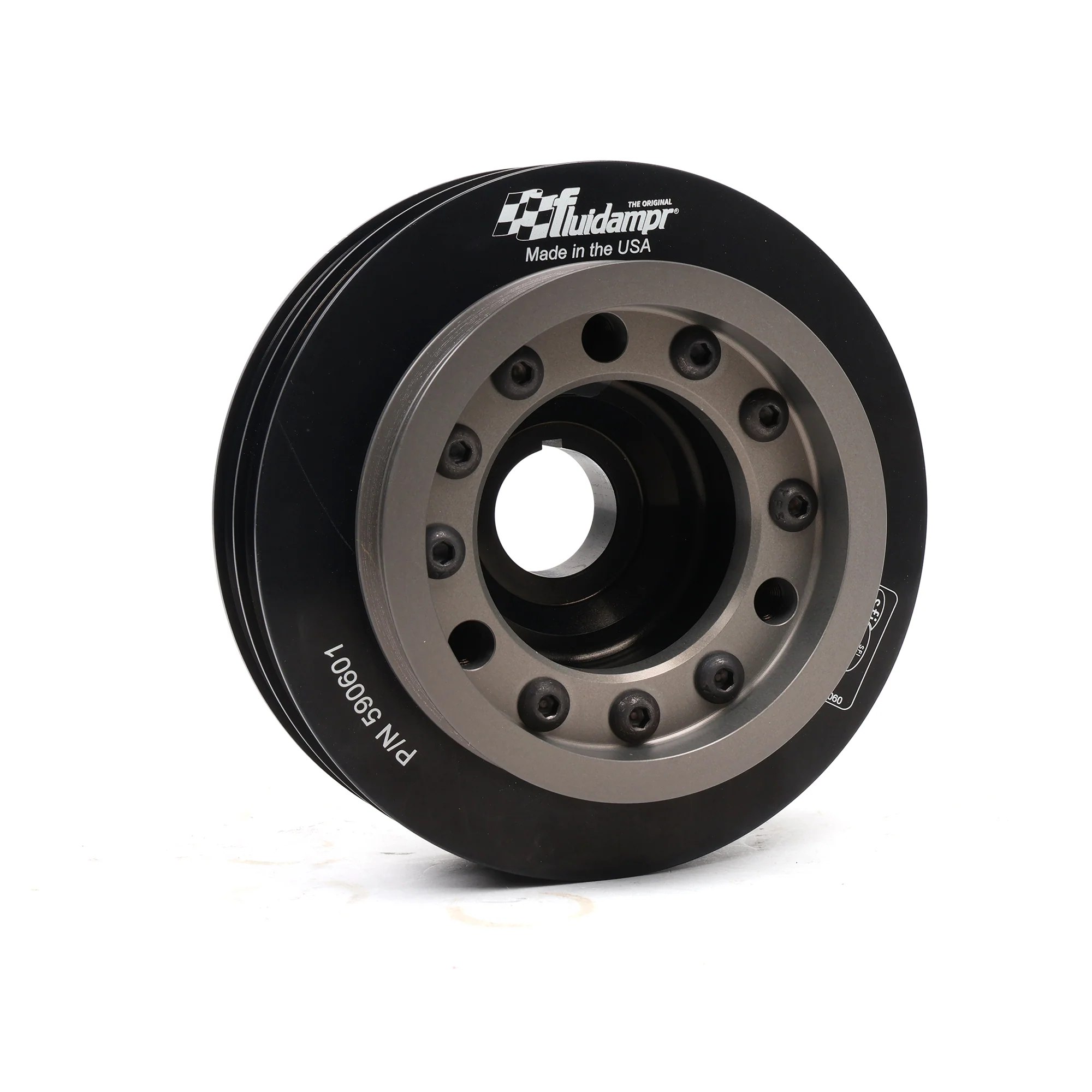
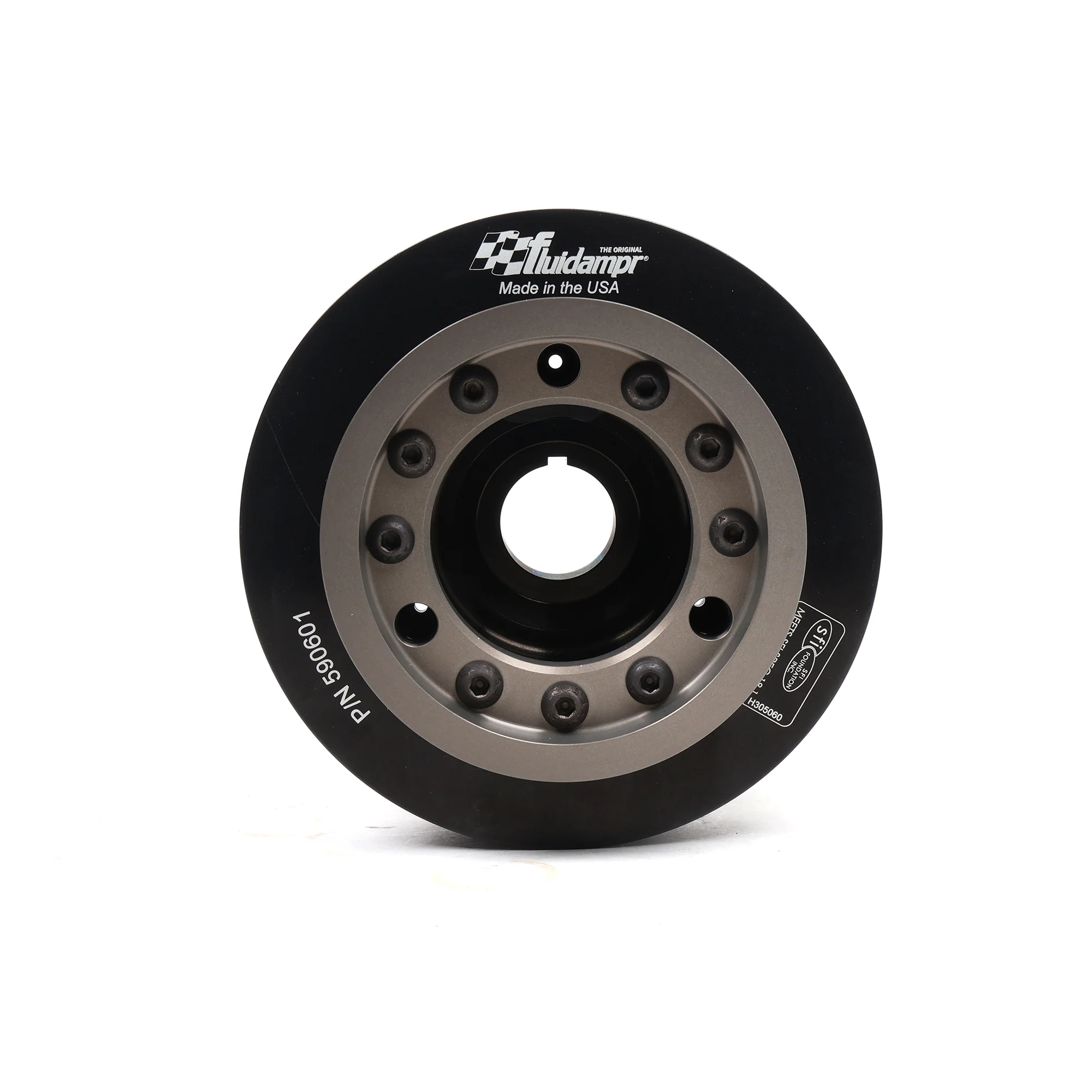
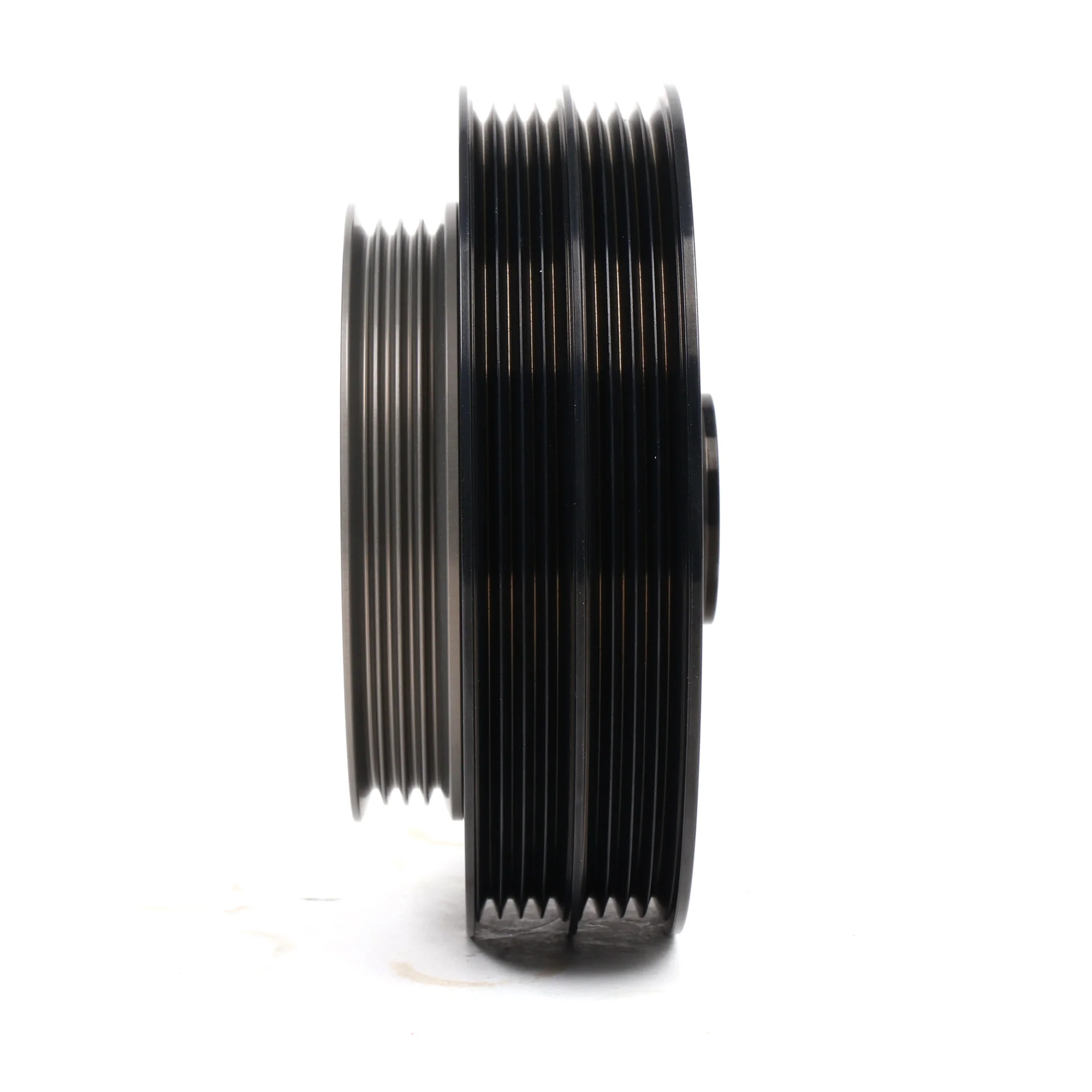
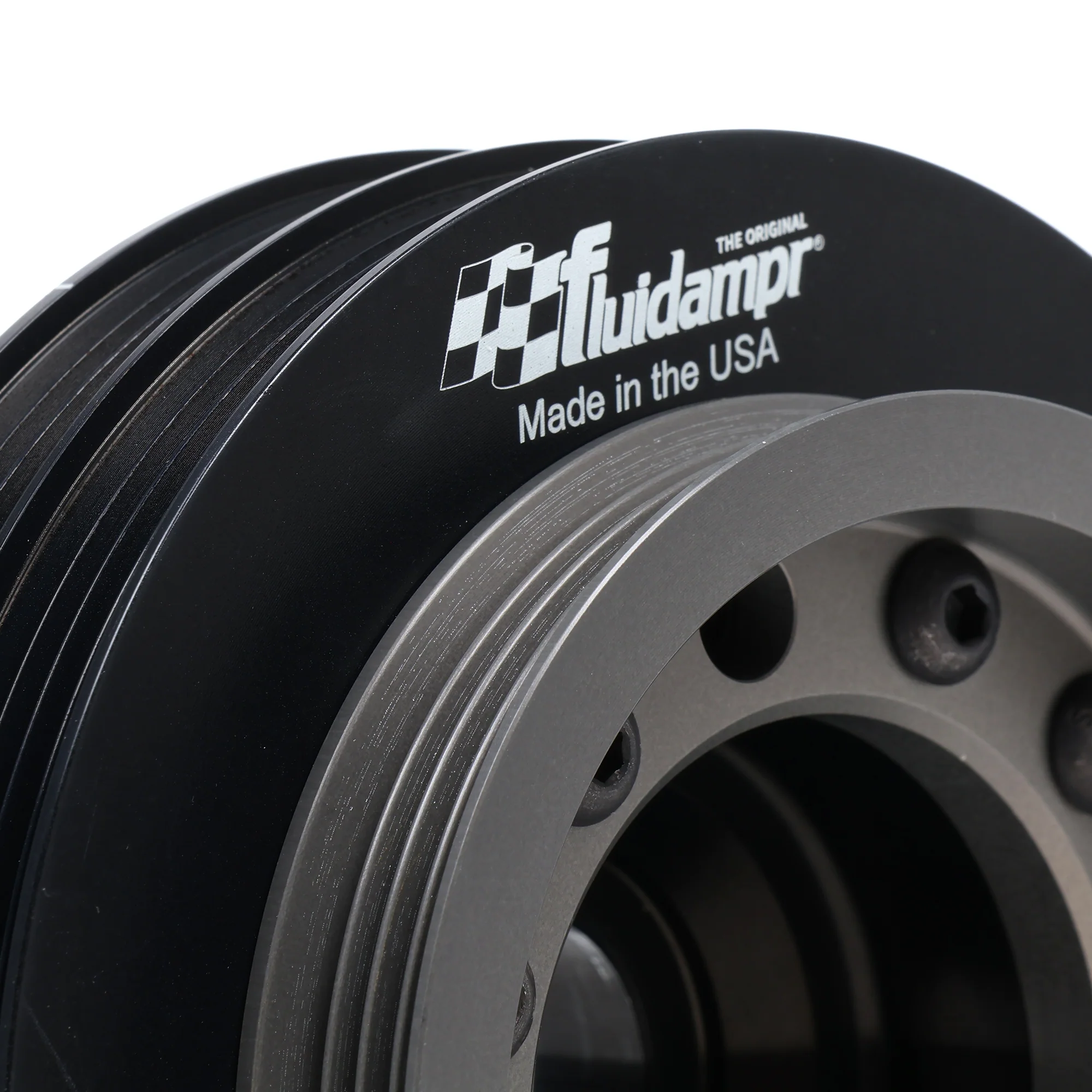
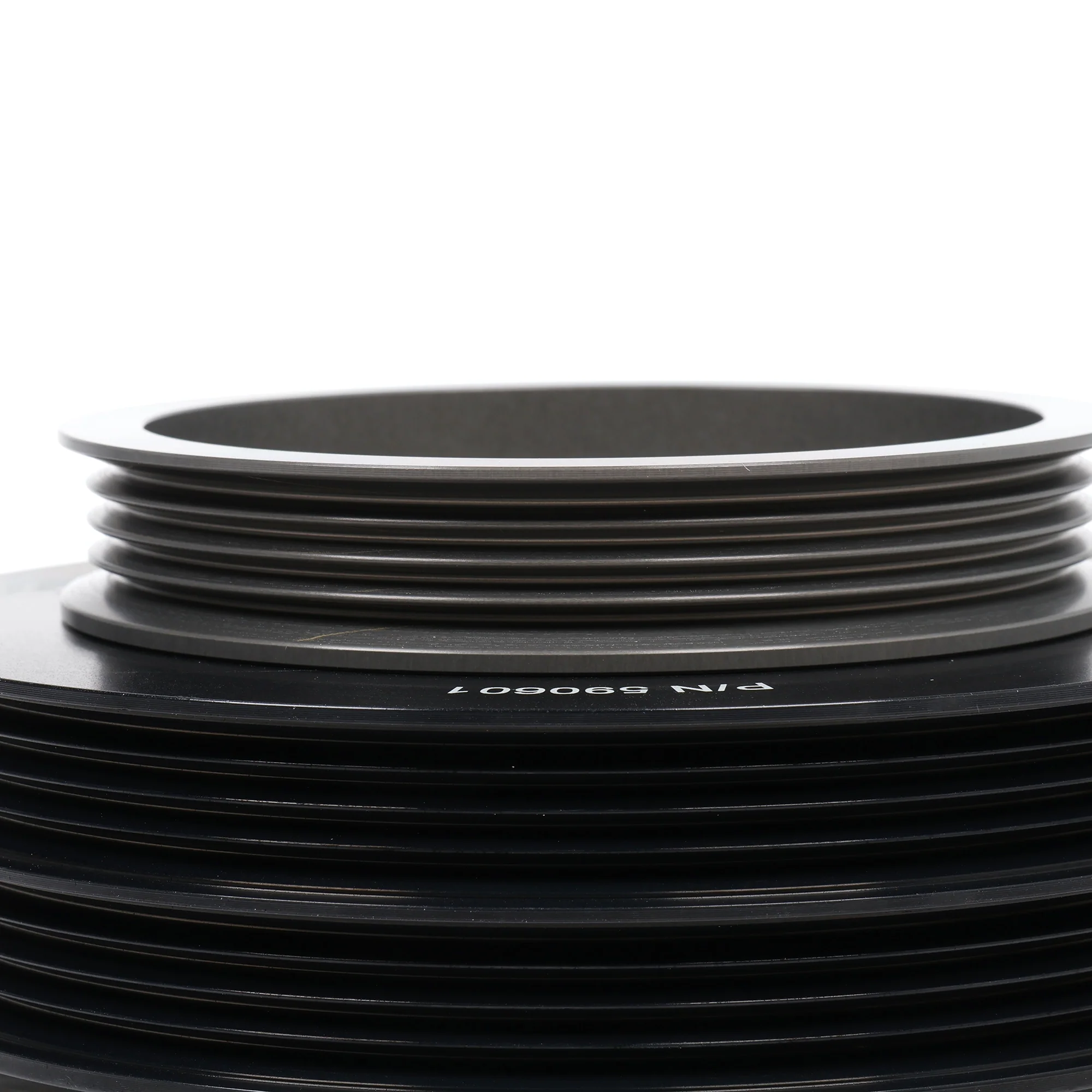
This is the Street Series damper (part number 590601). It's got three accessory belt grooves for your power steering pump, A/C compressor, and alternator. You're not losing any accessories. The third belt pulley's aluminum to keep weight down while the damper body's steel to provide the mass needed for vibration control. The bore's a light press fit on the crank nose. Fluidampr specifically designed that for high-horsepower B series builds to keep the damper securely located under extreme loads. Stock rubber dampers can spin on the crank when you're making serious power. This doesn't. It's got engraved timing marks at TDC plus additional marks at 90, 180, and 270 degrees. There are also three marks at 14, 16, and 18 degrees. The damper's SFI 18.1 certified and the certification's engraved on the damper, not a sticker that falls off.
When You Need This Damper
If you're building a serious B series, this should be on your parts list alongside your forged internals. The Fluidampr's most critical on engines that have been modified in ways that increase torsional vibration. Deleted balance shafts, lightweight flywheels, aftermarket cams, forced induction, nitrous, higher compression, high-flow oil pumps—all of that changes the harmonics. The stock damper was never designed to handle those changes. You're also freeing horsepower that you were losing to crankshaft deflection and bearing friction from uncontrolled vibration. Fluidampr estimates 2 to 5+ hp freed on B series engines depending on power level and how bad the vibration was. That's not created horsepower. That's horsepower your engine was already making but losing to vibration. Even if you're not building a high-horsepower motor, the stock rubber damper degrades with age. If you're refreshing a 25+ year old B series and the original crank pulley's never been replaced, the rubber's almost certainly compromised. This is a legitimate reliability upgrade even on a stock motor.
What You Get
- Fluidampr 590601 Street Series harmonic damper for B series engines
- Viscous silicone damper (free-floating inertia ring, self-tuning across entire RPM range)
- Steel housing and inertia ring with black zinc chromate finish
- Three accessory belt grooves (power steering, A/C, alternator - retains all accessories)
- Engraved timing marks: TDC, 90°, 180°, 270°, plus 14°, 16°, 18° marks
- SFI 18.1 certified (certification engraved, not a sticker)
- No maintenance required - viscous silicone rated -40°F to 300°F
- Internally balanced (no counterweights - B series is internally balanced)
- Made in USA at ISO 9001 certified facility (Buffalo, NY)
Fits These Engines
- B17A1
- B18A1, B18B1
- B18C1, B18C5
- B16A2, B16A3
- B20B4, B20Z2
Note: This is NOT a lightweight pulley or underdrive pulley, it's a harmonic damper that provides vibration control across the entire RPM range. Lightweight pulleys delete damper mass and eliminate harmonic damping, which causes long-term crankshaft and bearing damage. Most critical on modified engines (deleted balance shafts, lightweight flywheel, turbo, nitrous, high compression, aftermarket cams) where torsional vibration characteristics have changed from stock. Stock rubber dampers degrade over time - if your B series is 25+ years old and the damper's never been replaced, the rubber's likely compromised even on a stock engine. Installation requires removing crank bolt and pulling old damper (impact gun or crank holding tool needed). Damper presses on with light interference fit, follow Fluidampr torque specs for crank bolt, don't reuse stretched bolt. Street Series (590601) retains all three accessory belt grooves for power steering, A/C, and alternator. If you're building a dedicated race car without A/C or power steering, Fluidampr makes a Race Series damper with 40% underdrive alternator pulley only (different part number). Frees 2-5+ hp from vibration reduction (not created power - power previously lost to crankshaft deflection and bearing friction). Viscous silicone requires zero maintenance and doesn't degrade like rubber. SFI certification engraved on damper (won't fall off like sticker). Timing marks engraved at TDC, 90°, 180°, 270°, plus 14°, 16°, 18° for degreeing.
-
1990-1993 Acura Integra
1994-2001 Acura Integra
1999-2000 Honda Civic Si1997-2001 Honda CR-V
1994-1997 Honda Del Sol VTEC
-
Outer diameter: 5.900 inches (5-7/8")
Bore diameter: 1.1800 inches
Length: 2.480 inches
Total weight: 7.8 lbs
Rotating weight: 5.2 lbs - (1) Harmonic Damper/Crank Pulley
Description
- Reduces Parasitic Drag
- Direct Fit for B16, B17, B18, and B20 Engines
- Street Series Retains AC/Power Steering
- Increases Power and Reliability
- Description
- Vehicle Fitment
- Technical Data
- Included
- Install Guide
-
Fluidampr Harmonic Damper - B Series Engines (Street Series)
You're building a B series. You've spent money on forged pistons, forged rods, cams, springs, and a turbo. You're making 400 whp. Your stock crank pulley's still sitting there with 150,000 miles on it and 25-year-old rubber that's cracked and heat-cycled to hell. That rubber damper was designed for a stock B18 making 140 hp at the crank with factory balance shafts and a stock flywheel. Every modification you've made, from deleting the balance shafts to running 20 PSI of boost to installing a lightweight flywheel, has changed the torsional vibration characteristics of your crankshaft. The stock damper can't adapt to that. It was tuned for one specific frequency range and it's not the frequency range your modified engine's running at. Fluidampr's 590601 replaces it with a viscous damper that self-tunes in real time across your entire RPM range. It's not a lightweight pulley. It's not an underdrive pulley. It's a damper that actually works.
Here's What's Actually Happening Inside Your Engine
Every time a cylinder fires, the combustion event twists the crankshaft ahead of its normal rotation. Then the crank rebounds. That's torsional vibration. It's not a smooth rotation. It's a twist-and-rebound motion happening thousands of times per minute. When these vibration frequencies line up with the crankshaft's natural resonance, bad things happen. Main bearing wear accelerates. Timing accuracy suffers because the crank's flexing instead of rotating smoothly. Eventually the crankshaft fails. A harmonic damper absorbs those vibrations before they cause damage. The stock Honda damper uses rubber bonding between the hub and the outer ring. It's tuned to a single frequency and it degrades over time as the rubber ages, cracks, and loses its damping properties. We've seen stock dampers with the rubber so deteriorated that the outer ring's loose and you can see it wobbling on the crank. That's not damping anything. That's a disaster waiting to happen.
Fluidampr's Different and Here's Why That Matters
The Fluidampr uses a free-floating inertia ring suspended in viscous silicone fluid inside a sealed steel housing. The inertia ring's not bonded to anything. It's floating. As the outer housing spins with the crankshaft, the inertia ring's free to rotate at different speeds depending on what frequencies the crank's producing. The silicone fluid between the outer housing and the inner ring absorbs the harmonic vibrations through shear force and dissipates them as heat. Because the ring's not mechanically bonded to a specific frequency, it automatically responds to whatever frequency the crankshaft's producing at any given RPM. It's self-tuning. You're at 3,000 RPM? It's damping the frequencies at 3,000 RPM. You're at 8,500 RPM? It's damping the frequencies at 8,500 RPM. The stock rubber damper can't do that. It was tuned for one frequency and that's all it does. The Fluidampr works across the entire RPM range. It doesn't wear out. It doesn't need maintenance. It doesn't need rebuilding. The silicone's rated from -40°F to 300°F so it's not cooking in the heat or getting hard in the cold like rubber does.
This Isn't a Lightweight Pulley and That's the Point
Don't confuse this with a lightweight pulley. Lightweight pulleys delete the damper mass to reduce rotating weight. You gain maybe 2-3 hp from less rotational inertia and you lose all harmonic damping. That's a bad trade. We've seen guys run lightweight pulleys and swear they haven't had problems. What they don't see is the microfractures forming in the crankshaft from years of uncontrolled torsional vibration. They don't see the accelerated main bearing wear. They don't see the timing inconsistency from the crank flexing. They see it when the crank breaks or when they tear down the motor at 50,000 miles and the bearings are trashed. Engine builders who work with serious B series builds don't run lightweight pulleys. They run dampers. The Fluidampr weighs 7.8 lbs total but the rotating mass is only 5.2 lbs because the inner ring's free-floating. That's comparable to the stock damper's rotating mass while providing way better damping across the RPM range.
Street Series Keeps All Your Accessories
This is the Street Series damper (part number 590601). It's got three accessory belt grooves for your power steering pump, A/C compressor, and alternator. You're not losing any accessories. The third belt pulley's aluminum to keep weight down while the damper body's steel to provide the mass needed for vibration control. The bore's a light press fit on the crank nose. Fluidampr specifically designed that for high-horsepower B series builds to keep the damper securely located under extreme loads. Stock rubber dampers can spin on the crank when you're making serious power. This doesn't. It's got engraved timing marks at TDC plus additional marks at 90, 180, and 270 degrees. There are also three marks at 14, 16, and 18 degrees. The damper's SFI 18.1 certified and the certification's engraved on the damper, not a sticker that falls off.
When You Need This Damper
If you're building a serious B series, this should be on your parts list alongside your forged internals. The Fluidampr's most critical on engines that have been modified in ways that increase torsional vibration. Deleted balance shafts, lightweight flywheels, aftermarket cams, forced induction, nitrous, higher compression, high-flow oil pumps—all of that changes the harmonics. The stock damper was never designed to handle those changes. You're also freeing horsepower that you were losing to crankshaft deflection and bearing friction from uncontrolled vibration. Fluidampr estimates 2 to 5+ hp freed on B series engines depending on power level and how bad the vibration was. That's not created horsepower. That's horsepower your engine was already making but losing to vibration. Even if you're not building a high-horsepower motor, the stock rubber damper degrades with age. If you're refreshing a 25+ year old B series and the original crank pulley's never been replaced, the rubber's almost certainly compromised. This is a legitimate reliability upgrade even on a stock motor.
What You Get
- Fluidampr 590601 Street Series harmonic damper for B series engines
- Viscous silicone damper (free-floating inertia ring, self-tuning across entire RPM range)
- Steel housing and inertia ring with black zinc chromate finish
- Three accessory belt grooves (power steering, A/C, alternator - retains all accessories)
- Engraved timing marks: TDC, 90°, 180°, 270°, plus 14°, 16°, 18° marks
- SFI 18.1 certified (certification engraved, not a sticker)
- No maintenance required - viscous silicone rated -40°F to 300°F
- Internally balanced (no counterweights - B series is internally balanced)
- Made in USA at ISO 9001 certified facility (Buffalo, NY)
Fits These Engines
- B17A1
- B18A1, B18B1
- B18C1, B18C5
- B16A2, B16A3
- B20B4, B20Z2
Note: This is NOT a lightweight pulley or underdrive pulley, it's a harmonic damper that provides vibration control across the entire RPM range. Lightweight pulleys delete damper mass and eliminate harmonic damping, which causes long-term crankshaft and bearing damage. Most critical on modified engines (deleted balance shafts, lightweight flywheel, turbo, nitrous, high compression, aftermarket cams) where torsional vibration characteristics have changed from stock. Stock rubber dampers degrade over time - if your B series is 25+ years old and the damper's never been replaced, the rubber's likely compromised even on a stock engine. Installation requires removing crank bolt and pulling old damper (impact gun or crank holding tool needed). Damper presses on with light interference fit, follow Fluidampr torque specs for crank bolt, don't reuse stretched bolt. Street Series (590601) retains all three accessory belt grooves for power steering, A/C, and alternator. If you're building a dedicated race car without A/C or power steering, Fluidampr makes a Race Series damper with 40% underdrive alternator pulley only (different part number). Frees 2-5+ hp from vibration reduction (not created power - power previously lost to crankshaft deflection and bearing friction). Viscous silicone requires zero maintenance and doesn't degrade like rubber. SFI certification engraved on damper (won't fall off like sticker). Timing marks engraved at TDC, 90°, 180°, 270°, plus 14°, 16°, 18° for degreeing.
-
1990-1993 Acura Integra
1994-2001 Acura Integra
1999-2000 Honda Civic Si1997-2001 Honda CR-V
1994-1997 Honda Del Sol VTEC
-
Outer diameter: 5.900 inches (5-7/8")
Bore diameter: 1.1800 inches
Length: 2.480 inches
Total weight: 7.8 lbs
Rotating weight: 5.2 lbs - (1) Harmonic Damper/Crank Pulley