Fluidampr Race Series Harmonic Damper for B Series
- 40% Underdrive for Enhanced Performance
- Designed for B16, B17, B18, and B20 Engines
- Eliminates AC and Power Steering Accessories
- Lightweight, Only 5.9 lbs!
- Description
- Vehicle Fitment
- Technical Data
- Included
- Install Guide
-
Fluidampr Harmonic Damper - B Series Engines (Race Series)
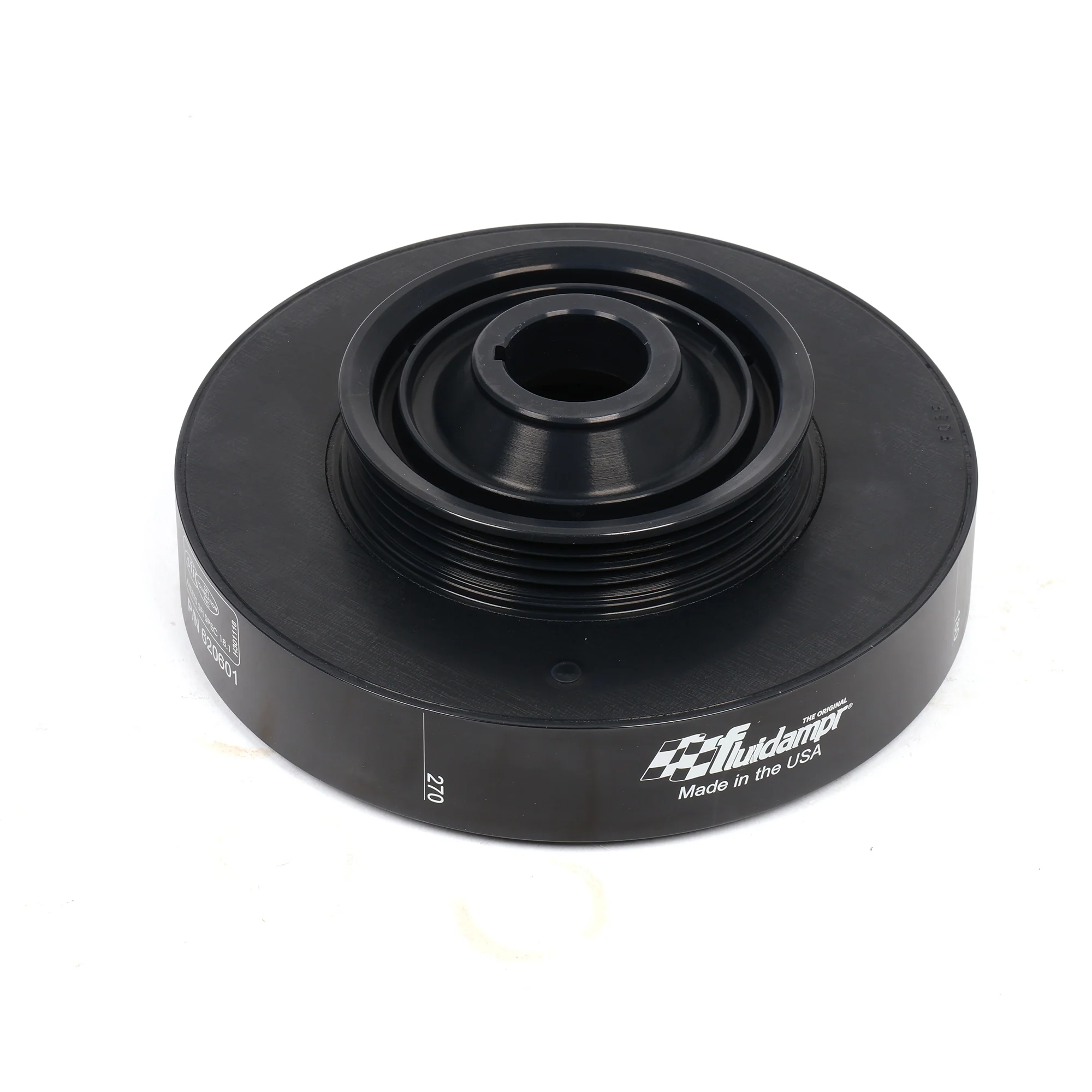
You're building a dedicated race car with a B series and you've already deleted the power steering and A/C. You don't need those accessory pulleys anymore and you want the alternator underdriven to free up a little power at high RPM. This is the Race Series Fluidampr. It's got one belt groove for the alternator and that's it. The alternator pulley's 35-40% underdriven so you're not robbing power spinning the alternator at full speed when you're at 8,500 RPM. This is not for street cars. If your car's still got power steering or air conditioning, you need the Street Series 590601 instead. This damper's for race cars, track-only builds, and drag cars where you've stripped the accessories and you're focused on making power. You're still getting the same viscous damper technology that self-tunes across the entire RPM range and protects your crank from torsional vibration. The underdrive's just a bonus on top of that.
Here's What Makes This the Race Series
The difference between the Street Series and the Race Series is simple. The Street Series has three belt grooves (power steering, A/C, alternator) at stock drive ratios. You're keeping all your accessories. The Race Series has one belt groove for the alternator only and that pulley's underdriven 35-40%. You're deleting power steering and A/C. The alternator's spinning slower so it's not parasitically draining power at high RPM. On a race car with minimal electrical loads (no stereo, no A/C compressor, no heated seats, no huge stereo amp), the underdriven alternator's fine. It'll still charge the battery and keep up with your ignition, fuel pump, and cooling fans. On a street car sitting in traffic with the headlights on, the A/C running, and a fuel pump pulling current, the alternator's not going to keep up at idle. That's why this is designated Race Series. It's for cars that don't sit in traffic.
Installation's Not a Simple Bolt-On
The Street Series is a direct bolt-on. You pull the old damper off and bolt this one on. The Race Series isn't. You're going to need to clearance or modify the lower timing cover to fit the different damper profile. That might mean cutting the cover, filing it, or replacing it with an aftermarket cover that's already clearanced. You'll also need a shorter alternator belt because the stock multi-groove belt won't work without the power steering and A/C pulleys. This isn't a drop-in part. Plan for some fabrication or machine work when you're installing it. If you're building a race motor and the engine's already out of the car, it's not a big deal. If you're trying to swap this onto a street car that's your daily driver, you're going to have a bad time.
This Is Still a Damper First, Underdrive Second
Don't buy this thinking it's just an underdrive pulley. It's a harmonic damper. The underdrive's a side benefit for race applications but the primary function is protecting your crankshaft from torsional vibration. Every time a cylinder fires, the crank twists ahead of its normal rotation and then rebounds. That's torsional vibration. When those vibration frequencies line up with the crank's natural resonance, you get accelerated main bearing wear, timing inaccuracy, and eventually crank failure. The Fluidampr absorbs those vibrations with a free-floating inertia ring suspended in viscous silicone fluid. The ring's not bonded to anything so it self-tunes to whatever frequency the crank's producing at any RPM. It works at 3,000 RPM and it works at 8,500 RPM. The stock rubber damper was tuned for one frequency and it degrades over time. This doesn't. If you've deleted balance shafts, installed a lightweight flywheel, or you're running boost or nitrous, the damping function's more important than the underdrive. Lightweight underdrive pulleys that don't provide any damping are saving you rotating mass while leaving your crank unprotected. That's a trade most serious engine builders won't make.
What You Get
- Fluidampr Race Series harmonic damper for B series engines
- Viscous silicone damper (free-floating inertia ring, self-tuning across entire RPM range)
- One belt groove for alternator only (35-40% underdrive)
- No power steering or A/C belt grooves (race car only)
- Steel housing and inertia ring with black zinc chromate finish
- Engraved timing marks and SFI 18.1 certification
- No maintenance required - viscous silicone rated -40°F to 300°F
- Internally balanced (B series is internally balanced, no counterweights needed)
- Made in USA at ISO 9001 certified facility
Fits These Engines
- B17A1 - 1992-1993 Acura Integra GS-R
- B18A1 - 1990-1991 Acura Integra GS/LS/RS
- B18B1 - 1994-2001 Acura Integra GS/LS/RS
- B18C1 - 1994-2001 Acura Integra GS-R
- B18C5 - 1997-2001 Acura Integra Type R
- B16A2 - 1999-2000 Honda Civic Si
- B16A3 - 1994-1997 Honda Del Sol VTEC
- B20B4 - 1997-2001 Honda CR-V
- B20Z2 - 1997-2001 Honda CR-V
- Fits all B series DOHC engines 1.6L through 2.1L
Note: This is the RACE SERIES damper - for dedicated race cars, track-only builds, and drag cars with NO power steering or A/C. If your car still has power steering or air conditioning, you need the Street Series 590601 instead (retains all three accessory pulleys at stock ratios). Installation requires modification or clearancing of the lower timing cover - this is NOT a direct bolt-on like the Street Series. You'll need to cut, file, or replace the timing cover to clear the damper profile. You'll also need a shorter alternator belt (stock multi-groove belt won't work without PS and A/C pulleys). The 35-40% alternator underdrive reduces alternator output at idle and low RPM - fine for race cars with minimal electrical loads but NOT suitable for street cars with headlights, A/C, stereo, and other accessories running in traffic. Damper matches to the engine, not the chassis (if you're running a B series swap, this fits your B series regardless of what car it's in). This is a harmonic damper first, underdrive pulley second - primary function is protecting crankshaft from torsional vibration. Most critical on modified engines with deleted balance shafts, lightweight flywheels, turbo, nitrous, or high compression. Lightweight underdrive pulleys without harmonic damping save rotating mass but leave crankshaft unprotected - not a trade serious engine builders make. SFI 18.1 certified with engraved certification (won't fall off). Viscous silicone requires zero maintenance and doesn't degrade like rubber.
-
1990-1993 Acura Integra
1994-2001 Acura Integra
1999-2000 Honda Civic Si1997-2001 Honda CR-V
1994-1997 Honda Del Sol VTEC
- (1) Harmonic Damper/Crank Pulley


Description
- 40% Underdrive for Enhanced Performance
- Designed for B16, B17, B18, and B20 Engines
- Eliminates AC and Power Steering Accessories
- Lightweight, Only 5.9 lbs!
- Description
- Vehicle Fitment
- Technical Data
- Included
- Install Guide
-
Fluidampr Harmonic Damper - B Series Engines (Race Series)
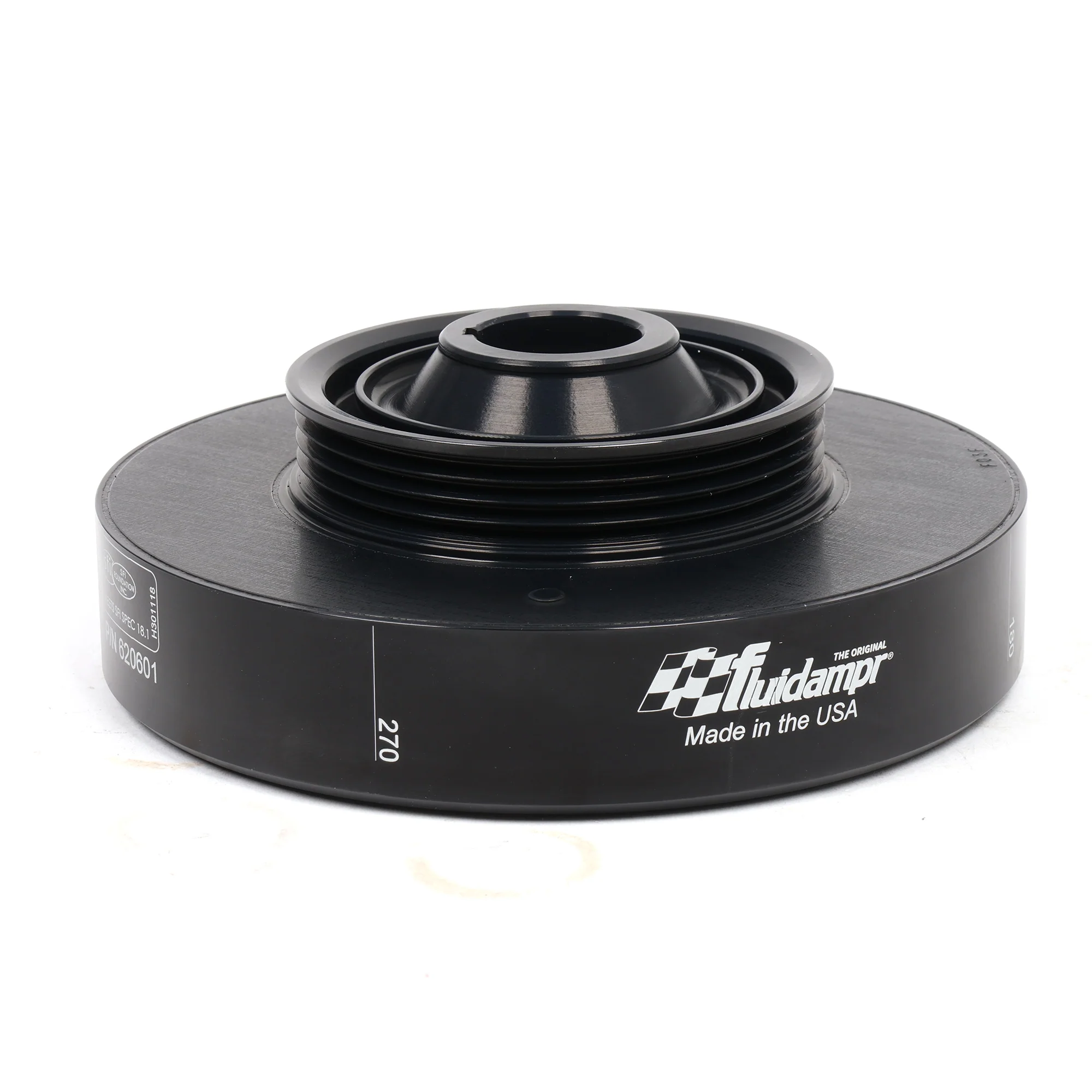
You're building a dedicated race car with a B series and you've already deleted the power steering and A/C. You don't need those accessory pulleys anymore and you want the alternator underdriven to free up a little power at high RPM. This is the Race Series Fluidampr. It's got one belt groove for the alternator and that's it. The alternator pulley's 35-40% underdriven so you're not robbing power spinning the alternator at full speed when you're at 8,500 RPM. This is not for street cars. If your car's still got power steering or air conditioning, you need the Street Series 590601 instead. This damper's for race cars, track-only builds, and drag cars where you've stripped the accessories and you're focused on making power. You're still getting the same viscous damper technology that self-tunes across the entire RPM range and protects your crank from torsional vibration. The underdrive's just a bonus on top of that.
Here's What Makes This the Race Series
The difference between the Street Series and the Race Series is simple. The Street Series has three belt grooves (power steering, A/C, alternator) at stock drive ratios. You're keeping all your accessories. The Race Series has one belt groove for the alternator only and that pulley's underdriven 35-40%. You're deleting power steering and A/C. The alternator's spinning slower so it's not parasitically draining power at high RPM. On a race car with minimal electrical loads (no stereo, no A/C compressor, no heated seats, no huge stereo amp), the underdriven alternator's fine. It'll still charge the battery and keep up with your ignition, fuel pump, and cooling fans. On a street car sitting in traffic with the headlights on, the A/C running, and a fuel pump pulling current, the alternator's not going to keep up at idle. That's why this is designated Race Series. It's for cars that don't sit in traffic.
Installation's Not a Simple Bolt-On
The Street Series is a direct bolt-on. You pull the old damper off and bolt this one on. The Race Series isn't. You're going to need to clearance or modify the lower timing cover to fit the different damper profile. That might mean cutting the cover, filing it, or replacing it with an aftermarket cover that's already clearanced. You'll also need a shorter alternator belt because the stock multi-groove belt won't work without the power steering and A/C pulleys. This isn't a drop-in part. Plan for some fabrication or machine work when you're installing it. If you're building a race motor and the engine's already out of the car, it's not a big deal. If you're trying to swap this onto a street car that's your daily driver, you're going to have a bad time.
This Is Still a Damper First, Underdrive Second
Don't buy this thinking it's just an underdrive pulley. It's a harmonic damper. The underdrive's a side benefit for race applications but the primary function is protecting your crankshaft from torsional vibration. Every time a cylinder fires, the crank twists ahead of its normal rotation and then rebounds. That's torsional vibration. When those vibration frequencies line up with the crank's natural resonance, you get accelerated main bearing wear, timing inaccuracy, and eventually crank failure. The Fluidampr absorbs those vibrations with a free-floating inertia ring suspended in viscous silicone fluid. The ring's not bonded to anything so it self-tunes to whatever frequency the crank's producing at any RPM. It works at 3,000 RPM and it works at 8,500 RPM. The stock rubber damper was tuned for one frequency and it degrades over time. This doesn't. If you've deleted balance shafts, installed a lightweight flywheel, or you're running boost or nitrous, the damping function's more important than the underdrive. Lightweight underdrive pulleys that don't provide any damping are saving you rotating mass while leaving your crank unprotected. That's a trade most serious engine builders won't make.
What You Get
- Fluidampr Race Series harmonic damper for B series engines
- Viscous silicone damper (free-floating inertia ring, self-tuning across entire RPM range)
- One belt groove for alternator only (35-40% underdrive)
- No power steering or A/C belt grooves (race car only)
- Steel housing and inertia ring with black zinc chromate finish
- Engraved timing marks and SFI 18.1 certification
- No maintenance required - viscous silicone rated -40°F to 300°F
- Internally balanced (B series is internally balanced, no counterweights needed)
- Made in USA at ISO 9001 certified facility
Fits These Engines
- B17A1 - 1992-1993 Acura Integra GS-R
- B18A1 - 1990-1991 Acura Integra GS/LS/RS
- B18B1 - 1994-2001 Acura Integra GS/LS/RS
- B18C1 - 1994-2001 Acura Integra GS-R
- B18C5 - 1997-2001 Acura Integra Type R
- B16A2 - 1999-2000 Honda Civic Si
- B16A3 - 1994-1997 Honda Del Sol VTEC
- B20B4 - 1997-2001 Honda CR-V
- B20Z2 - 1997-2001 Honda CR-V
- Fits all B series DOHC engines 1.6L through 2.1L
Note: This is the RACE SERIES damper - for dedicated race cars, track-only builds, and drag cars with NO power steering or A/C. If your car still has power steering or air conditioning, you need the Street Series 590601 instead (retains all three accessory pulleys at stock ratios). Installation requires modification or clearancing of the lower timing cover - this is NOT a direct bolt-on like the Street Series. You'll need to cut, file, or replace the timing cover to clear the damper profile. You'll also need a shorter alternator belt (stock multi-groove belt won't work without PS and A/C pulleys). The 35-40% alternator underdrive reduces alternator output at idle and low RPM - fine for race cars with minimal electrical loads but NOT suitable for street cars with headlights, A/C, stereo, and other accessories running in traffic. Damper matches to the engine, not the chassis (if you're running a B series swap, this fits your B series regardless of what car it's in). This is a harmonic damper first, underdrive pulley second - primary function is protecting crankshaft from torsional vibration. Most critical on modified engines with deleted balance shafts, lightweight flywheels, turbo, nitrous, or high compression. Lightweight underdrive pulleys without harmonic damping save rotating mass but leave crankshaft unprotected - not a trade serious engine builders make. SFI 18.1 certified with engraved certification (won't fall off). Viscous silicone requires zero maintenance and doesn't degrade like rubber.
-
1990-1993 Acura Integra
1994-2001 Acura Integra
1999-2000 Honda Civic Si1997-2001 Honda CR-V
1994-1997 Honda Del Sol VTEC
- (1) Harmonic Damper/Crank Pulley