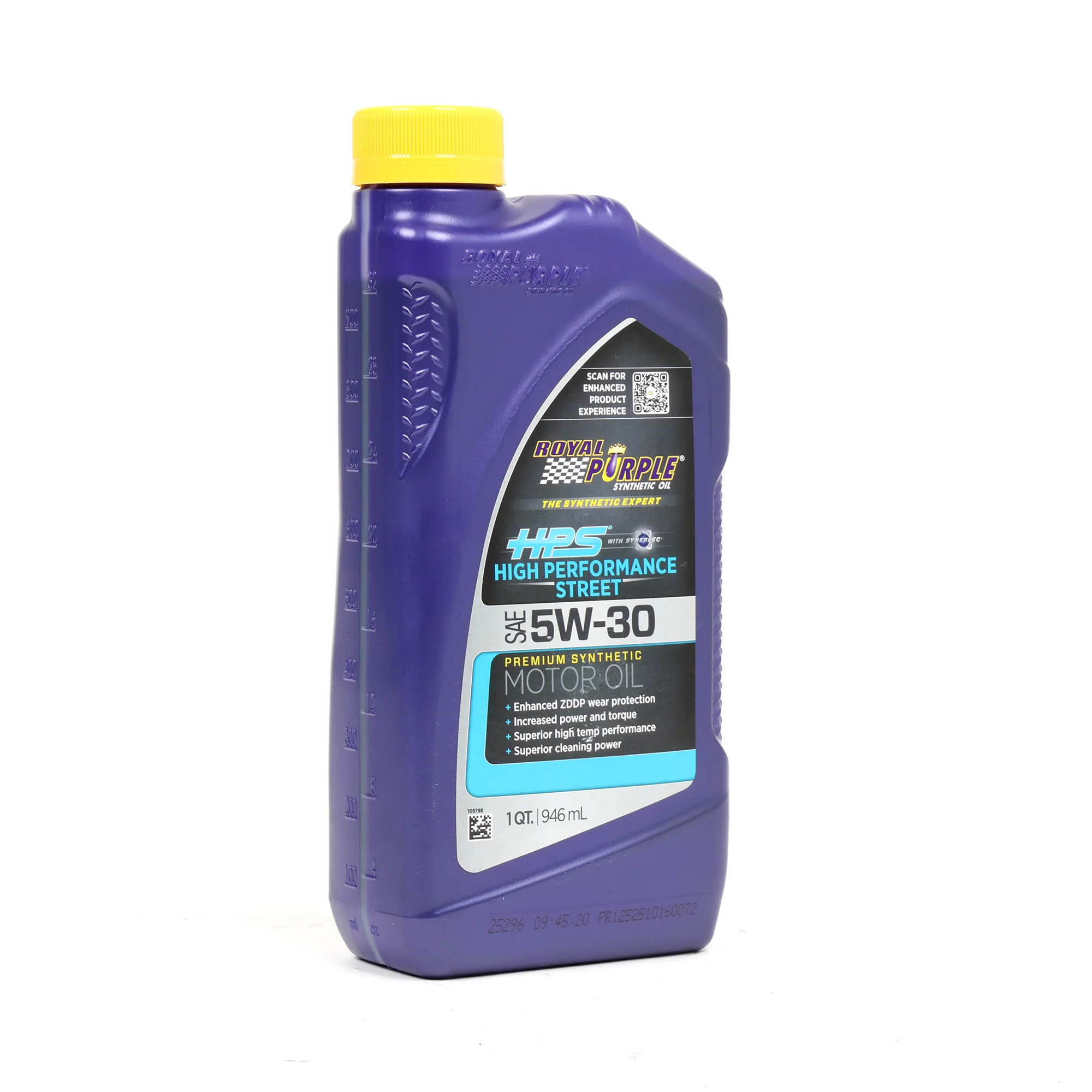
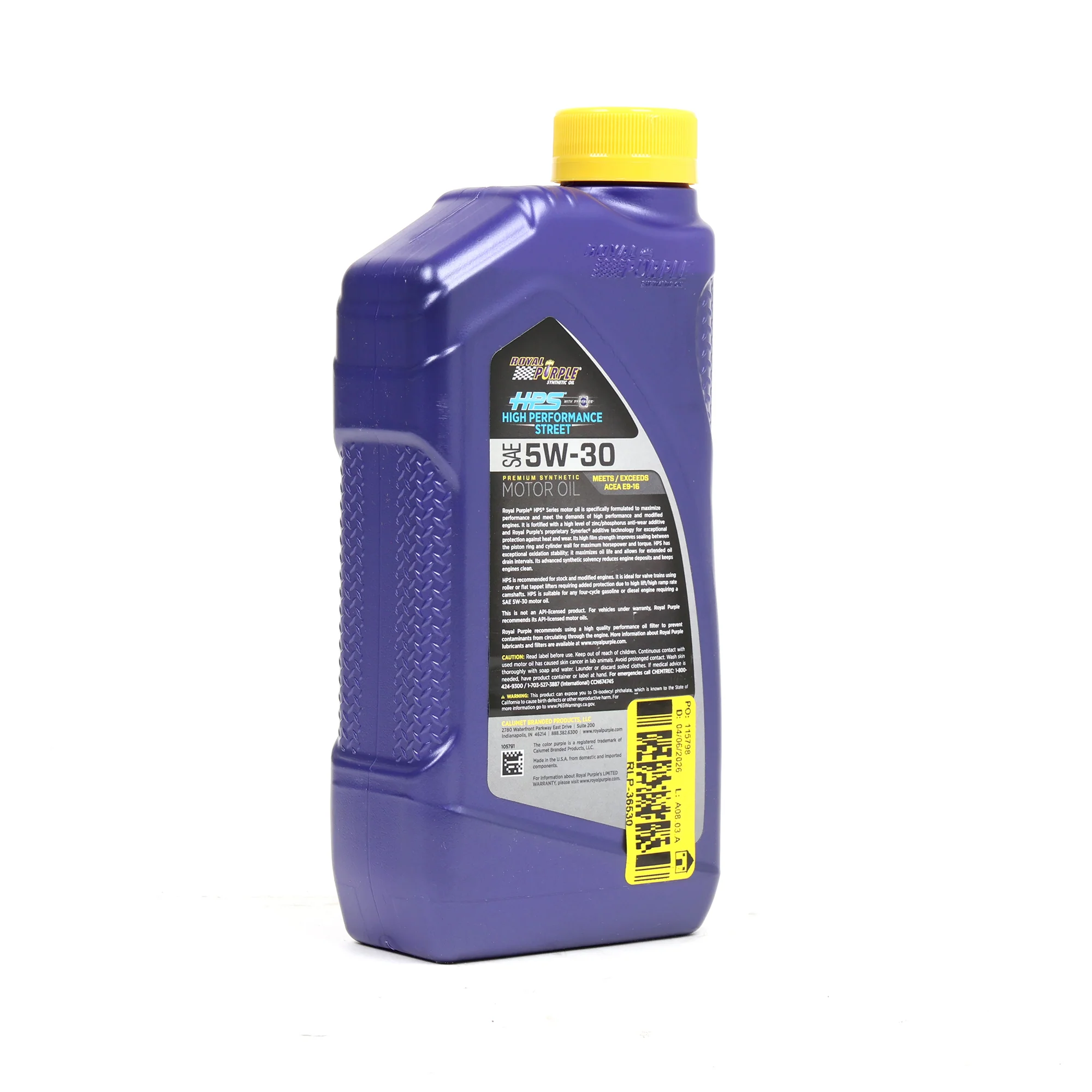
Royal Purple High Performance Street 5W-30 Oil - 1 Quart
- Sold Individually
- Thicker Weight than 5W-20
- Perfect for Turbo Builds
- Perfect for High Performance Street Builds
- Description
- Vehicle Fitment
- Included
-
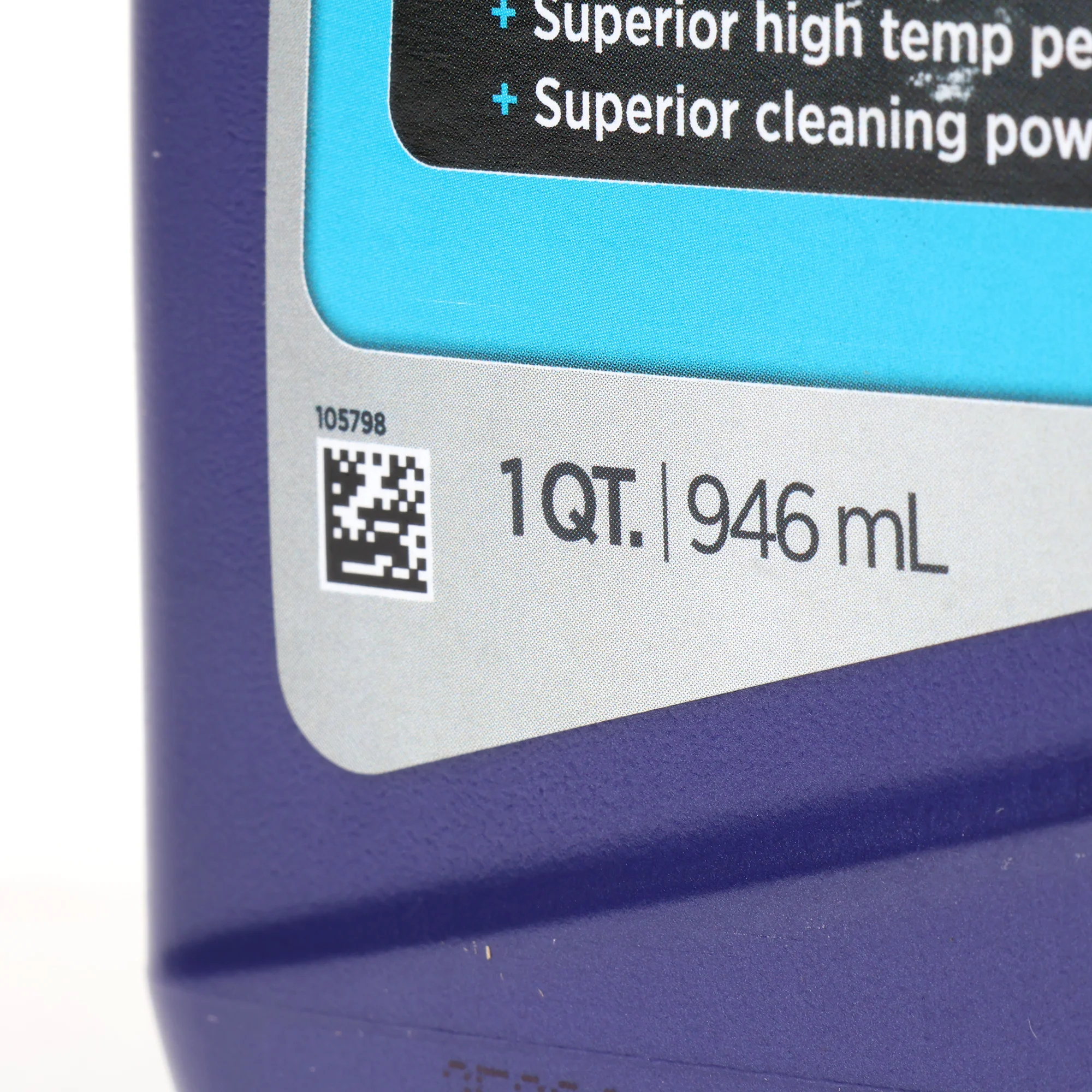
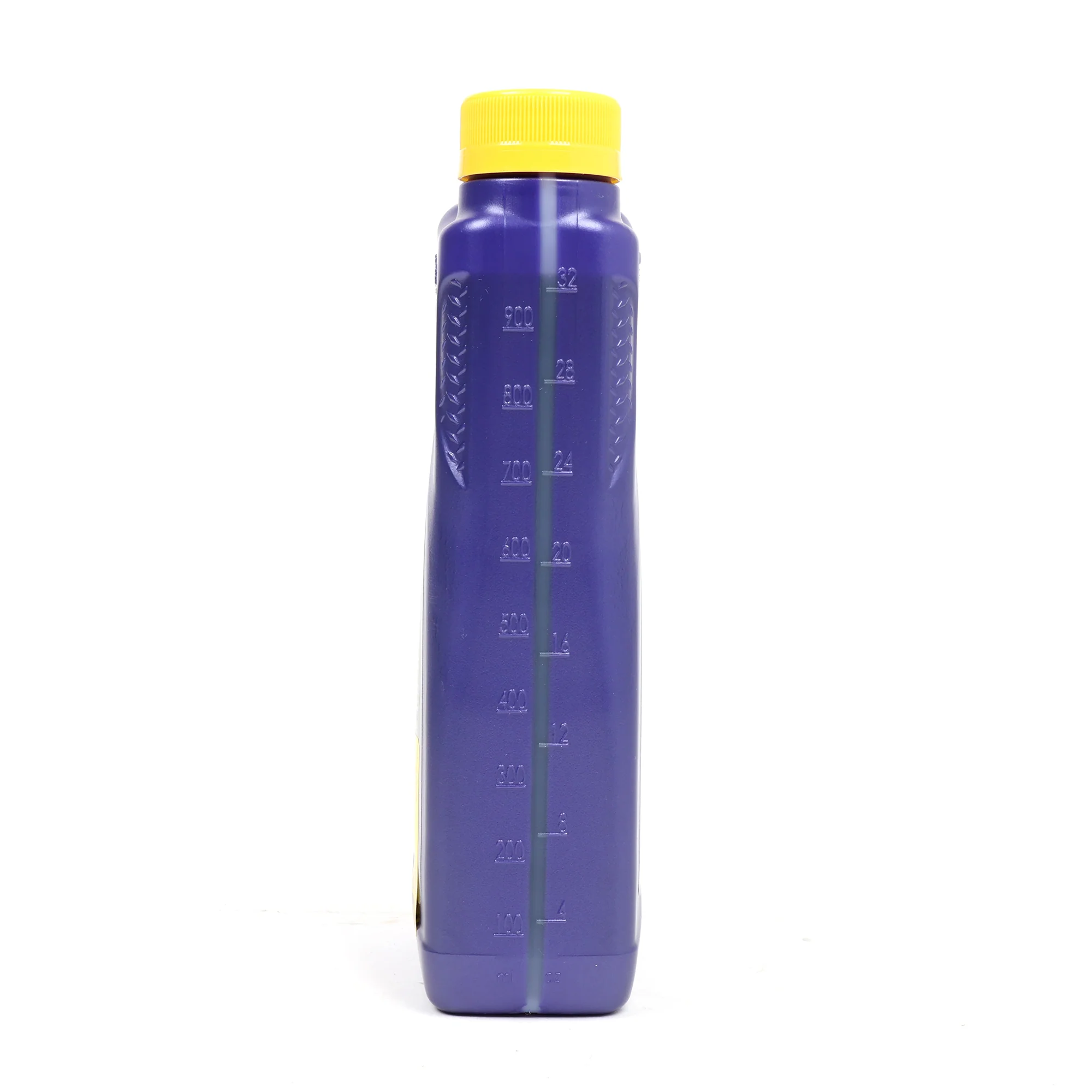
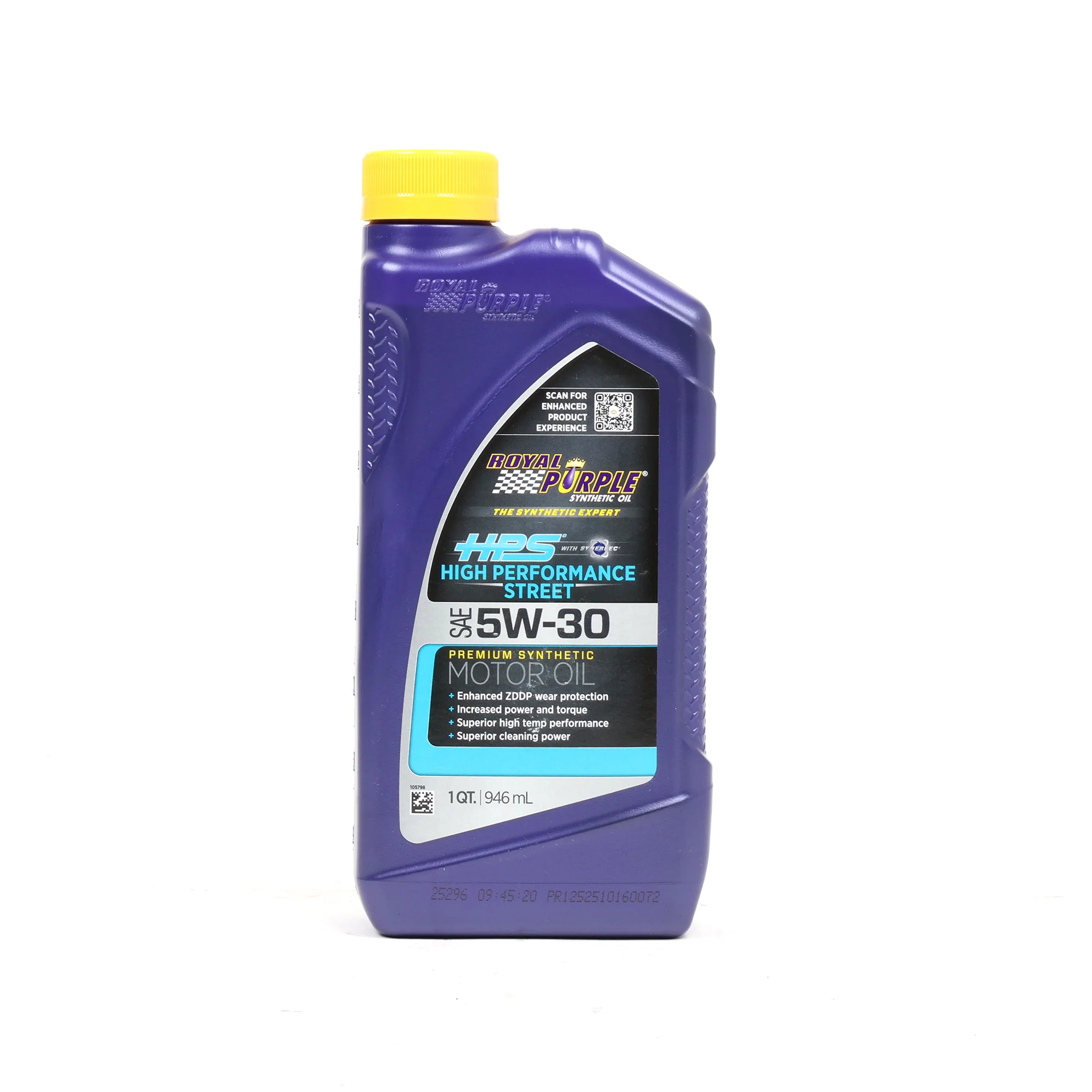
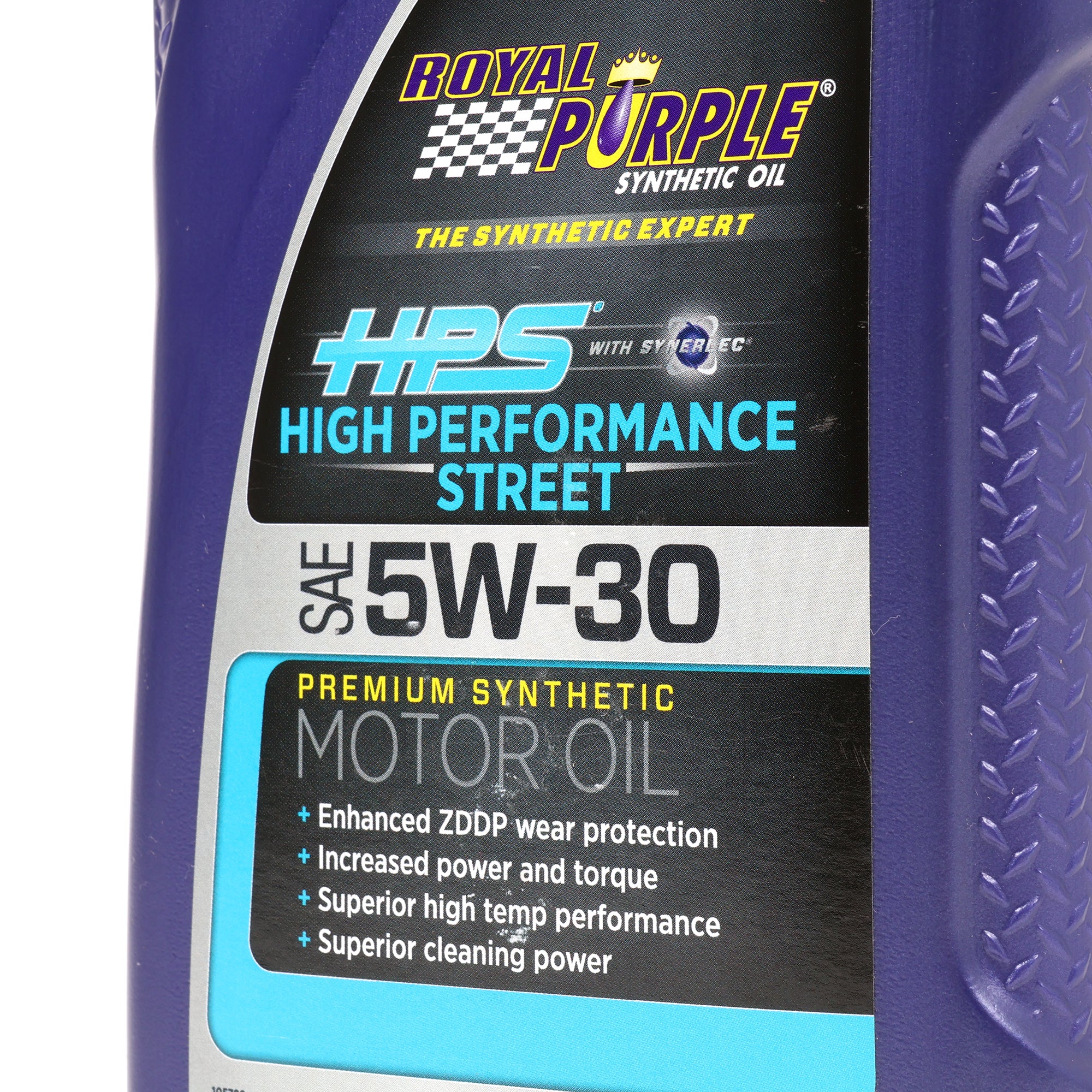
Royal Purple High Performance 5W-30 Motor Oil - 1 Quart
You're standing in the oil aisle trying to figure out if you should run 5W-20 like your manual says or step up to 5W-30. Your Civic's got 180,000 miles on it and you're burning a quart between oil changes, or maybe you're running a turbo build and you want thicker oil for the extra heat and cylinder pressure. Royal Purple High Performance 5W-30 is what you run when you need more oil film strength than 5W-20 gives you. We've been running Royal Purple in customer cars and in our own Hondas for fifteen years. The stuff works. Your oil stays cleaner longer, your engine runs quieter, and when we pull oil samples and send them to Blackstone Labs, the wear numbers are lower than what we see from Mobil 1 or Pennzoil. If you're keeping your car past 150,000 miles, if you've got a high-mileage engine that's burning oil, or if you're running boost, 5W-30's the right choice. This is a single 1-quart bottle. Your engine takes about 4 quarts so you'll need four or five bottles depending on what you're driving.
Here's When You Run 5W-30 Instead of 5W-20
Most newer Hondas call for 5W-20. That's a thin oil. Honda specs it because thin oil improves fuel economy by a fraction of an MPG and it helps them meet CAFE standards. 5W-20 works fine if your engine's stock, low mileage, and you're not pushing it hard. But there are situations where you want thicker oil. If you've got a high-mileage engine (150,000+ miles) and your piston rings are worn, you're getting blowby. Combustion pressure's sneaking past the rings and pressurizing your crankcase. That pressure pushes oil past worn valve seals and you're burning oil. Thicker oil (5W-30) doesn't fix worn rings but it helps. The thicker film doesn't get pushed past the rings as easily so you burn less oil between changes. If you're running a turbo and you're making 300+ whp, you want 5W-30. Cylinder pressures are way higher on a boosted engine and the oil film gets squeezed thinner. Thicker oil gives you more protection under high cylinder pressure. If you're tracking your car and your oil temps are hitting 240-260°F, 5W-30 holds its viscosity better at high temps than 5W-20 does. The oil doesn't thin out as much when it gets hot so you're maintaining better protection when the engine's under load.
Here's What We've Seen Running This Oil
We did an oil change interval test a few years back on high-mileage K series motors. Took three cars, all over 150,000 miles, all burning about a quart of oil every 3,000 miles on 5W-20. Switched them all to Royal Purple 5W-30. After 5,000 miles, all three cars were only burning half a quart instead of a full quart. The thicker oil was sealing better past worn rings. We also run 5W-30 in our turbo builds. We've got a K24 turbo Accord making 380 whp that's been running Royal Purple 5W-30 for three years. We pull oil samples every 5,000 miles and send them to Blackstone. Iron levels stay around 6-8 ppm, aluminum stays around 2-3 ppm, copper stays around 3-5 ppm. Those are low numbers for a turbo engine making that kind of power. The oil also stays cleaner. When we drain it at 5,000 miles it's still amber instead of black. Engines run quieter on Royal Purple too. The valvetrain noise on K series motors quiets down after you switch from conventional oil or even from other synthetics. That's because the oil film's stronger and there's less metal-on-metal contact at the cam lobes.
It's Not Magic, It's Just Better Additives
Royal Purple isn't doing anything revolutionary. They're using a synthetic base oil and they're adding better additives than what you get in cheap oil. The key additive package is what they call Synerlec. Strip away the marketing and what that means is the additives are designed to stick to metal surfaces. When your engine's running, there's an oil film between all the moving parts. When you shut the engine off, gravity pulls most of that oil back down into the pan. When you start the engine the next morning, there's a few seconds before the oil pump gets oil back up to the cam and the crank. That's dry startup wear. Royal Purple's additives don't drain off the metal as fast. They stick. So when you start the engine, there's still a protective layer on the metal even before fresh oil gets pumped up. That reduces startup wear. The additives also work better under load. When you're accelerating hard and the oil pressure between your crank bearings and the crank journals gets squeezed down to almost nothing, the additives create a sacrificial layer that keeps metal from touching metal. Less metal contact means less wear.
Cold Starts Are Fine, Hot Protection's Better
5W-30's still a relatively thin oil when it's cold. The "5W" means it flows like a 5-weight oil when it's cold. That's the same as 5W-20. Your engine gets lubricated just as fast on cold starts. Royal Purple's 5W-30 flows at temperatures down to -40°F. We're in Louisiana so we don't see -40 but if you're in Minnesota or Montana and it's 10 degrees outside, this oil's still flowing. The difference between 5W-30 and 5W-20 is the hot-side protection. The "30" means it protects like a 30-weight oil when the engine's hot. That's a thicker film than 5W-20 gives you. If you're running a turbo, if you're tracking the car, if you've got a high-mileage engine with worn clearances, or if you just want more protection, 5W-30's the right call. You're giving up maybe 0.2 MPG in fuel economy compared to 5W-20. That's nothing. The extra protection's worth it.
Don't Mix This Up with Their Race Oil
Royal Purple makes a few different oils. This is their High Performance oil. It's for street cars. It's got detergents to keep your engine clean and it meets all the API and ILSAC specs so it's not going to void your warranty or kill your catalytic converter. They also make XPR race oil. XPR's got way more zinc and phosphorus (ZDDP) for anti-wear protection. That's great for race engines that get rebuilt every season. It's terrible for street cars. The extra ZDDP will poison your catalytic converter and you'll fail emissions. Don't run race oil in your street car unless you've deleted your cats and you don't care about emissions. Run this oil. It's designed for what you're doing.
How Much You Need and How to Do It Right
Most 4-cylinder Hondas and Acuras take between 3.7 and 4.4 quarts of oil with the filter. K20 in an RSX or EP3 Civic Si takes 4.4 quarts. K24 in an Accord or TSX takes 4.4 quarts. L15 in a 10th gen Civic Si takes 3.7 quarts. V6 engines like the J35 take about 4.5 quarts. Buy four or five bottles depending on your engine. When you're doing the oil change, warm the engine up first. Drive it for 10 minutes. Warm oil drains faster and you'll get more of the old oil out. Pull the drain plug, let it drain for at least 10 minutes, don't rush it. Change the filter. We use OEM Honda filters or Wix filters. Don't cheap out and buy a $3 Fram filter when you're spending $40 on oil. Put the drain plug back in, fill the engine, start it up and let it run for a minute, then shut it off and check the dipstick. Top it off if you need to. Don't overfill. Too much oil's just as bad as not enough.
What You Get
- Royal Purple High Performance 5W-30 full synthetic motor oil - 1 quart bottle
- Designed for high-mileage engines, turbo builds, and track use
- Synthetic base oil with Synerlec additive package
- Better wear protection than conventional oil and most other synthetics
- Thicker hot-side protection (30-weight) than 5W-20
- Flows at temperatures down to -40°F
- API SN PLUS and ILSAC GF-5 certified (won't void warranty, safe for cats)
- Purple color so you know what's in there when you check the dipstick
- Sold individually - buy 4 or 5 bottles depending on your engine
Note: Sold as single 1-quart bottle. Most 4-cylinder engines need 4-5 quarts, V6 engines need 4.5-5.5 quarts. Check your owner's manual. Run 5W-30 if you've got a high-mileage engine burning oil, if you're running a turbo, if you track the car, or if you just want more protection than 5W-20 gives you. Change your oil every 5,000 miles if you're driving it hard or tracking it, 7,500 miles if you're just commuting. Royal Purple says you can go 12,000 miles but we wouldn't. Oil's cheap, engines are expensive. When you drain the old oil, let it drain for 10 minutes minimum so you get as much old crud out as possible. Use a good filter - OEM Honda or Wix. The oil's purple so you'll see it on your dipstick and you'll know you're running Royal Purple instead of whatever the quick lube place put in there.
- Universal
- (1) 1-Quart Bottle
Original: $13.99
-65%$13.99
$4.90

Description
- Sold Individually
- Thicker Weight than 5W-20
- Perfect for Turbo Builds
- Perfect for High Performance Street Builds
- Description
- Vehicle Fitment
- Included
-
Royal Purple High Performance 5W-30 Motor Oil - 1 Quart
You're standing in the oil aisle trying to figure out if you should run 5W-20 like your manual says or step up to 5W-30. Your Civic's got 180,000 miles on it and you're burning a quart between oil changes, or maybe you're running a turbo build and you want thicker oil for the extra heat and cylinder pressure. Royal Purple High Performance 5W-30 is what you run when you need more oil film strength than 5W-20 gives you. We've been running Royal Purple in customer cars and in our own Hondas for fifteen years. The stuff works. Your oil stays cleaner longer, your engine runs quieter, and when we pull oil samples and send them to Blackstone Labs, the wear numbers are lower than what we see from Mobil 1 or Pennzoil. If you're keeping your car past 150,000 miles, if you've got a high-mileage engine that's burning oil, or if you're running boost, 5W-30's the right choice. This is a single 1-quart bottle. Your engine takes about 4 quarts so you'll need four or five bottles depending on what you're driving.
Here's When You Run 5W-30 Instead of 5W-20
Most newer Hondas call for 5W-20. That's a thin oil. Honda specs it because thin oil improves fuel economy by a fraction of an MPG and it helps them meet CAFE standards. 5W-20 works fine if your engine's stock, low mileage, and you're not pushing it hard. But there are situations where you want thicker oil. If you've got a high-mileage engine (150,000+ miles) and your piston rings are worn, you're getting blowby. Combustion pressure's sneaking past the rings and pressurizing your crankcase. That pressure pushes oil past worn valve seals and you're burning oil. Thicker oil (5W-30) doesn't fix worn rings but it helps. The thicker film doesn't get pushed past the rings as easily so you burn less oil between changes. If you're running a turbo and you're making 300+ whp, you want 5W-30. Cylinder pressures are way higher on a boosted engine and the oil film gets squeezed thinner. Thicker oil gives you more protection under high cylinder pressure. If you're tracking your car and your oil temps are hitting 240-260°F, 5W-30 holds its viscosity better at high temps than 5W-20 does. The oil doesn't thin out as much when it gets hot so you're maintaining better protection when the engine's under load.
Here's What We've Seen Running This Oil
We did an oil change interval test a few years back on high-mileage K series motors. Took three cars, all over 150,000 miles, all burning about a quart of oil every 3,000 miles on 5W-20. Switched them all to Royal Purple 5W-30. After 5,000 miles, all three cars were only burning half a quart instead of a full quart. The thicker oil was sealing better past worn rings. We also run 5W-30 in our turbo builds. We've got a K24 turbo Accord making 380 whp that's been running Royal Purple 5W-30 for three years. We pull oil samples every 5,000 miles and send them to Blackstone. Iron levels stay around 6-8 ppm, aluminum stays around 2-3 ppm, copper stays around 3-5 ppm. Those are low numbers for a turbo engine making that kind of power. The oil also stays cleaner. When we drain it at 5,000 miles it's still amber instead of black. Engines run quieter on Royal Purple too. The valvetrain noise on K series motors quiets down after you switch from conventional oil or even from other synthetics. That's because the oil film's stronger and there's less metal-on-metal contact at the cam lobes.
It's Not Magic, It's Just Better Additives
Royal Purple isn't doing anything revolutionary. They're using a synthetic base oil and they're adding better additives than what you get in cheap oil. The key additive package is what they call Synerlec. Strip away the marketing and what that means is the additives are designed to stick to metal surfaces. When your engine's running, there's an oil film between all the moving parts. When you shut the engine off, gravity pulls most of that oil back down into the pan. When you start the engine the next morning, there's a few seconds before the oil pump gets oil back up to the cam and the crank. That's dry startup wear. Royal Purple's additives don't drain off the metal as fast. They stick. So when you start the engine, there's still a protective layer on the metal even before fresh oil gets pumped up. That reduces startup wear. The additives also work better under load. When you're accelerating hard and the oil pressure between your crank bearings and the crank journals gets squeezed down to almost nothing, the additives create a sacrificial layer that keeps metal from touching metal. Less metal contact means less wear.
Cold Starts Are Fine, Hot Protection's Better
5W-30's still a relatively thin oil when it's cold. The "5W" means it flows like a 5-weight oil when it's cold. That's the same as 5W-20. Your engine gets lubricated just as fast on cold starts. Royal Purple's 5W-30 flows at temperatures down to -40°F. We're in Louisiana so we don't see -40 but if you're in Minnesota or Montana and it's 10 degrees outside, this oil's still flowing. The difference between 5W-30 and 5W-20 is the hot-side protection. The "30" means it protects like a 30-weight oil when the engine's hot. That's a thicker film than 5W-20 gives you. If you're running a turbo, if you're tracking the car, if you've got a high-mileage engine with worn clearances, or if you just want more protection, 5W-30's the right call. You're giving up maybe 0.2 MPG in fuel economy compared to 5W-20. That's nothing. The extra protection's worth it.
Don't Mix This Up with Their Race Oil
Royal Purple makes a few different oils. This is their High Performance oil. It's for street cars. It's got detergents to keep your engine clean and it meets all the API and ILSAC specs so it's not going to void your warranty or kill your catalytic converter. They also make XPR race oil. XPR's got way more zinc and phosphorus (ZDDP) for anti-wear protection. That's great for race engines that get rebuilt every season. It's terrible for street cars. The extra ZDDP will poison your catalytic converter and you'll fail emissions. Don't run race oil in your street car unless you've deleted your cats and you don't care about emissions. Run this oil. It's designed for what you're doing.
How Much You Need and How to Do It Right
Most 4-cylinder Hondas and Acuras take between 3.7 and 4.4 quarts of oil with the filter. K20 in an RSX or EP3 Civic Si takes 4.4 quarts. K24 in an Accord or TSX takes 4.4 quarts. L15 in a 10th gen Civic Si takes 3.7 quarts. V6 engines like the J35 take about 4.5 quarts. Buy four or five bottles depending on your engine. When you're doing the oil change, warm the engine up first. Drive it for 10 minutes. Warm oil drains faster and you'll get more of the old oil out. Pull the drain plug, let it drain for at least 10 minutes, don't rush it. Change the filter. We use OEM Honda filters or Wix filters. Don't cheap out and buy a $3 Fram filter when you're spending $40 on oil. Put the drain plug back in, fill the engine, start it up and let it run for a minute, then shut it off and check the dipstick. Top it off if you need to. Don't overfill. Too much oil's just as bad as not enough.
What You Get
- Royal Purple High Performance 5W-30 full synthetic motor oil - 1 quart bottle
- Designed for high-mileage engines, turbo builds, and track use
- Synthetic base oil with Synerlec additive package
- Better wear protection than conventional oil and most other synthetics
- Thicker hot-side protection (30-weight) than 5W-20
- Flows at temperatures down to -40°F
- API SN PLUS and ILSAC GF-5 certified (won't void warranty, safe for cats)
- Purple color so you know what's in there when you check the dipstick
- Sold individually - buy 4 or 5 bottles depending on your engine
Note: Sold as single 1-quart bottle. Most 4-cylinder engines need 4-5 quarts, V6 engines need 4.5-5.5 quarts. Check your owner's manual. Run 5W-30 if you've got a high-mileage engine burning oil, if you're running a turbo, if you track the car, or if you just want more protection than 5W-20 gives you. Change your oil every 5,000 miles if you're driving it hard or tracking it, 7,500 miles if you're just commuting. Royal Purple says you can go 12,000 miles but we wouldn't. Oil's cheap, engines are expensive. When you drain the old oil, let it drain for 10 minutes minimum so you get as much old crud out as possible. Use a good filter - OEM Honda or Wix. The oil's purple so you'll see it on your dipstick and you'll know you're running Royal Purple instead of whatever the quick lube place put in there.
- Universal
- (1) 1-Quart Bottle