SpeedFactory B/D/F/H/J Series Titanium Manifold Stud Kit
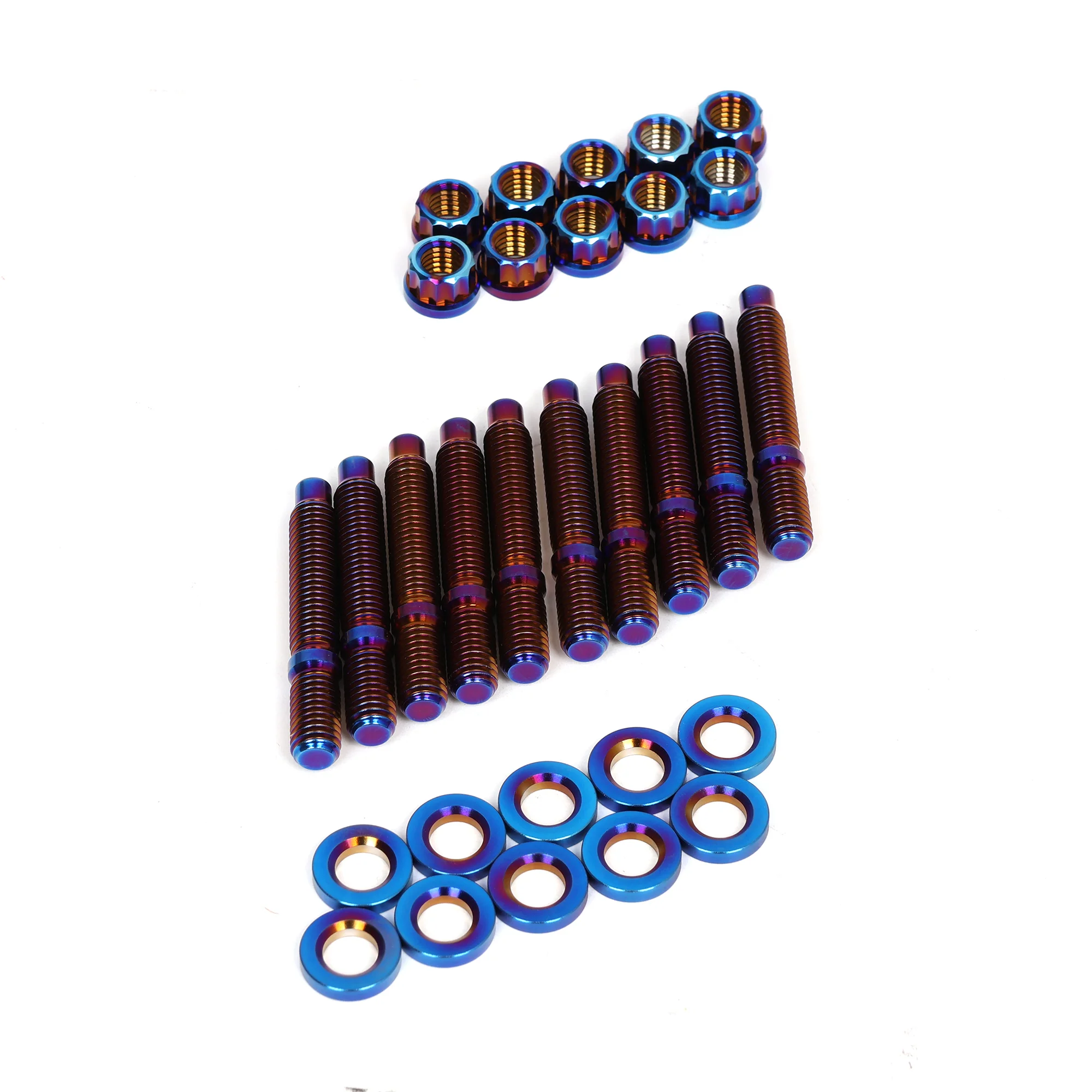
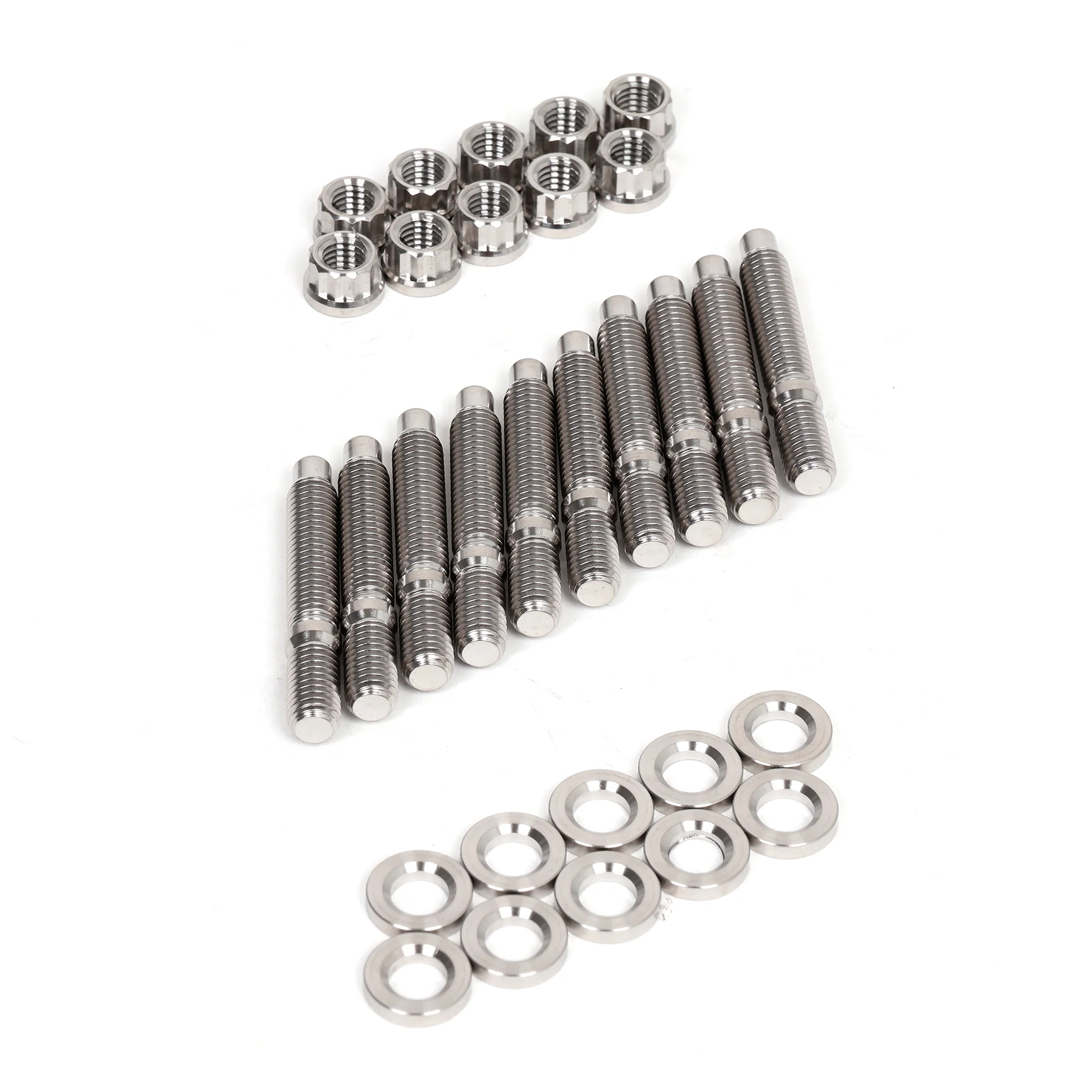
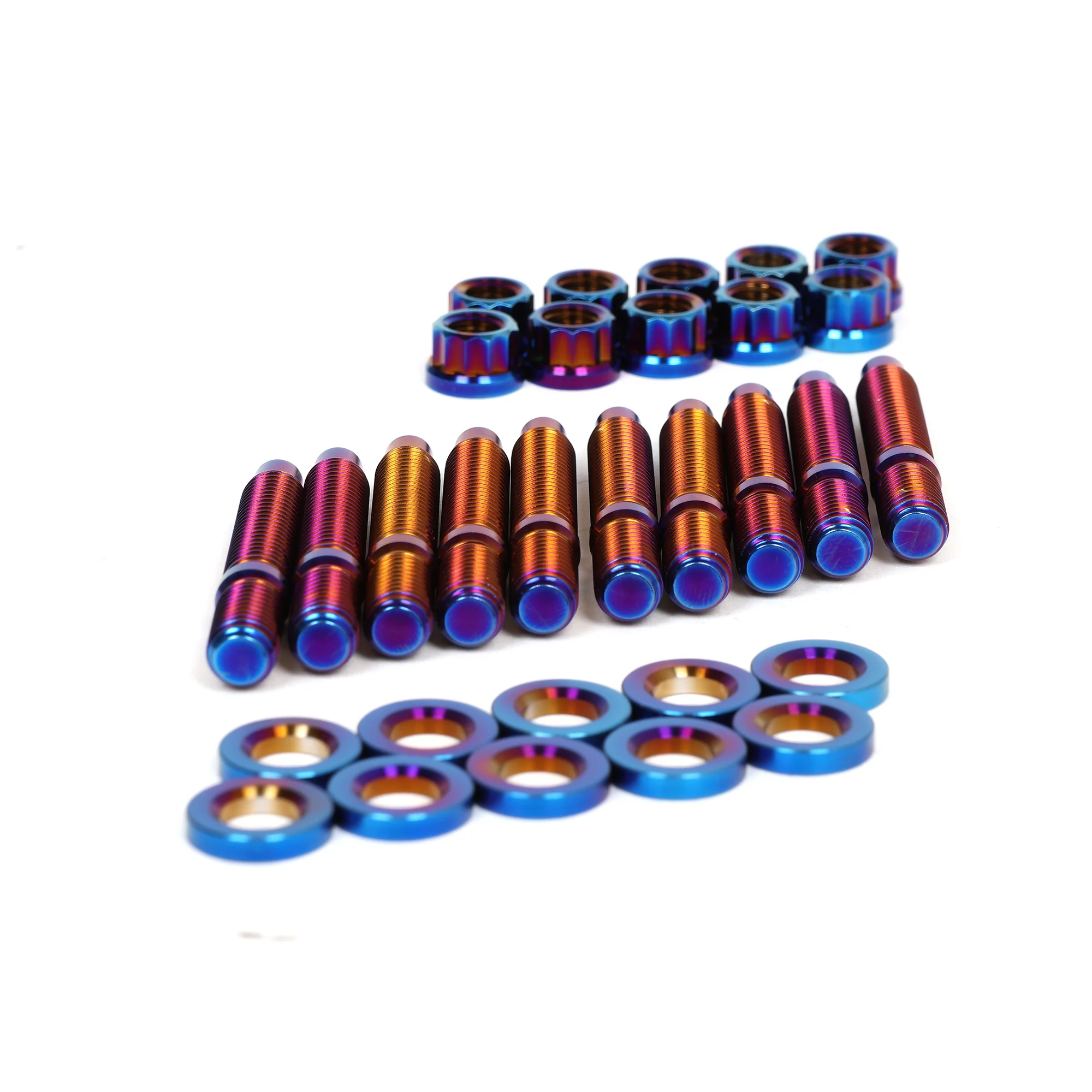
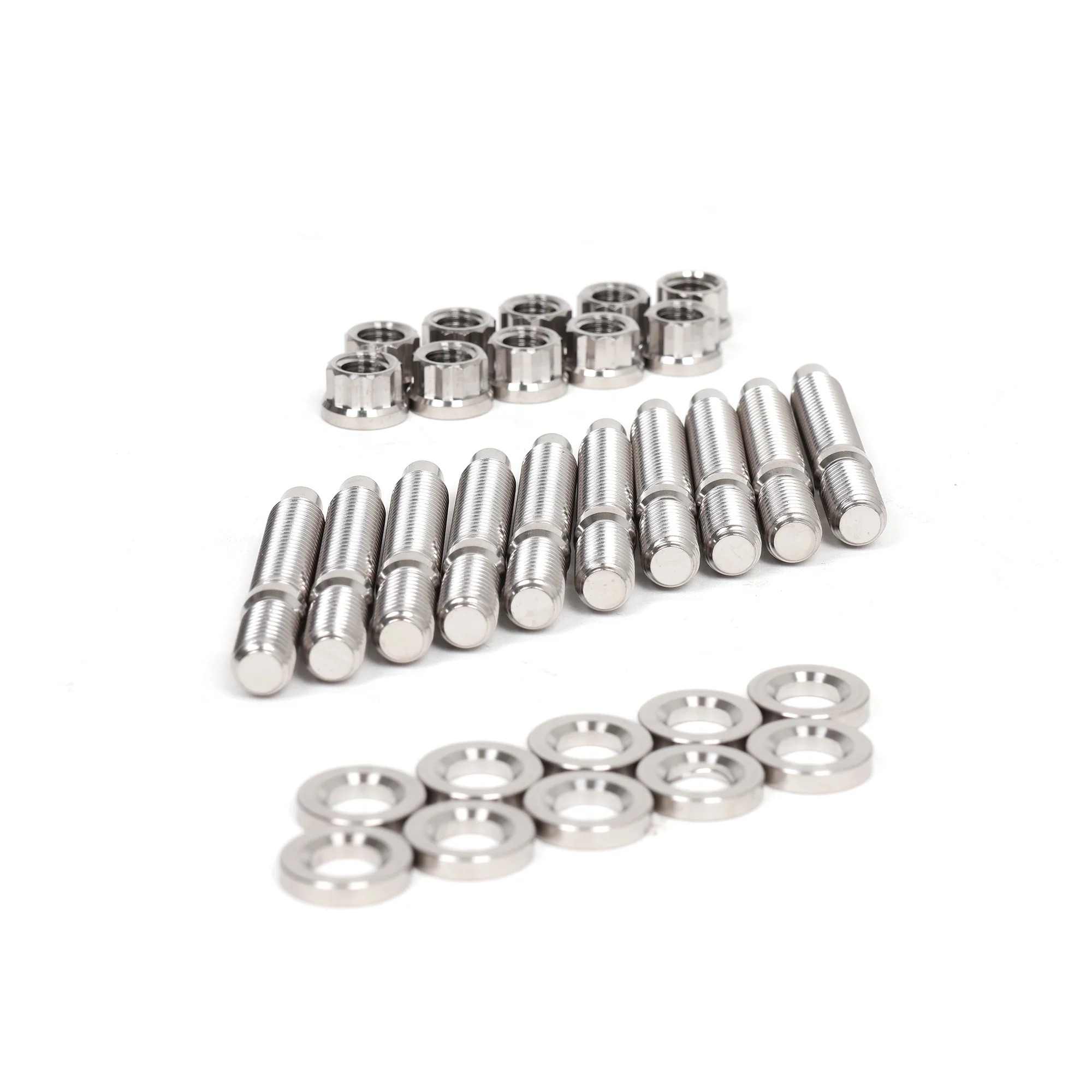
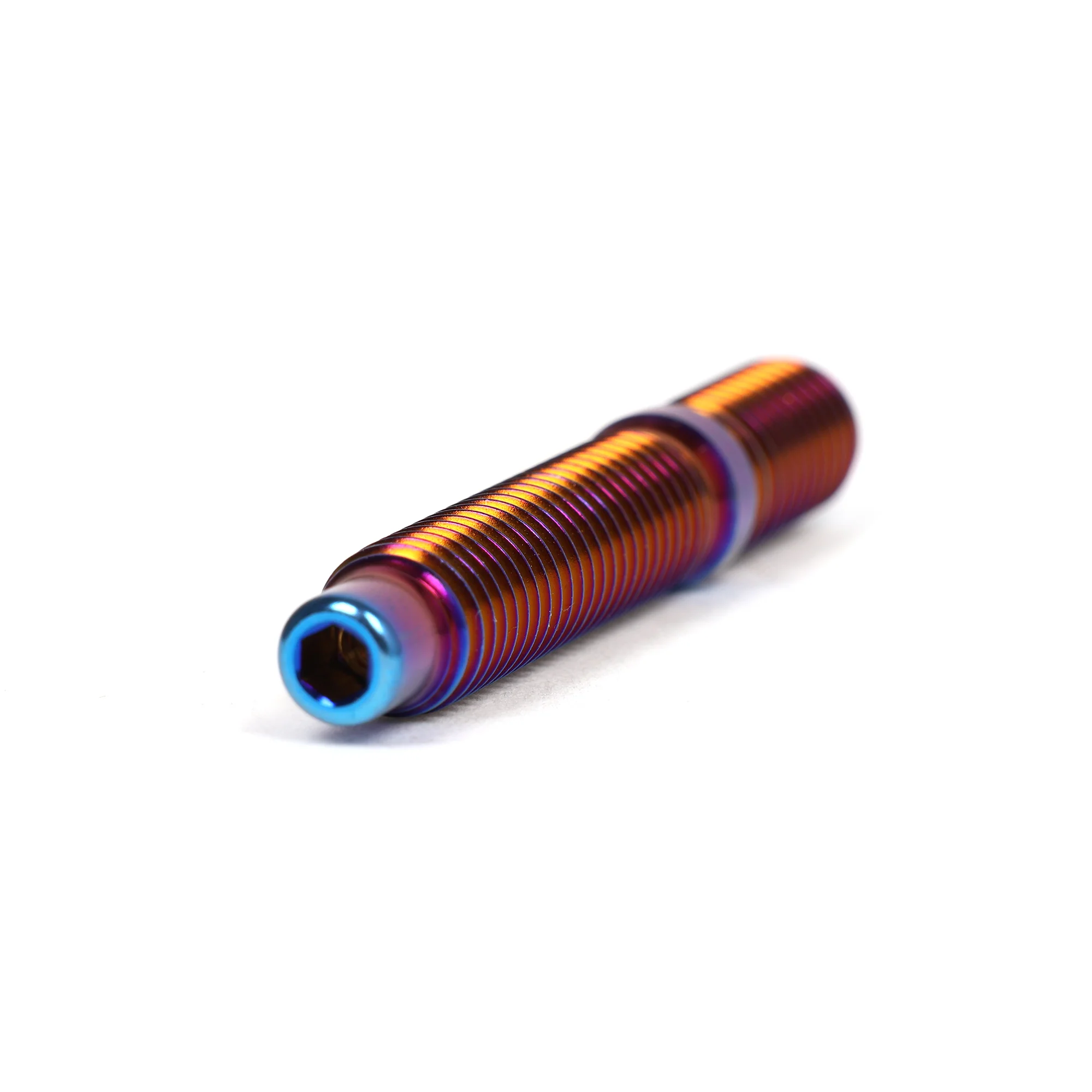
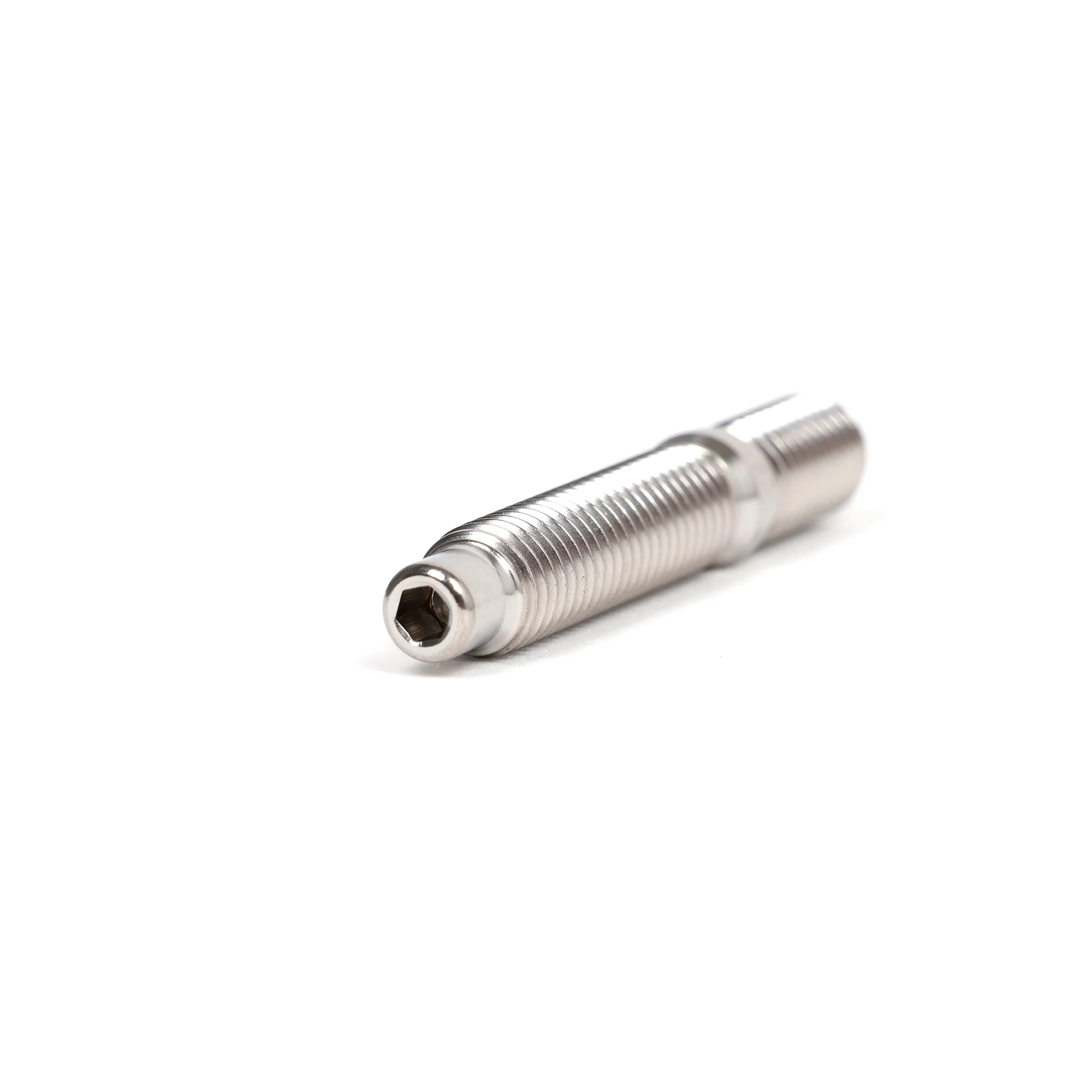
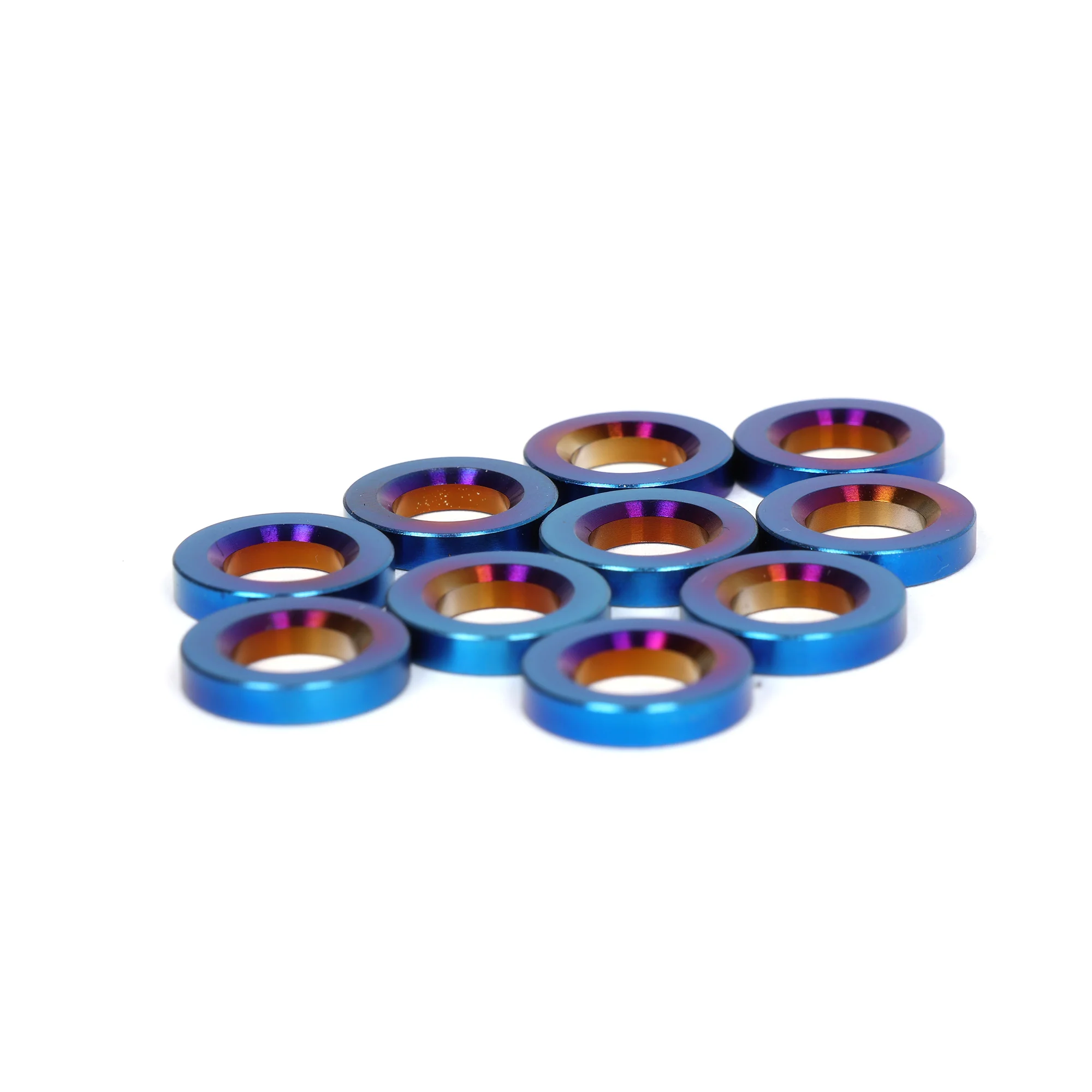
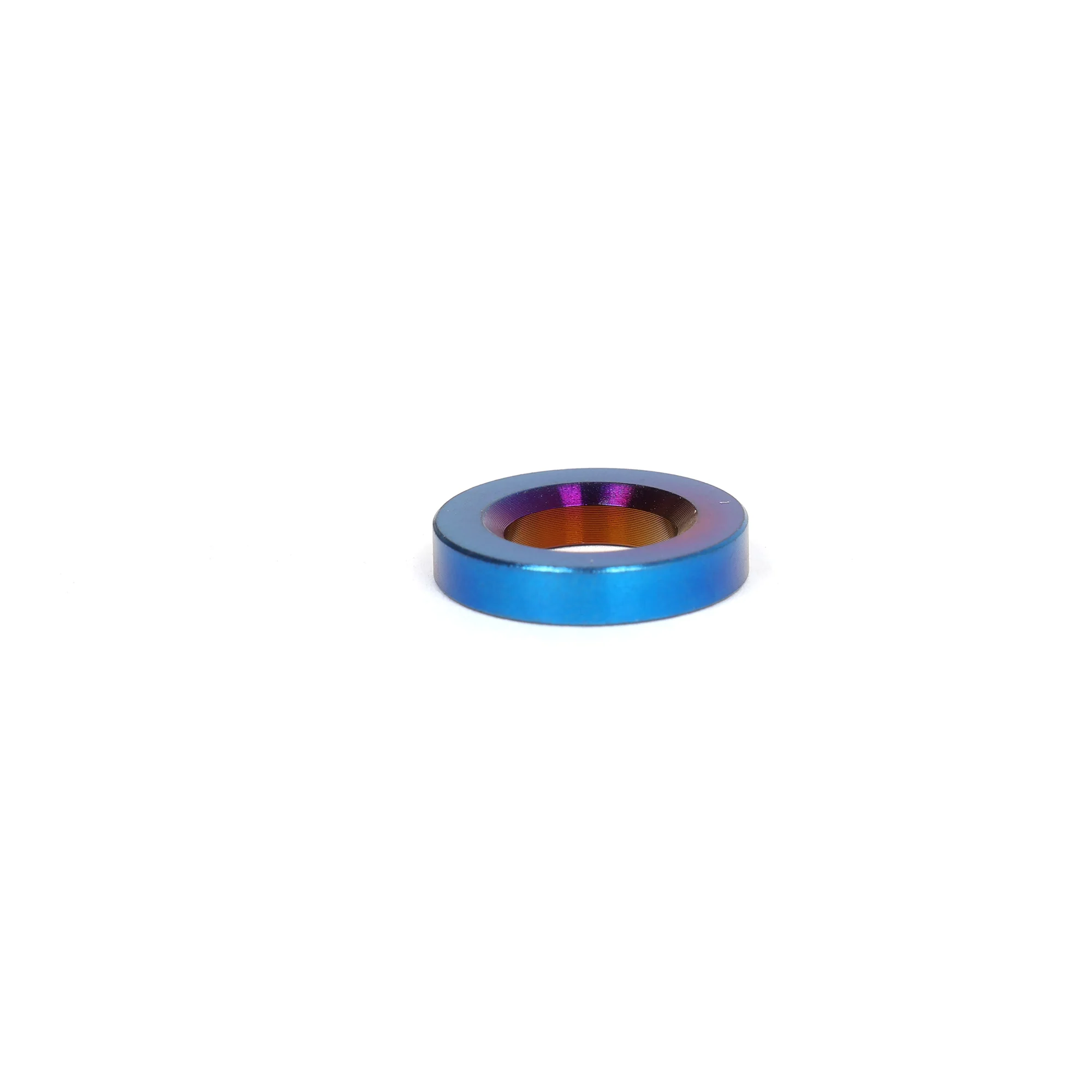
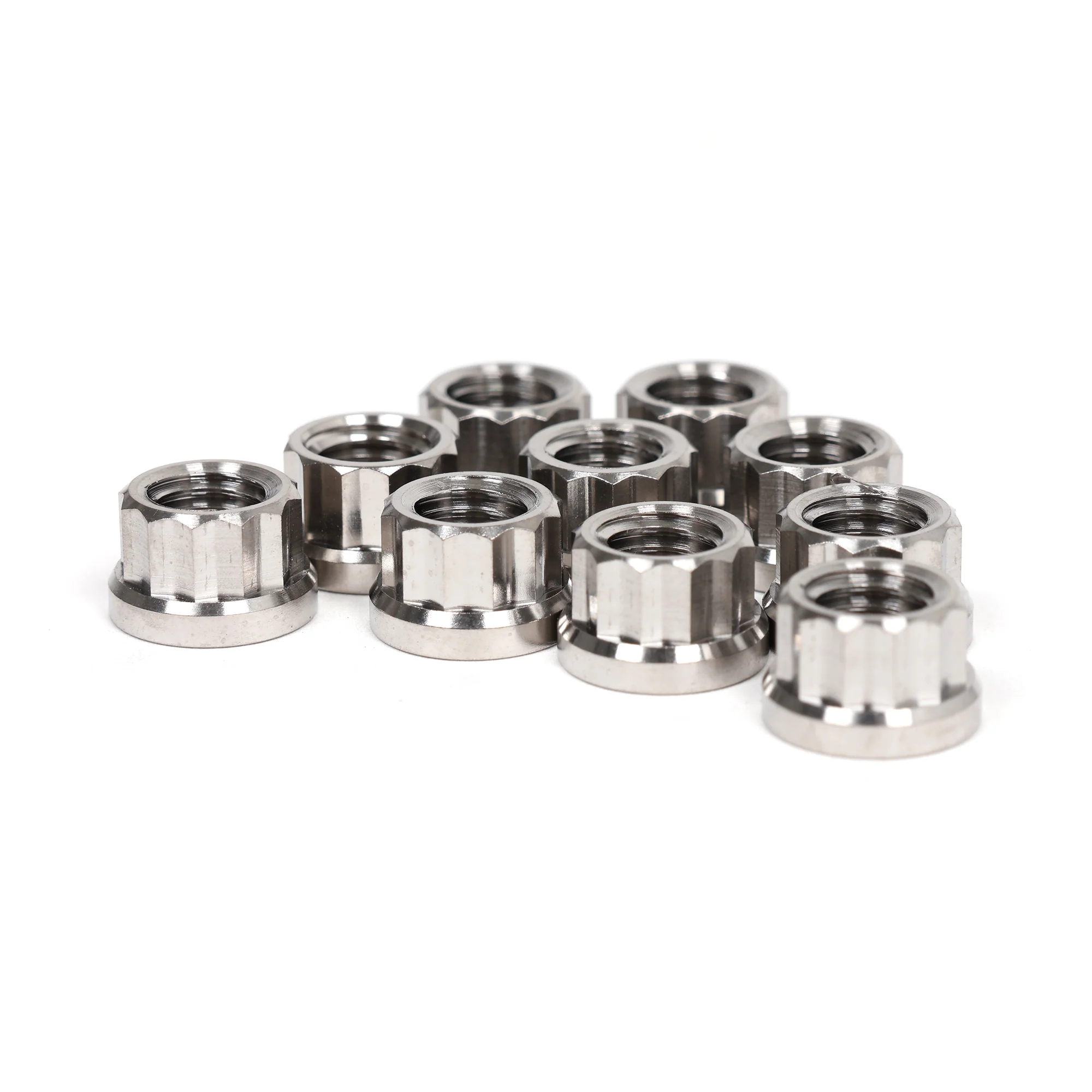
- Includes 10 Studs, Washers, and Nuts
- Compatible with B, D, F, H, and J Series Engines
- Works as Intake or Exhaust Manifold Studs
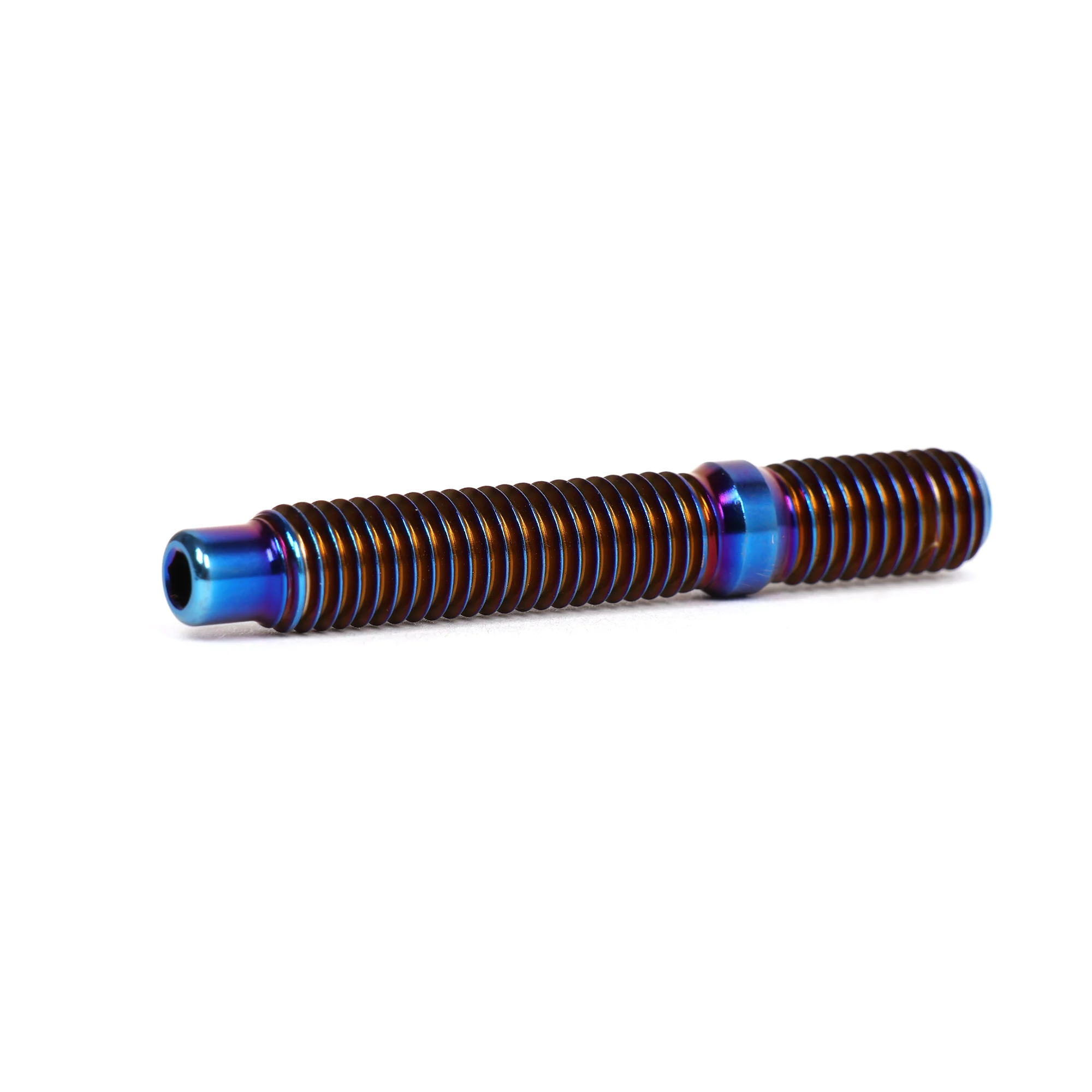
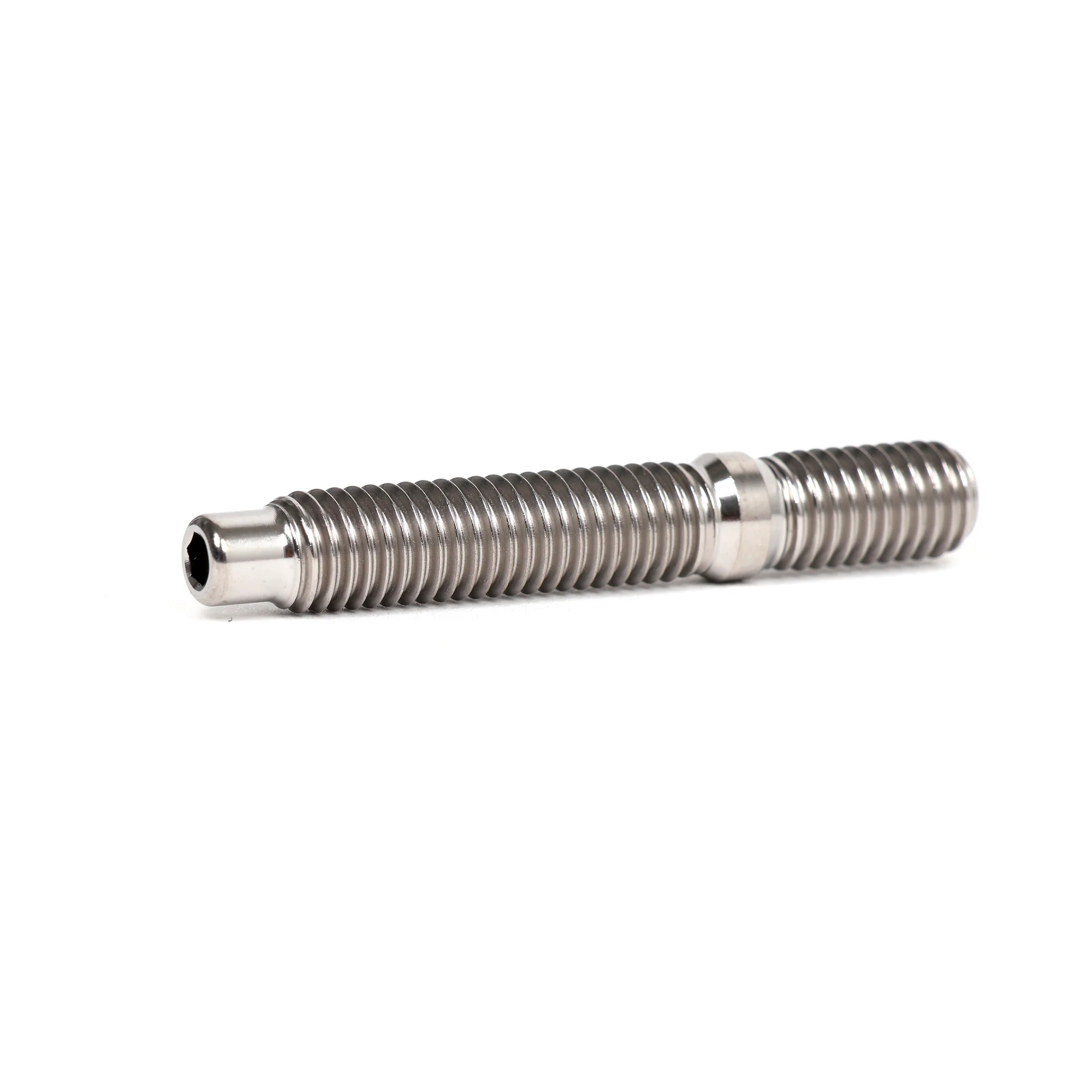
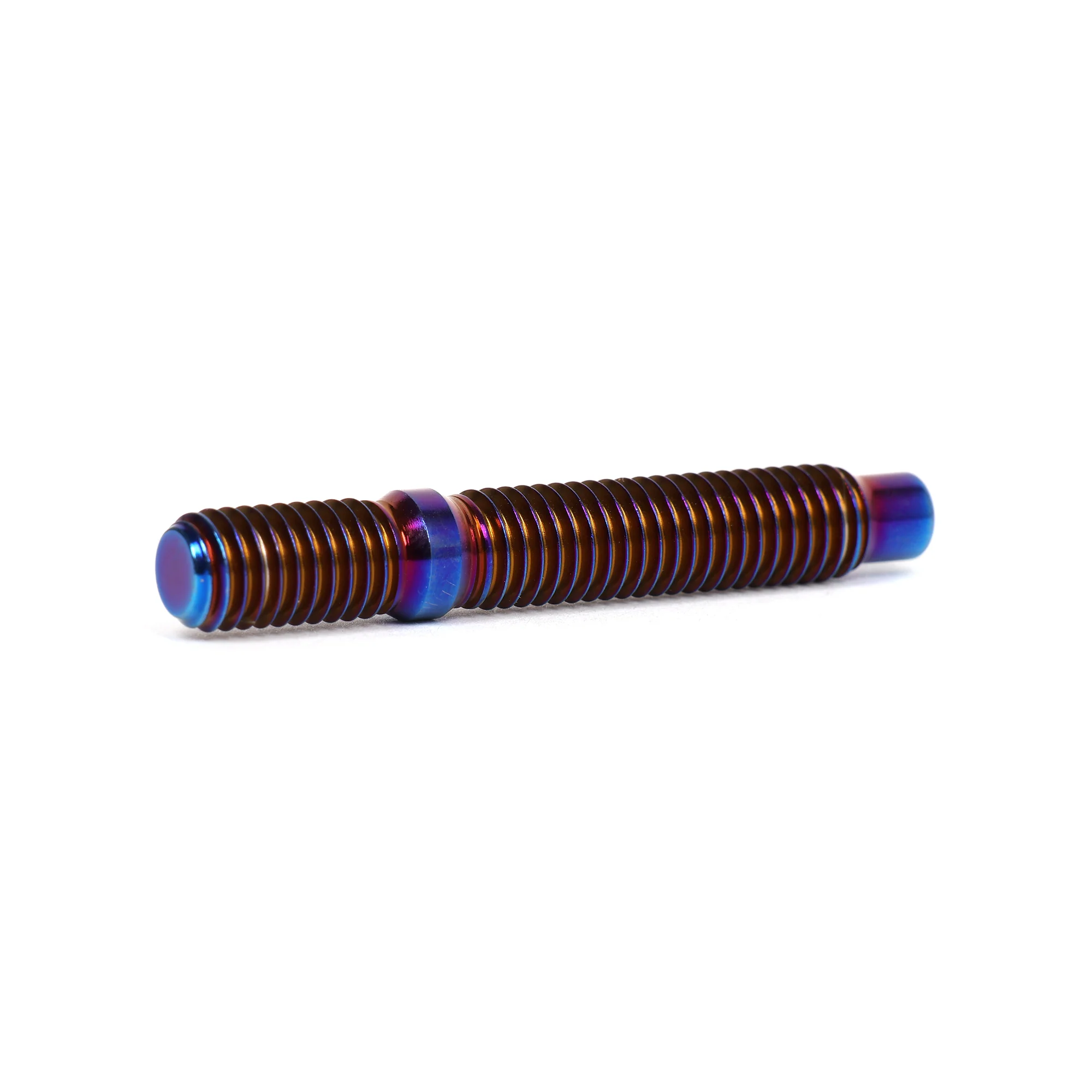
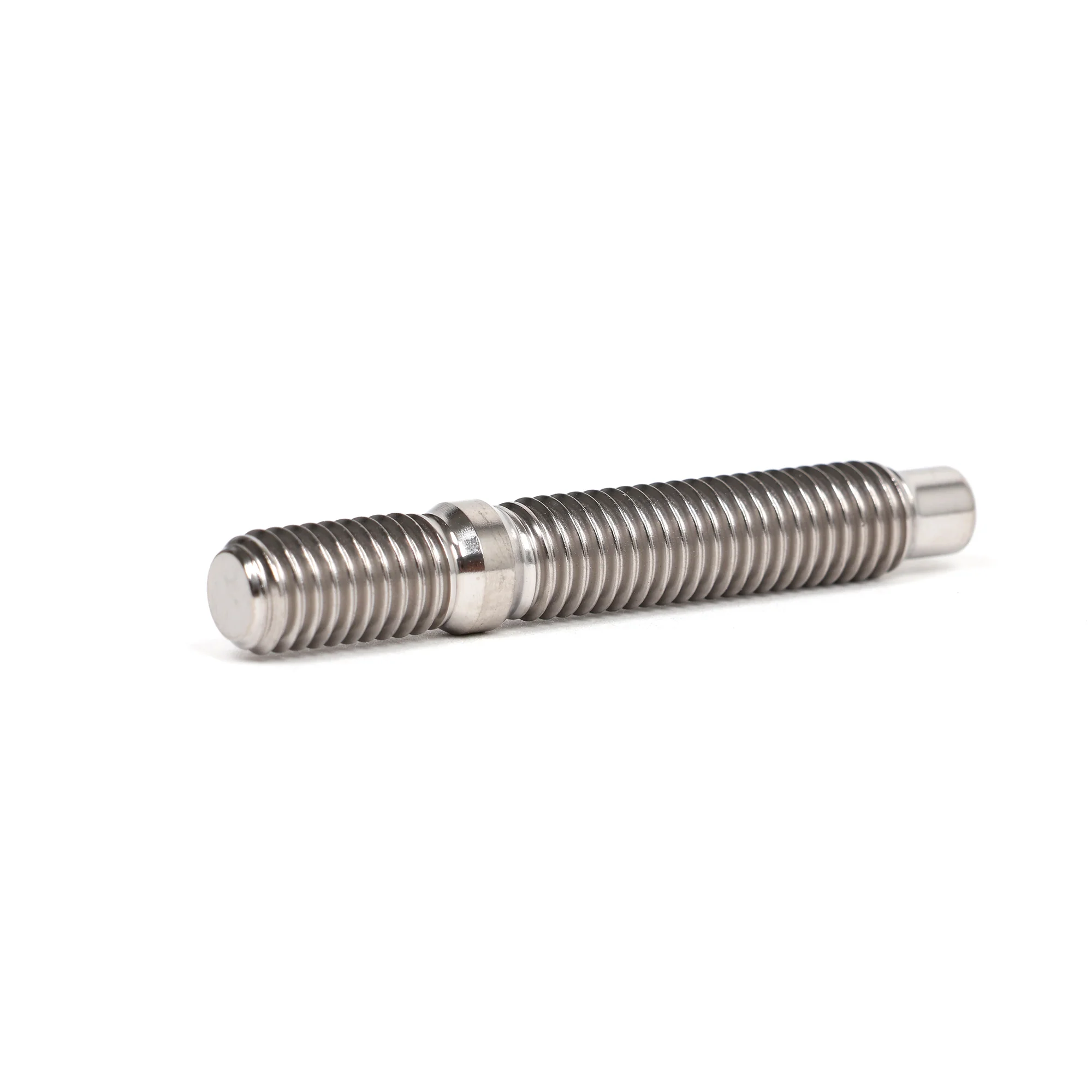
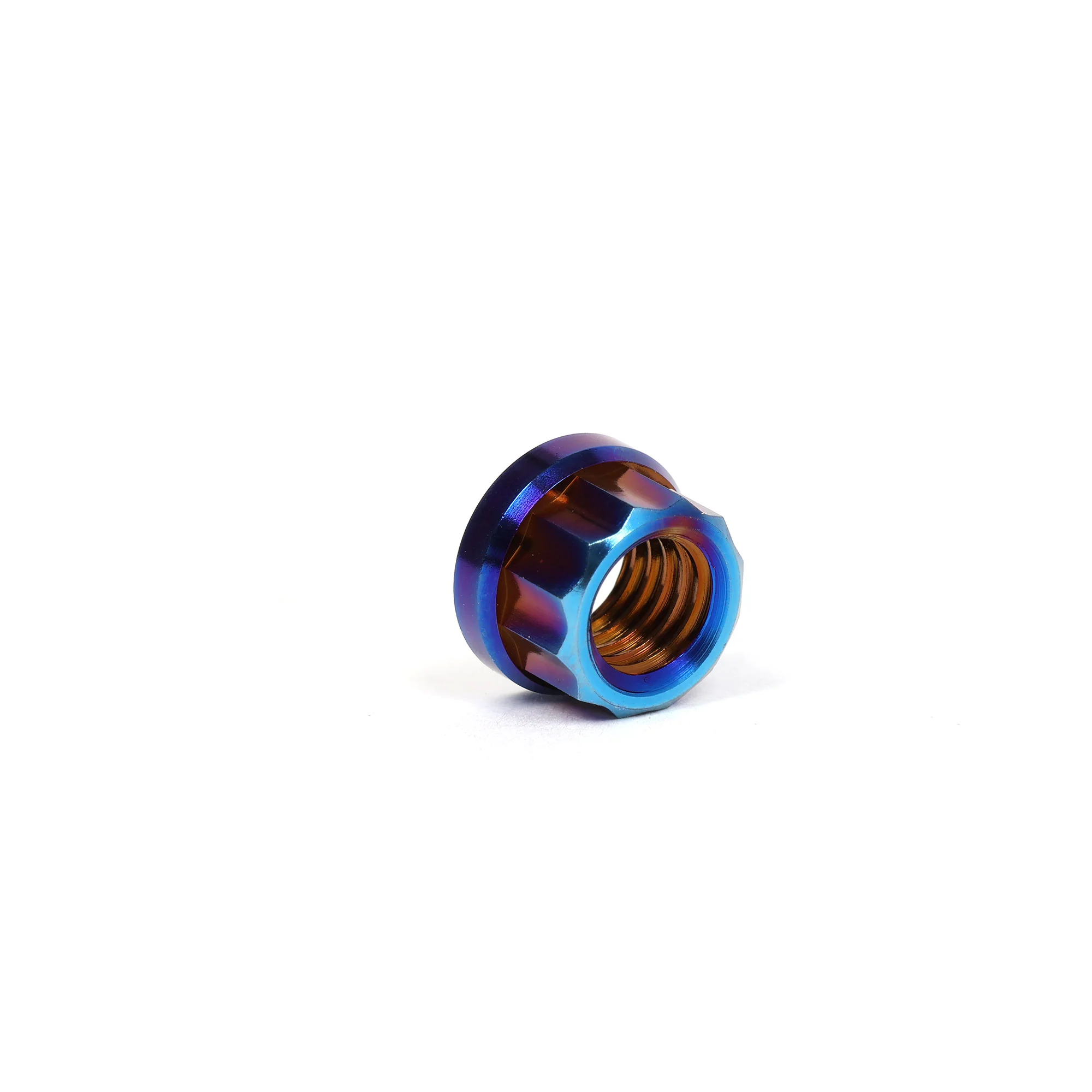
- Available in Two Finishes and Two Lengths
- Description
- Vehicle Fitment
- Included
-
SpeedFactory Titanium Exhaust/Intake Manifold Stud Kit - B/D/F/H/J Series
Tired of snapping exhaust manifold studs or dealing with rusted intake manifold bolts that won't come out? SpeedFactory titanium manifold studs are made from Ti 6Al-4V (Grade 5 titanium), which is way stronger than your factory steel studs and it doesn't rust. I've been running titanium manifold studs on my turbo builds for years because I'm sick of drilling out broken studs. Each stud weighs 12 grams complete (stud, nut, washer) compared to 25-30 grams for steel hardware. That's not a huge weight savings, but if you're building a full titanium fastener setup, it adds up. The real benefit is the studs don't corrode and they're strong enough to clamp your manifold down properly without stretching or breaking. If you've ever spent two hours drilling out a snapped manifold stud, you know why titanium's worth it.
Here's Why Steel Manifold Studs Fail
Your factory exhaust manifold studs and intake manifold bolts are mild steel. They sit in your cylinder head getting heat-cycled over and over. Exhaust studs see 1000+ degree temps from your exhaust manifold. The steel expands and contracts repeatedly, and eventually it fatigues and snaps. Steel also corrodes from heat, moisture, and exhaust gases. I've pulled B series and K series heads where the exhaust studs are so rusted they snap off flush with the head when you try to remove them. Then you're drilling out the broken stud and hoping you don't tap into the coolant jacket. Titanium doesn't corrode like steel and it handles heat cycling way better. Ti 6Al-4V has a higher fatigue strength than mild steel, so the studs don't stretch or snap under clamp load.
Ti 6Al-4V Grade 5 Titanium - Not Cheap Stuff
SpeedFactory uses Ti 6Al-4V, which is Grade 5 titanium. That's 6% aluminum, 4% vanadium, and 90% titanium. It's the same grade of titanium used in aerospace fasteners and high-end racing applications. Grade 5 titanium's got a tensile strength around 130,000 PSI compared to 60,000-80,000 PSI for mild steel bolts. That means the titanium studs are way stronger for the same size. They're also 45% lighter than steel. The studs won't corrode from heat, salt, or moisture. I've run titanium exhaust studs on turbo manifolds for 5+ years and they still look new when I pull them off.
3mm Hex Key Tip Makes Installation Easy
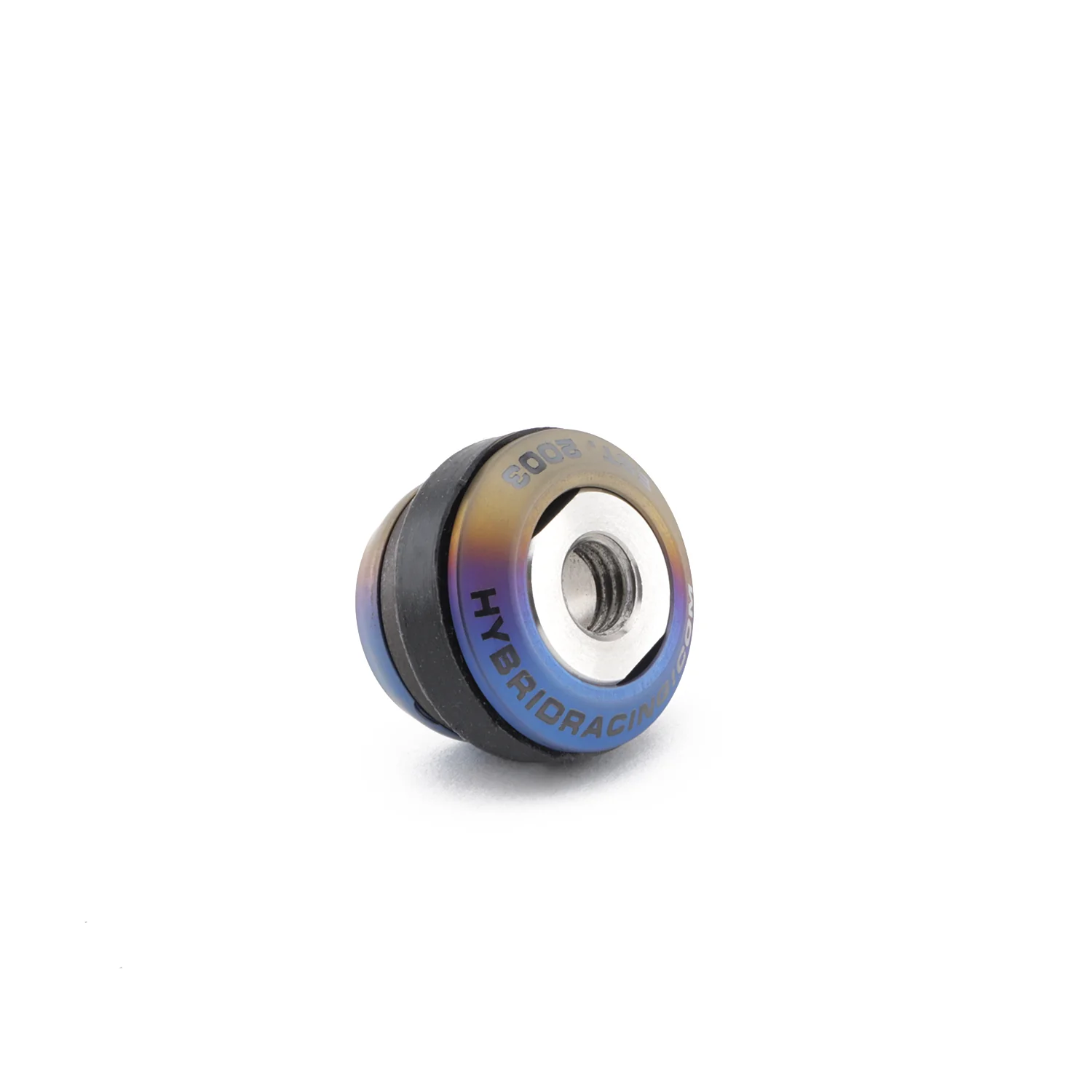
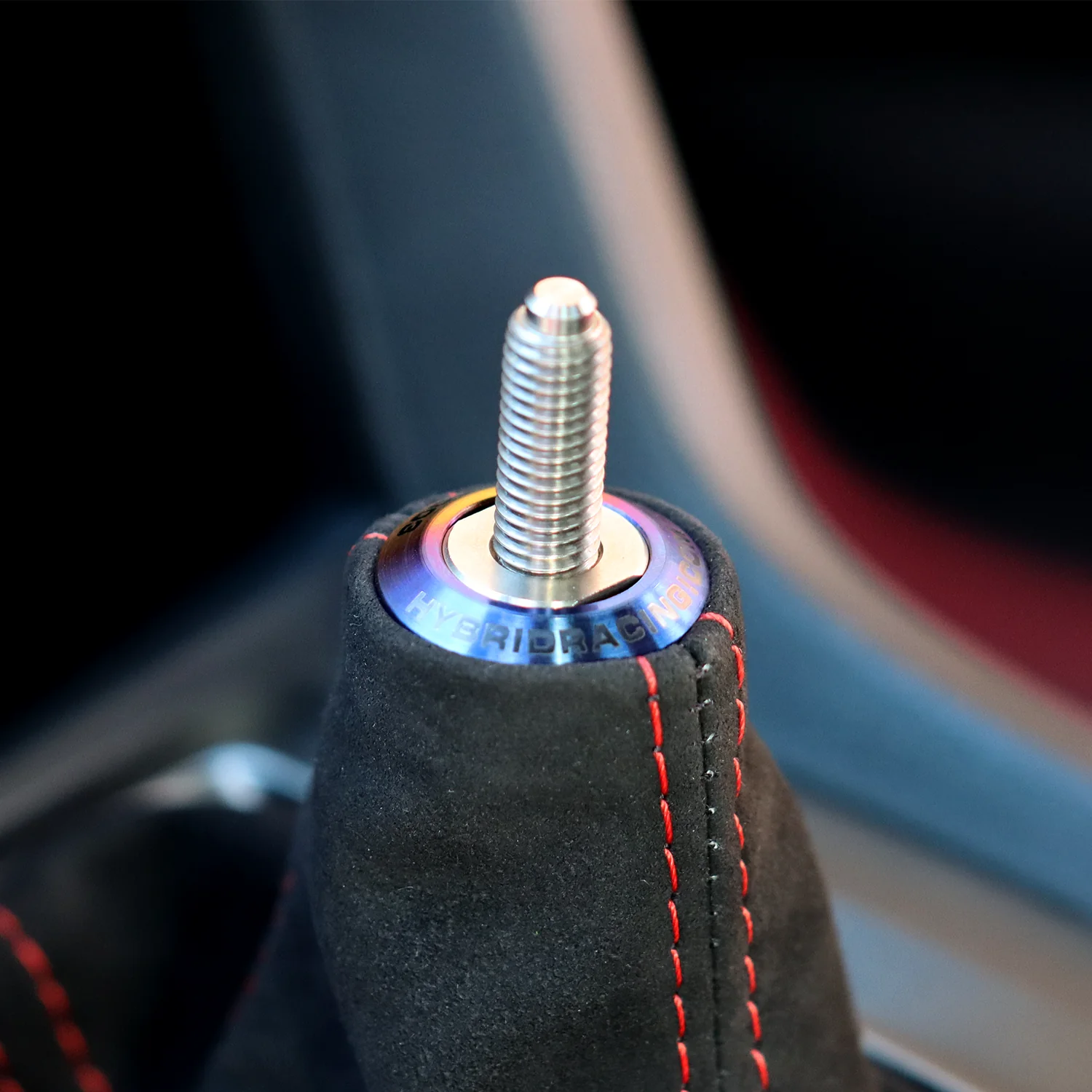
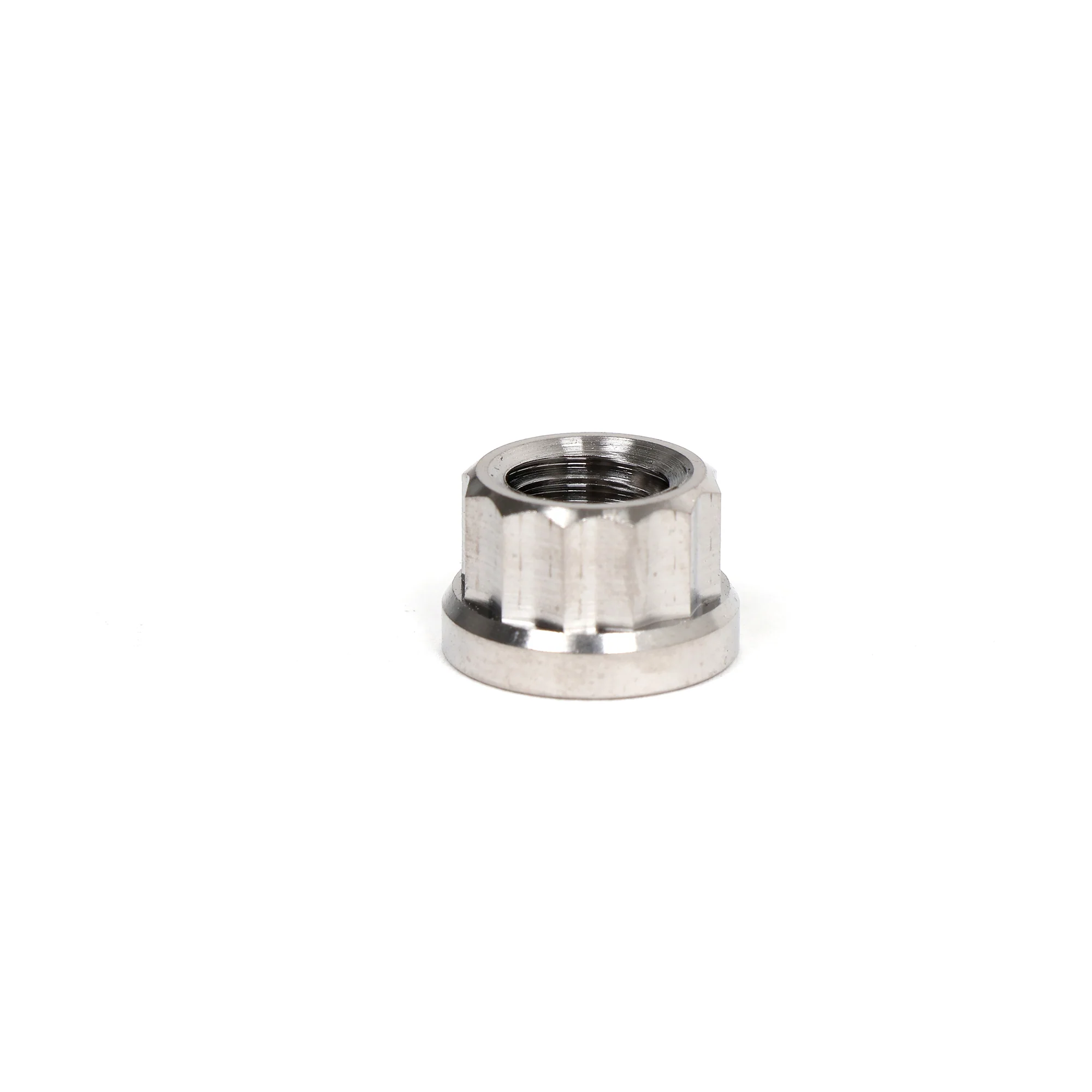
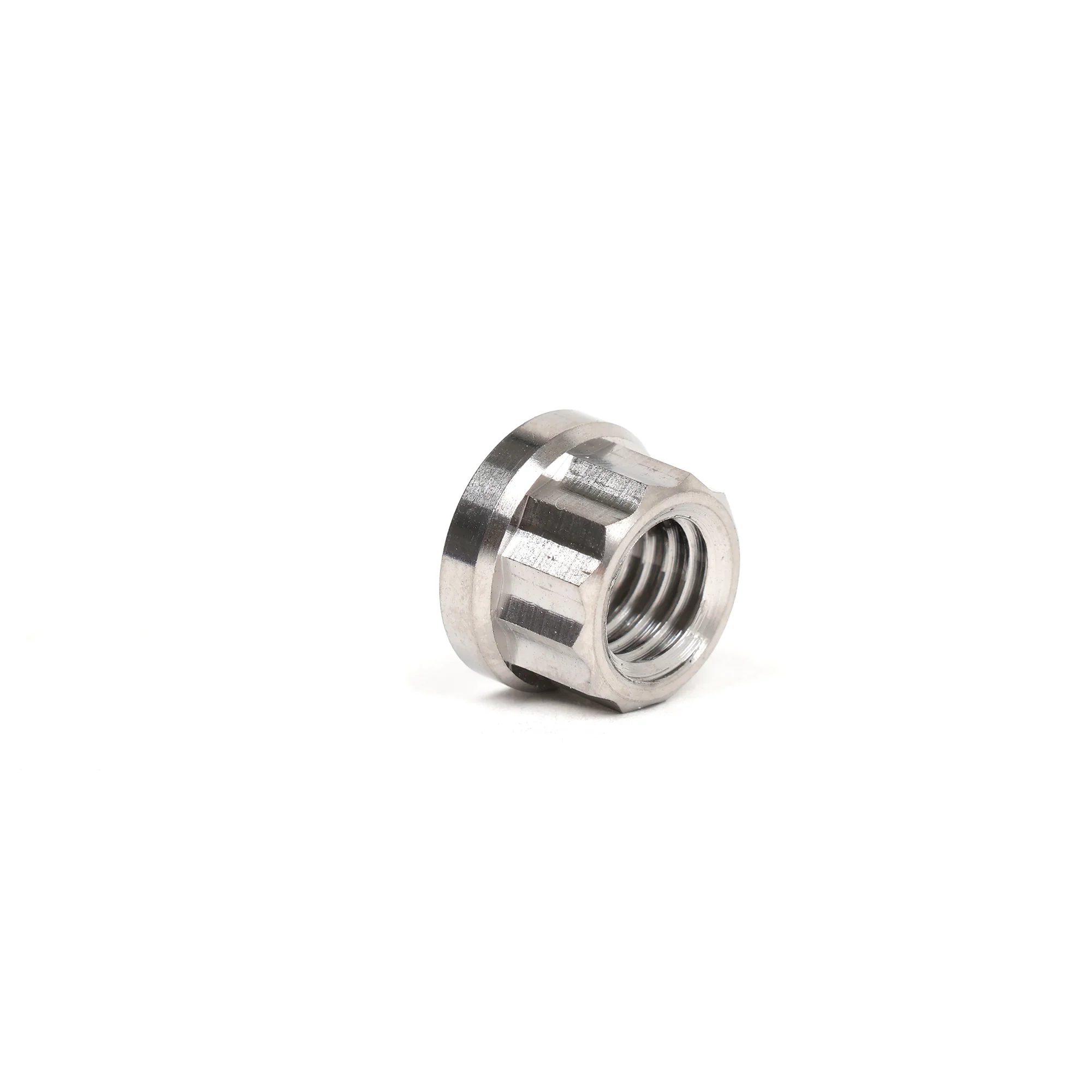
The studs have a 3mm hex socket machined into the top. You thread the stud into your cylinder head using a 3mm Allen key. Once the stud's in, you drop your manifold on, install the washer and nut, and torque it down. Studs are way better than bolts for clamping manifolds because the stud's already torqued into the head. You're not trying to thread a bolt in while holding the manifold in place and compressing a gasket. With studs, the manifold just drops on and you torque the nuts. The 12-point titanium nuts are way easier to work with in tight spaces than 6-point nuts because you've got more positions to grab them with a wrench.
45mm vs. 55mm vs. 65mm Length - Here's Which One You Need
SpeedFactory makes three lengths: 45mm, 55mm, and 65mm. Here's what you need: - 45mm: All exhaust manifolds and headers, stock intake manifolds - 55mm: Aftermarket intake manifolds (Skunk2, Intake, RBC, etc.) or intake manifolds with thermal gaskets - 65mm: Thick thermal gaskets or custom setups Most people need 45mm for exhaust and 45mm for stock intake manifolds. If you're running an aftermarket intake manifold like a Skunk2 Pro or an RBC manifold, get 55mm because aftermarket manifolds are usually thicker than stock. If you're running a thick thermal gasket between your intake manifold and head (like a Thermal R&D gasket), you need 55mm to account for the extra thickness. The 65mm length is for really thick thermal setups or custom applications.
What You Get
- SpeedFactory titanium manifold stud kit (10 studs)
- Material: Ti 6Al-4V (Grade 5 titanium)
- Thread: M8 x 1.25mm
- Lengths available: 45mm, 55mm, or 65mm
- 10 titanium studs with 3mm hex key installation tip
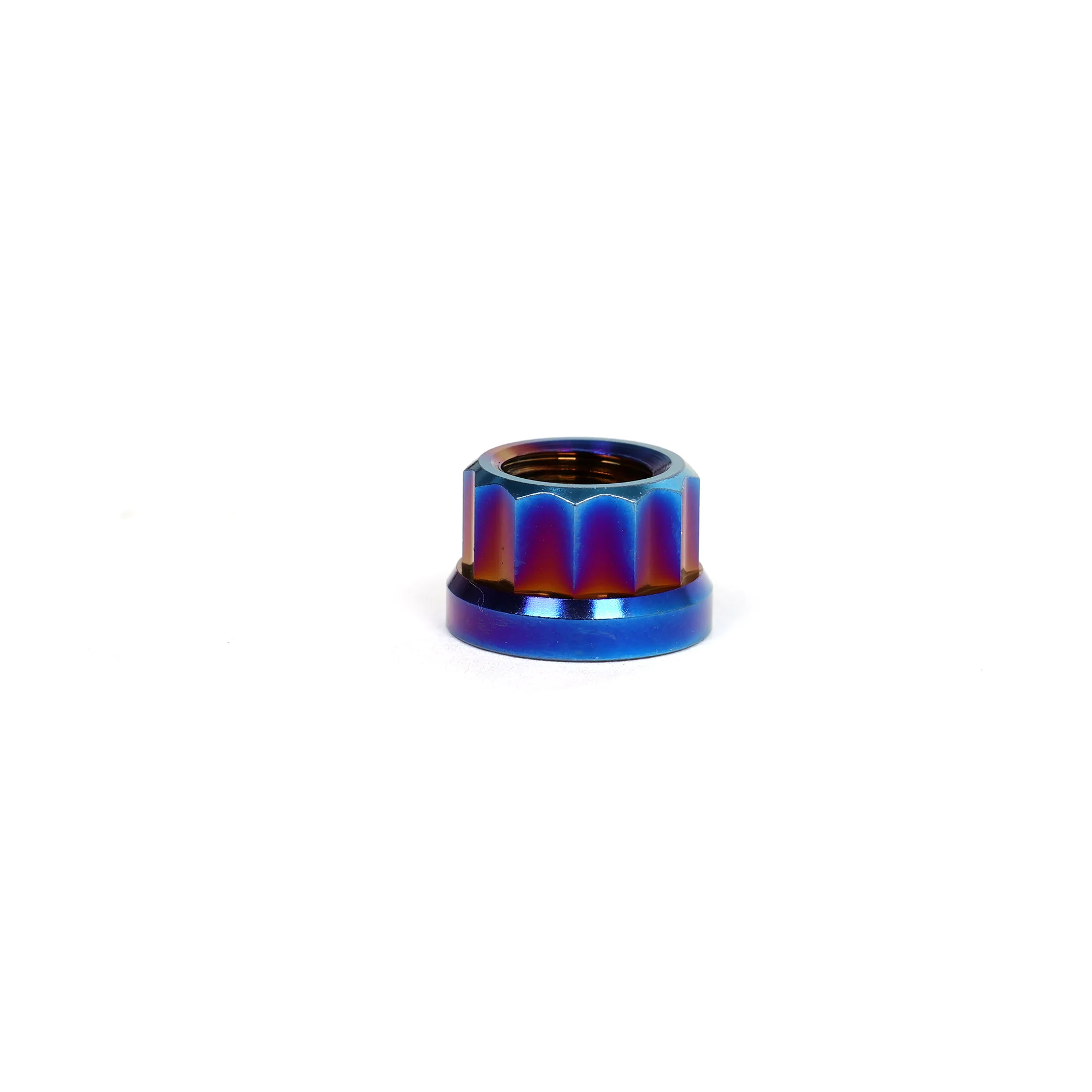
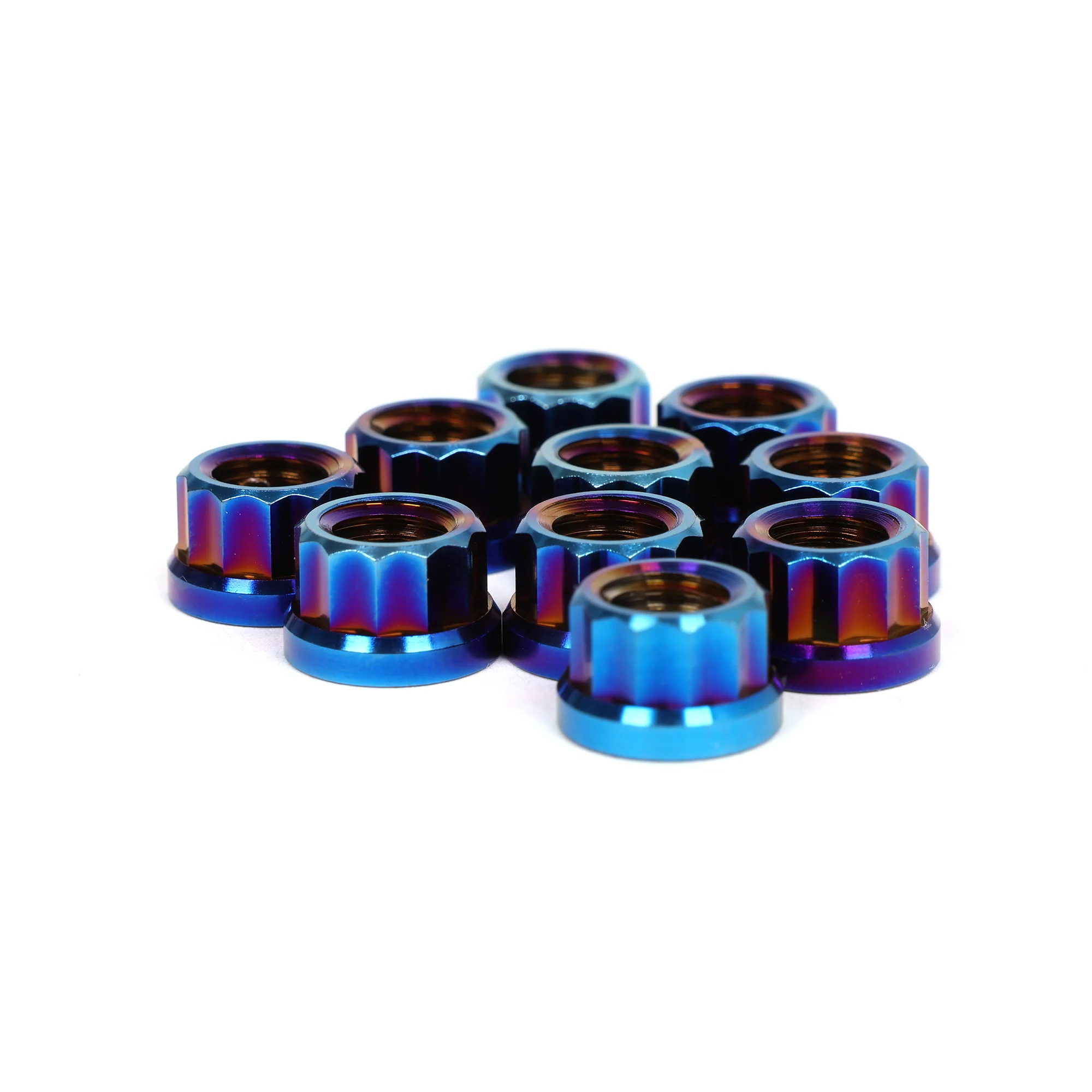
- 10 titanium 12-point M8 nuts
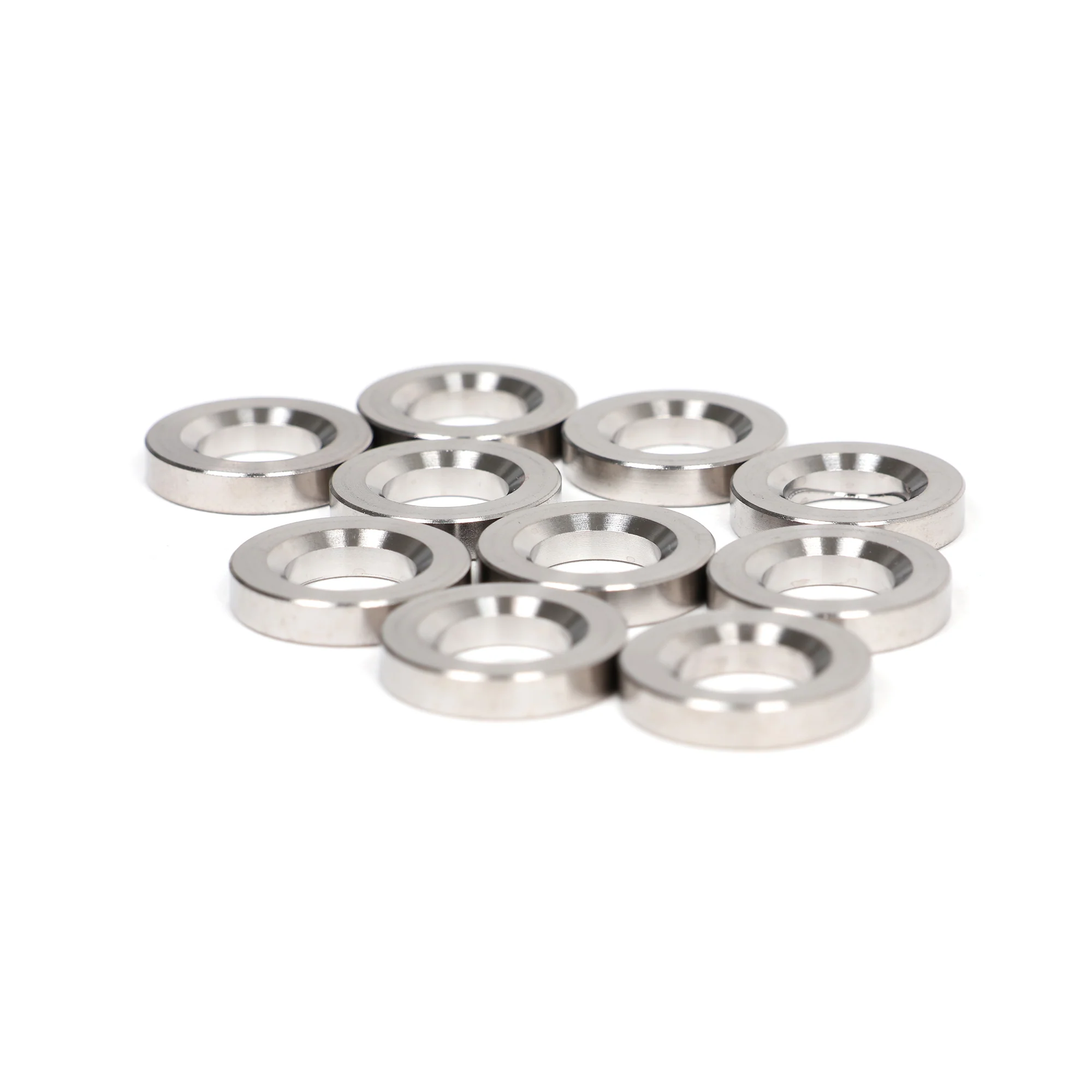
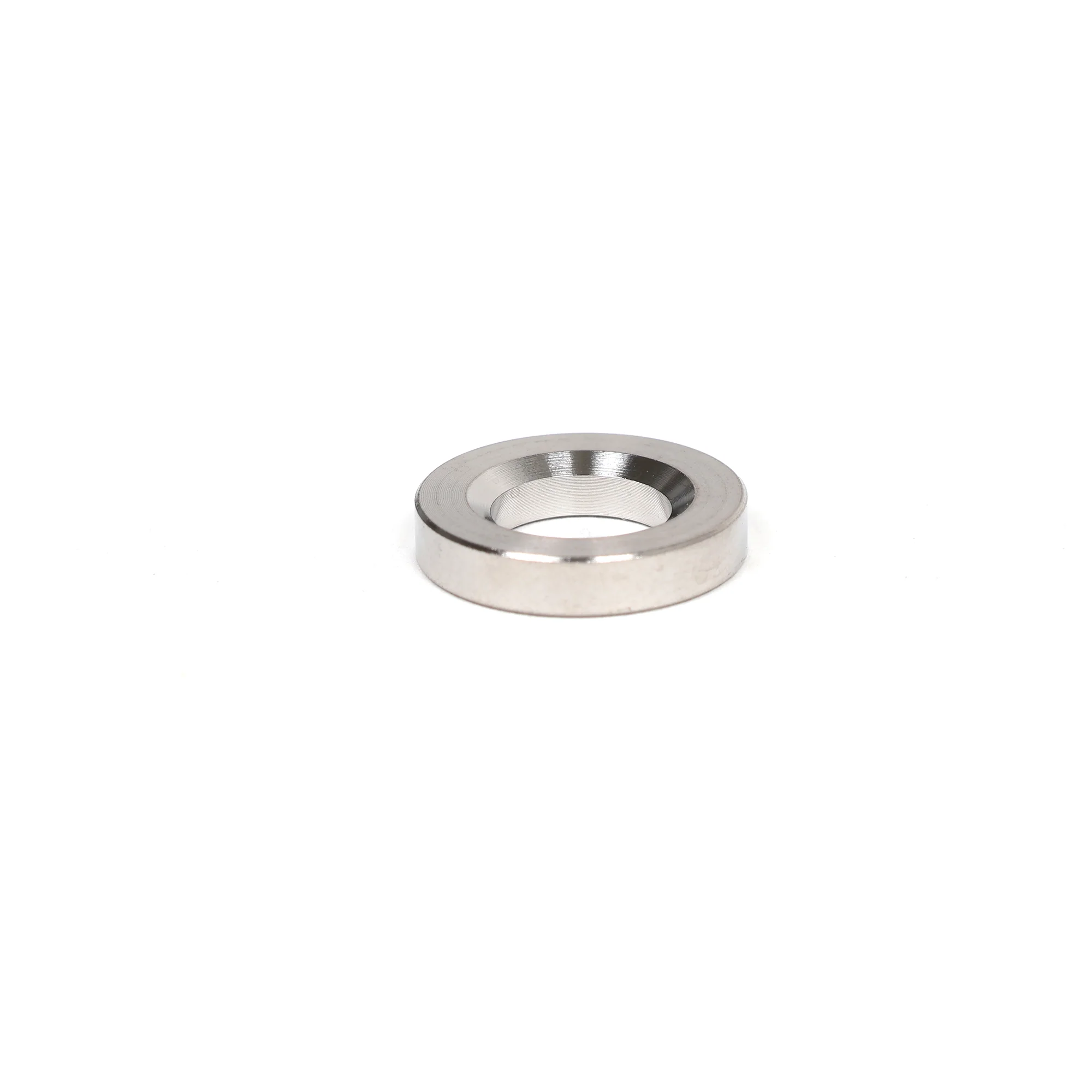
- 10 titanium M8 washers
- Weight: 12 grams per stud/nut/washer assembly (45% lighter than steel)
- Corrosion-resistant (won't rust or corrode)
- High fatigue strength (won't stretch or snap like steel)
Works With
- Honda B series engines (B16, B18, B20)
- Honda D series engines (D15, D16)
- Honda F series engines (F20, F22, F23)
- Honda H series engines (H22, H23)
- Honda J series engines (J30, J32, J35, J37)
- Exhaust manifolds and headers
- Stock and aftermarket intake manifolds
Which Length to Order
- 45mm: Exhaust manifolds, headers, stock intake manifolds
- 55mm: Aftermarket intake manifolds (Skunk2, Intake, RBC), thermal gaskets
- 65mm: Extra-thick thermal gaskets, custom setups
Note: The kit includes 10 studs, 10 nuts, and 10 washers. Most B/D/F/H series engines use 8 intake manifold bolts/studs and 8 exhaust manifold studs per side. The kit's got 10 pieces so you've got spares. J series V6 engines use different stud counts depending on the application. When you're installing the studs, thread them into your cylinder head by hand first to make sure the threads are clean. Don't crank them in with an impact gun or you'll gall the titanium threads. Use a 3mm Allen key and thread them in until they're snug. Don't overtorque the studs into the head. The studs should be snug but not crazy tight. You're torquing the nuts on top, not the studs themselves. When you're torquing the nuts, use the same torque spec you'd use for steel hardware. Titanium's stronger than steel, but you don't need to overtorque it. Follow your factory torque specs. If you're installing these on a turbo manifold, use anti-seize on the threads. Titanium can gall (seize up) against aluminum or steel if you don't use anti-seize. Use high-temp copper anti-seize on the stud threads and nut threads.
-
1997-1999 Acura CL2001-2003 Acura CL1990-2001 Acura Integra199-2003 Acura TL2004-2014 Acura TL1990-2002 Honda Accord2003-2017 Honda Accord (V6)1988-2000 Honda Civic CX/DX/EX/LX/VX/Si2001-2005 Honda Civic DX/EX/LX1988-1991 Honda CRX1997-2001 Honda CR-V1993-1997 Honda Del Sol S/Si/VTEC1995-1998 Honda Odyssey1992-2001 Honda Prelude
-
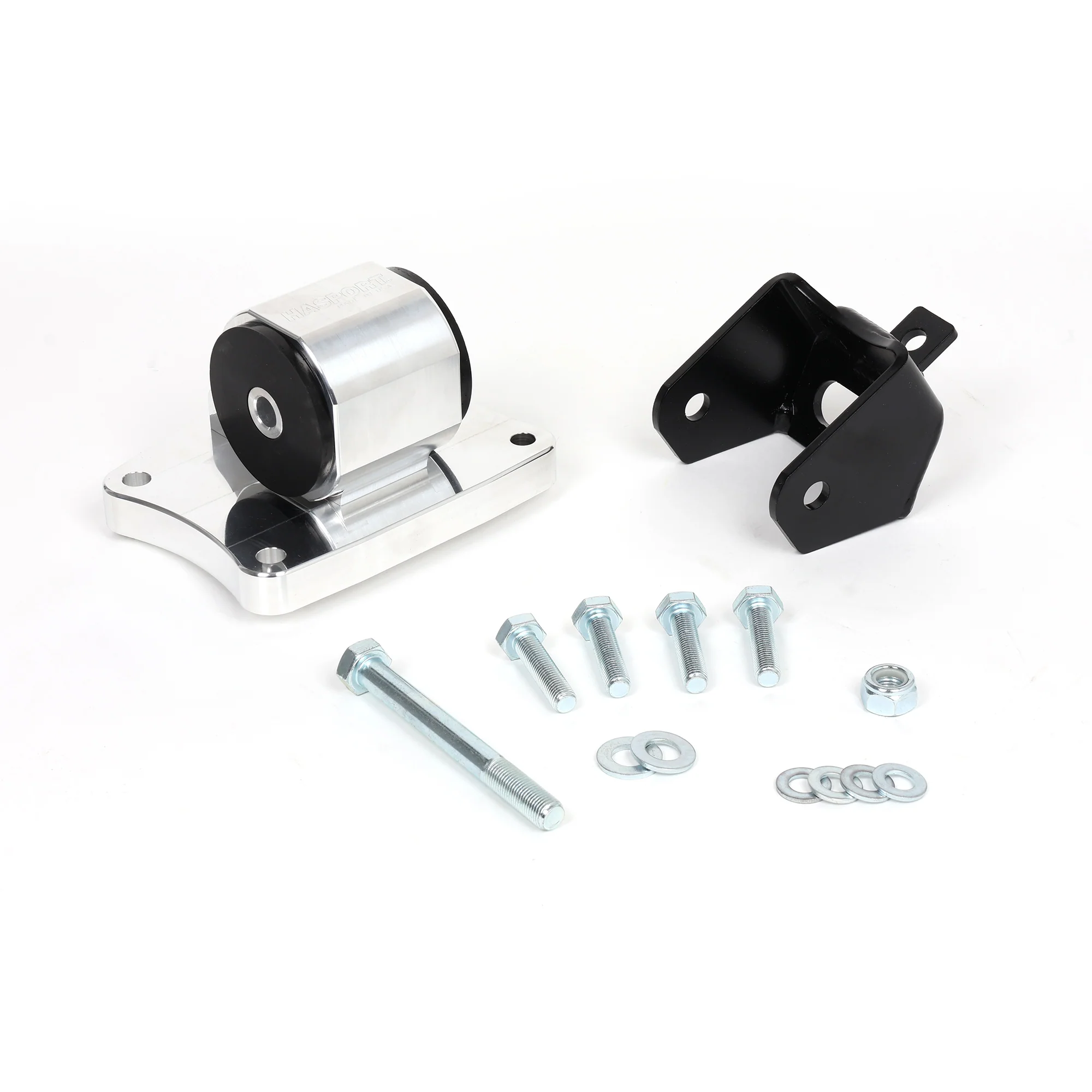
(10) Titanium Studs(10) Titanium Washers(10) Titanium Nuts
Description
- Includes 10 Studs, Washers, and Nuts
- Compatible with B, D, F, H, and J Series Engines
- Works as Intake or Exhaust Manifold Studs
- Available in Two Finishes and Two Lengths
- Description
- Vehicle Fitment
- Included
-
SpeedFactory Titanium Exhaust/Intake Manifold Stud Kit - B/D/F/H/J Series
Tired of snapping exhaust manifold studs or dealing with rusted intake manifold bolts that won't come out? SpeedFactory titanium manifold studs are made from Ti 6Al-4V (Grade 5 titanium), which is way stronger than your factory steel studs and it doesn't rust. I've been running titanium manifold studs on my turbo builds for years because I'm sick of drilling out broken studs. Each stud weighs 12 grams complete (stud, nut, washer) compared to 25-30 grams for steel hardware. That's not a huge weight savings, but if you're building a full titanium fastener setup, it adds up. The real benefit is the studs don't corrode and they're strong enough to clamp your manifold down properly without stretching or breaking. If you've ever spent two hours drilling out a snapped manifold stud, you know why titanium's worth it.
Here's Why Steel Manifold Studs Fail
Your factory exhaust manifold studs and intake manifold bolts are mild steel. They sit in your cylinder head getting heat-cycled over and over. Exhaust studs see 1000+ degree temps from your exhaust manifold. The steel expands and contracts repeatedly, and eventually it fatigues and snaps. Steel also corrodes from heat, moisture, and exhaust gases. I've pulled B series and K series heads where the exhaust studs are so rusted they snap off flush with the head when you try to remove them. Then you're drilling out the broken stud and hoping you don't tap into the coolant jacket. Titanium doesn't corrode like steel and it handles heat cycling way better. Ti 6Al-4V has a higher fatigue strength than mild steel, so the studs don't stretch or snap under clamp load.
Ti 6Al-4V Grade 5 Titanium - Not Cheap Stuff
SpeedFactory uses Ti 6Al-4V, which is Grade 5 titanium. That's 6% aluminum, 4% vanadium, and 90% titanium. It's the same grade of titanium used in aerospace fasteners and high-end racing applications. Grade 5 titanium's got a tensile strength around 130,000 PSI compared to 60,000-80,000 PSI for mild steel bolts. That means the titanium studs are way stronger for the same size. They're also 45% lighter than steel. The studs won't corrode from heat, salt, or moisture. I've run titanium exhaust studs on turbo manifolds for 5+ years and they still look new when I pull them off.
3mm Hex Key Tip Makes Installation Easy
The studs have a 3mm hex socket machined into the top. You thread the stud into your cylinder head using a 3mm Allen key. Once the stud's in, you drop your manifold on, install the washer and nut, and torque it down. Studs are way better than bolts for clamping manifolds because the stud's already torqued into the head. You're not trying to thread a bolt in while holding the manifold in place and compressing a gasket. With studs, the manifold just drops on and you torque the nuts. The 12-point titanium nuts are way easier to work with in tight spaces than 6-point nuts because you've got more positions to grab them with a wrench.
45mm vs. 55mm vs. 65mm Length - Here's Which One You Need
SpeedFactory makes three lengths: 45mm, 55mm, and 65mm. Here's what you need: - 45mm: All exhaust manifolds and headers, stock intake manifolds - 55mm: Aftermarket intake manifolds (Skunk2, Intake, RBC, etc.) or intake manifolds with thermal gaskets - 65mm: Thick thermal gaskets or custom setups Most people need 45mm for exhaust and 45mm for stock intake manifolds. If you're running an aftermarket intake manifold like a Skunk2 Pro or an RBC manifold, get 55mm because aftermarket manifolds are usually thicker than stock. If you're running a thick thermal gasket between your intake manifold and head (like a Thermal R&D gasket), you need 55mm to account for the extra thickness. The 65mm length is for really thick thermal setups or custom applications.
What You Get
- SpeedFactory titanium manifold stud kit (10 studs)
- Material: Ti 6Al-4V (Grade 5 titanium)
- Thread: M8 x 1.25mm
- Lengths available: 45mm, 55mm, or 65mm
- 10 titanium studs with 3mm hex key installation tip
- 10 titanium 12-point M8 nuts
- 10 titanium M8 washers
- Weight: 12 grams per stud/nut/washer assembly (45% lighter than steel)
- Corrosion-resistant (won't rust or corrode)
- High fatigue strength (won't stretch or snap like steel)
Works With
- Honda B series engines (B16, B18, B20)
- Honda D series engines (D15, D16)
- Honda F series engines (F20, F22, F23)
- Honda H series engines (H22, H23)
- Honda J series engines (J30, J32, J35, J37)
- Exhaust manifolds and headers
- Stock and aftermarket intake manifolds
Which Length to Order
- 45mm: Exhaust manifolds, headers, stock intake manifolds
- 55mm: Aftermarket intake manifolds (Skunk2, Intake, RBC), thermal gaskets
- 65mm: Extra-thick thermal gaskets, custom setups
Note: The kit includes 10 studs, 10 nuts, and 10 washers. Most B/D/F/H series engines use 8 intake manifold bolts/studs and 8 exhaust manifold studs per side. The kit's got 10 pieces so you've got spares. J series V6 engines use different stud counts depending on the application. When you're installing the studs, thread them into your cylinder head by hand first to make sure the threads are clean. Don't crank them in with an impact gun or you'll gall the titanium threads. Use a 3mm Allen key and thread them in until they're snug. Don't overtorque the studs into the head. The studs should be snug but not crazy tight. You're torquing the nuts on top, not the studs themselves. When you're torquing the nuts, use the same torque spec you'd use for steel hardware. Titanium's stronger than steel, but you don't need to overtorque it. Follow your factory torque specs. If you're installing these on a turbo manifold, use anti-seize on the threads. Titanium can gall (seize up) against aluminum or steel if you don't use anti-seize. Use high-temp copper anti-seize on the stud threads and nut threads.
-
1997-1999 Acura CL2001-2003 Acura CL1990-2001 Acura Integra199-2003 Acura TL2004-2014 Acura TL1990-2002 Honda Accord2003-2017 Honda Accord (V6)1988-2000 Honda Civic CX/DX/EX/LX/VX/Si2001-2005 Honda Civic DX/EX/LX1988-1991 Honda CRX1997-2001 Honda CR-V1993-1997 Honda Del Sol S/Si/VTEC1995-1998 Honda Odyssey1992-2001 Honda Prelude
-
(10) Titanium Studs(10) Titanium Washers(10) Titanium Nuts