Wiseco K20/24 87mm Bore Pistons
- Multiple Compression Ratios Available
- 87mm bore Pistons
- Piston Rings and Wrist Pins Included
- Perfect for K20/24 Setups
- Description
- Vehicle Fitment
- Technical Data
- Included
-
Wiseco K20/K24 Forged Pistons - 87mm Bore
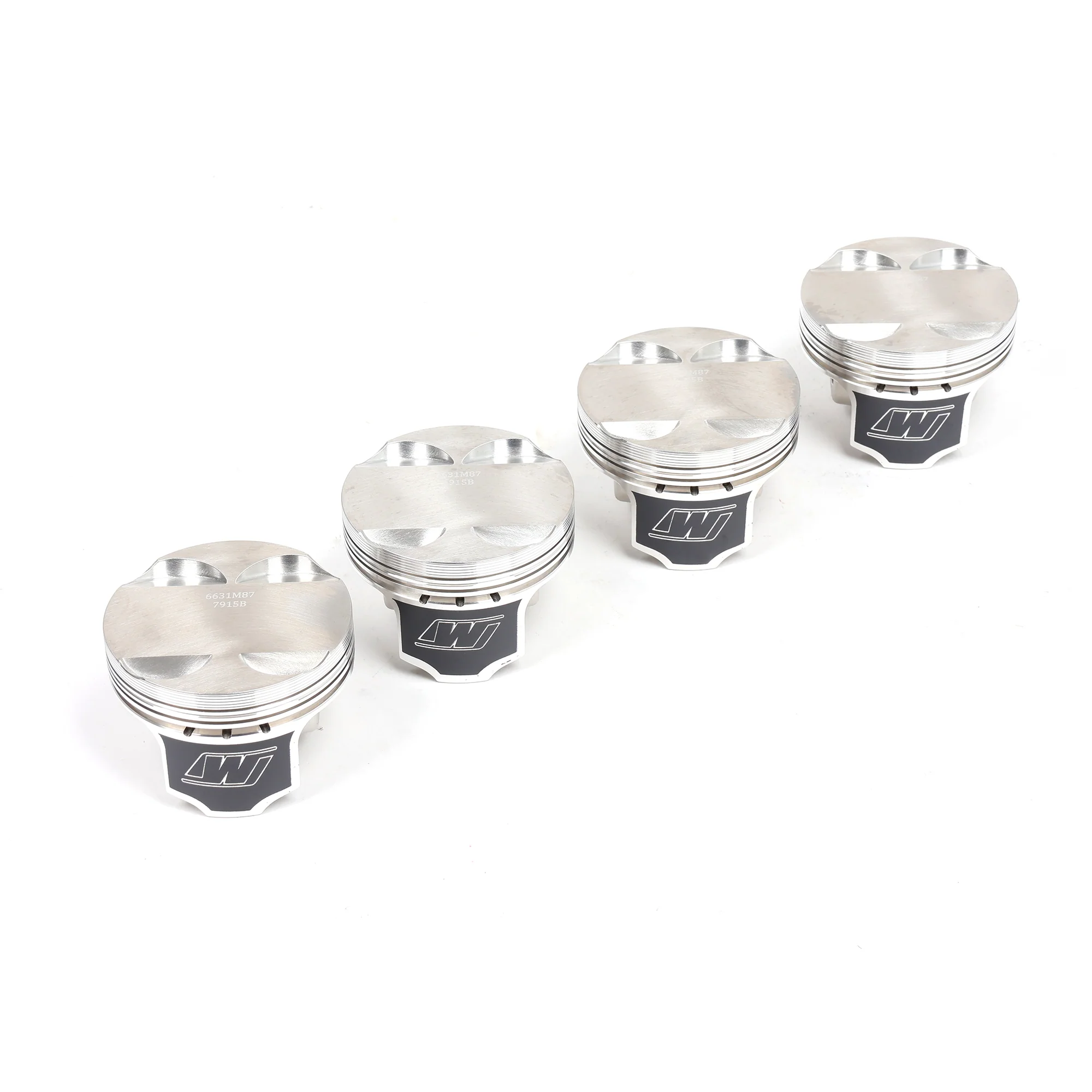
You're building a K24/K20 Frankenstein motor and you need pistons that aren't going to crack when you're making serious power. Wiseco's 87mm forged pistons are built for K series race motors, specifically K24 block with K20 head setups. These are 2618 aluminum forgings, not cast or hypereutectic pistons. The 2618 alloy's got way higher tensile strength than the stuff Honda uses in stock pistons so they handle detonation and high cylinder pressures without cracking. Wiseco makes these pistons in five different compression ratios, 11.1:1, 10.2:1, 13.7:1, 12.5:1, and 14.2:1, so you can dial in your compression based on whether you're running all-motor, mild boost, or big turbo. If you're building a motor that's going to see sustained high RPM or serious boost pressure, you need forged pistons. Stock cast pistons will crack.
Here's Why 2618 Aluminum Matters
Stock K series pistons are cast aluminum. Cast pistons are cheap to make and they work fine for stock power levels but they're brittle. When you start making serious power, whether that's from high compression and cams or from boost, cylinder pressures go up and cast pistons crack. The top ring land cracks, the skirt cracks, you're pulling the motor apart to replace broken pistons. Wiseco forges these pistons from 2618 aluminum. The forging process compresses the grain structure and makes the material way stronger. The 2618 alloy itself has higher tensile strength and better heat resistance than the 4032 alloy you see in cheaper forged pistons. That means these pistons handle detonation events without cracking. If you accidentally lean out and you get a little knock, the 2618 pistons absorb it. Cast pistons would crack.
ArmorGlide Skirt Coating
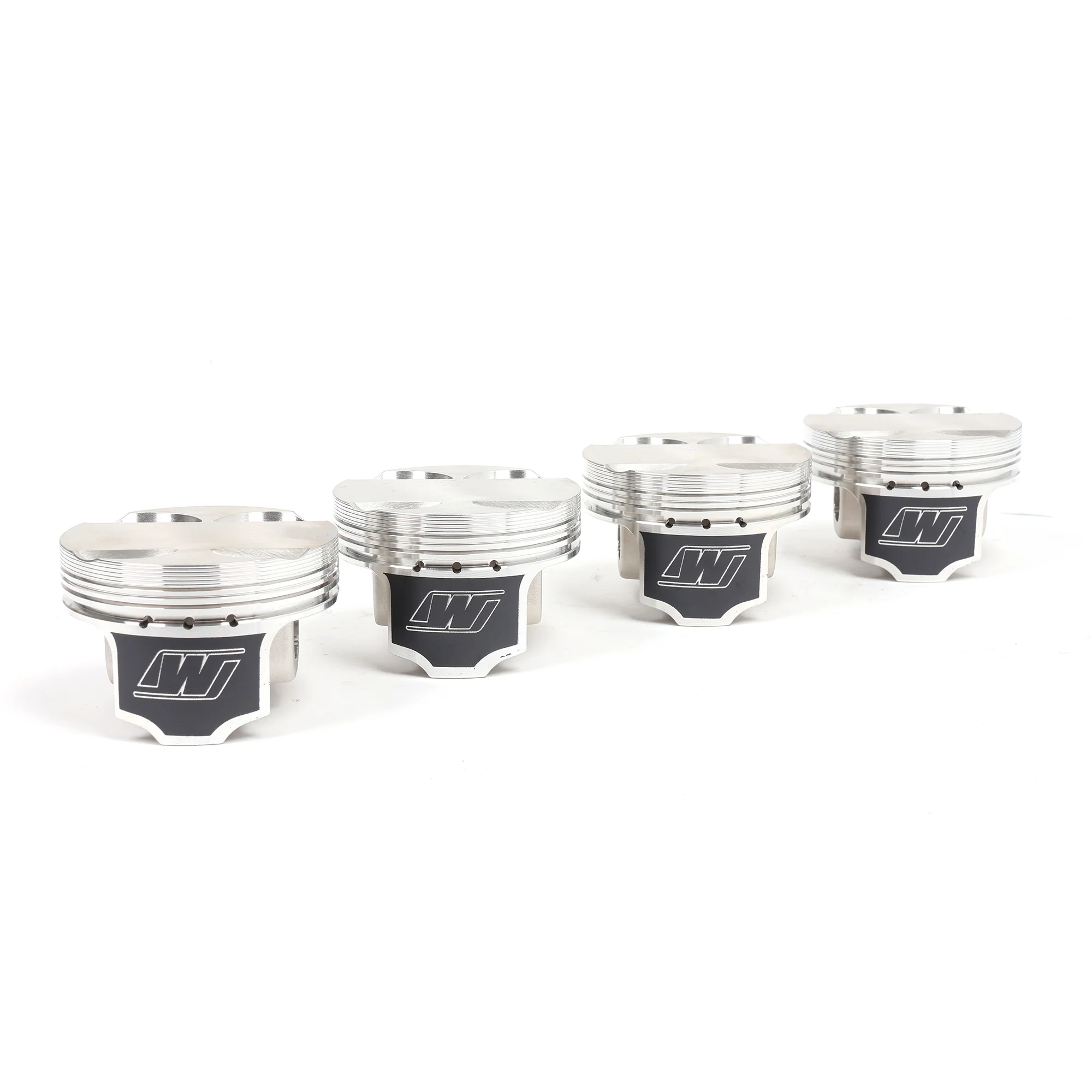
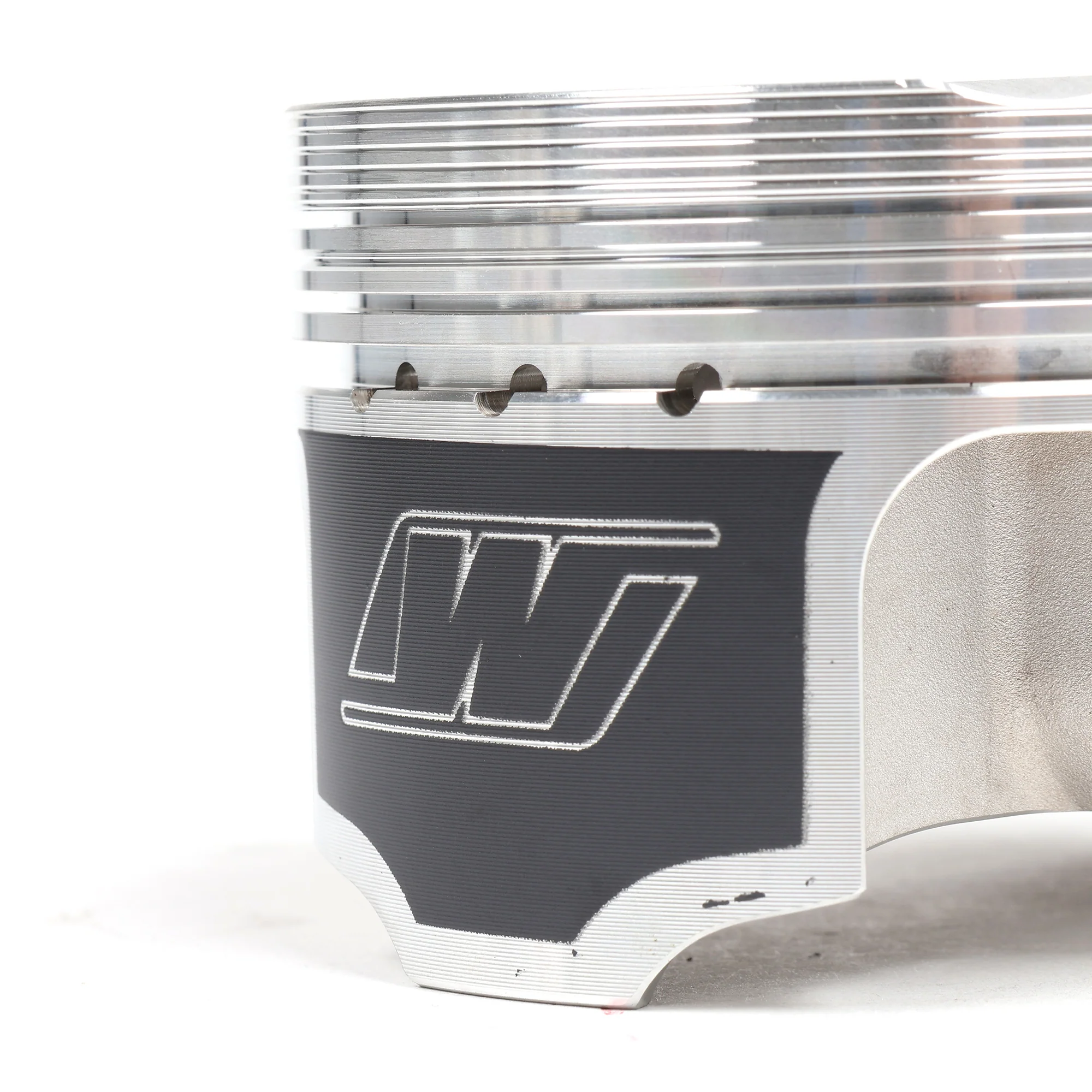
Wiseco coats the piston skirts with ArmorGlide. That's a friction-reducing coating that lets the piston move up and down the cylinder bore with less resistance. Less friction means less heat, quieter operation, and better seizure resistance if you ever lose oil pressure or your cooling system fails. The coating also helps the pistons survive initial startup when there's not full oil pressure yet. Stock pistons don't have a skirt coating so they're scuffing the cylinder walls every time you cold start the motor. ArmorGlide prevents that.
Anti-Detonation Grooves and Forced Pin Oiling
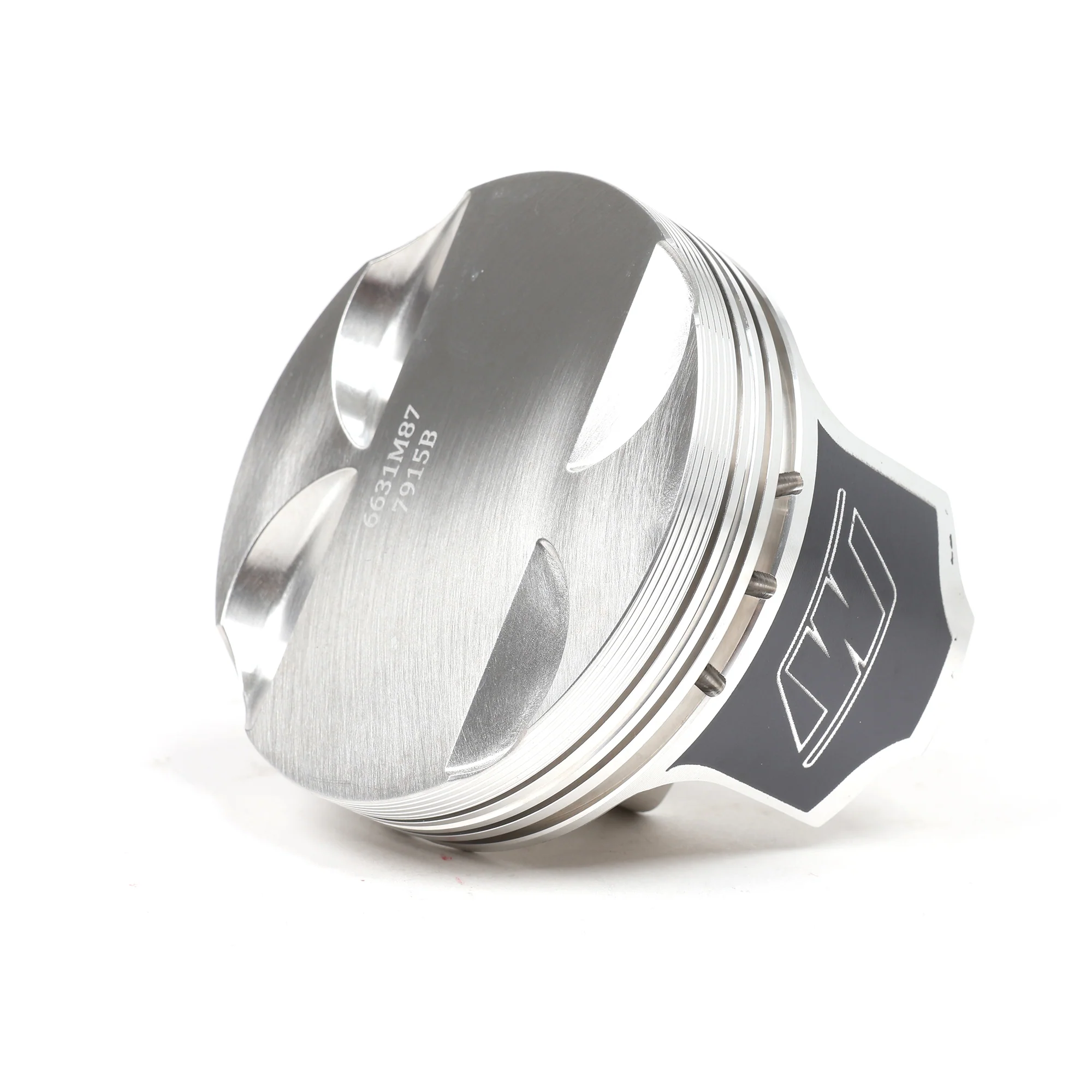
Wiseco machines anti-detonation grooves into the top of the piston. Those grooves disrupt the flame front during combustion and reduce the chance of detonation. They're not going to save you if you're running a garbage tune but they help. The pistons also have forced pin oiling. There's an oiling hole that directs oil to the wrist pin during the compression stroke. That keeps the pin and the small end of the rod lubricated under high loads. Better lubrication means less wear and longer life.
Pick Your Compression Ratio
Wiseco makes these pistons in five different compression ratios. Here's how to pick the right one for your build:
10.2:1: Low compression for high-boost turbo setups. If you're running 15+ PSI on pump gas or you're pushing serious boost on E85, this is the compression ratio you want. Lower compression gives you more room to add timing and boost without knocking.
11.1:1: Mild compression for street turbo builds or conservative all-motor setups. Works well for 8-12 PSI on 93 octane or for naturally aspirated motors that aren't running aggressive cams.
12.5:1: Higher compression for all-motor builds or very low boost applications. If you're building a naturally aspirated K series for VTEC crossover power or you're running a mild 5-6 PSI supercharger setup, 12.5:1 works.
13.7:1: High compression for serious all-motor racing. This is for motors running race gas or E85 with no boost. You're chasing every bit of compression to make power from displacement and RPM.
14.2:1: Maximum compression for dedicated all-motor race builds on race fuel. If you're running a built K series on the dyno pulling 9,000+ RPM on C16 or similar race gas, this is the ratio. Don't run 14.2:1 on pump gas or you're going to detonate immediately.
The compression ratio you pick depends on your fuel, your boost level, and your tuning. Don't just guess, figure out what compression ratio you need before you order pistons. If you're not sure, ask your engine builder or your tuner. Running the wrong compression ratio means you're either leaving power on the table or you're knocking.
What You Get
- Wiseco forged pistons for K20/K24 Frankenstein motors
- 87mm bore size
- 2618 aluminum forging for high tensile strength
- ArmorGlide skirt coating for reduced friction and seizure resistance
- Anti-detonation grooves machined into piston crown
- Forced pin oiling for wrist pin lubrication
- Precision-machined for tight tolerances
- Made in USA
- Available in five compression ratios: 10.2:1, 11.1:1, 12.5:1, 13.7:1, 14.2:1
- Sold as complete piston set (4 pistons)
Fits These Motors
- K24 block with K20 head (Frankenstein builds)
- 87mm bore (requires machine work on K24 block to achieve 87mm bore)
Note: These are 87mm bore pistons. The K24 block has an 87mm bore from the factory so these are stock bore pistons for K24 blocks. If you're building a Frankenstein motor with a K24 block and K20 head, these pistons drop right in at stock bore size. You'll need piston rings, wrist pins, and circlips separately, those aren't included. Make sure you order the correct compression ratio for your build. Higher compression ratios (12.5:1, 13.7:1, 14.2:1) are for naturally aspirated motors or very low-boost setups. Lower compression ratios (10.2:1, 11.1:1) are for turbo builds. If you're not sure which compression ratio you need, talk to your engine builder or tuner before you order. Running the wrong compression can cause detonation and engine damage. When you're assembling the motor, follow proper piston-to-wall clearance specs for 2618 aluminum pistons. 2618 pistons need more clearance than cast pistons because the material expands more when it gets hot. Check Wiseco's spec sheet for the correct clearance. Too tight and the pistons will seize when the motor gets hot. Too loose and you'll have piston slap and excessive blow-by. Get it right the first time.
-
2006-2011 Acura CSX2002-2006 Acura RSX2004-2008 Acura TSX2003-2007 Honda Accord (K24)2002-2011 Honda Civic Si2002-2006 Honda CRV2003-2011 Honda Element
-
Compatible with K24 Block and K20 Head Setups Only87mm Bore0.866 in. Pin Diameter
-
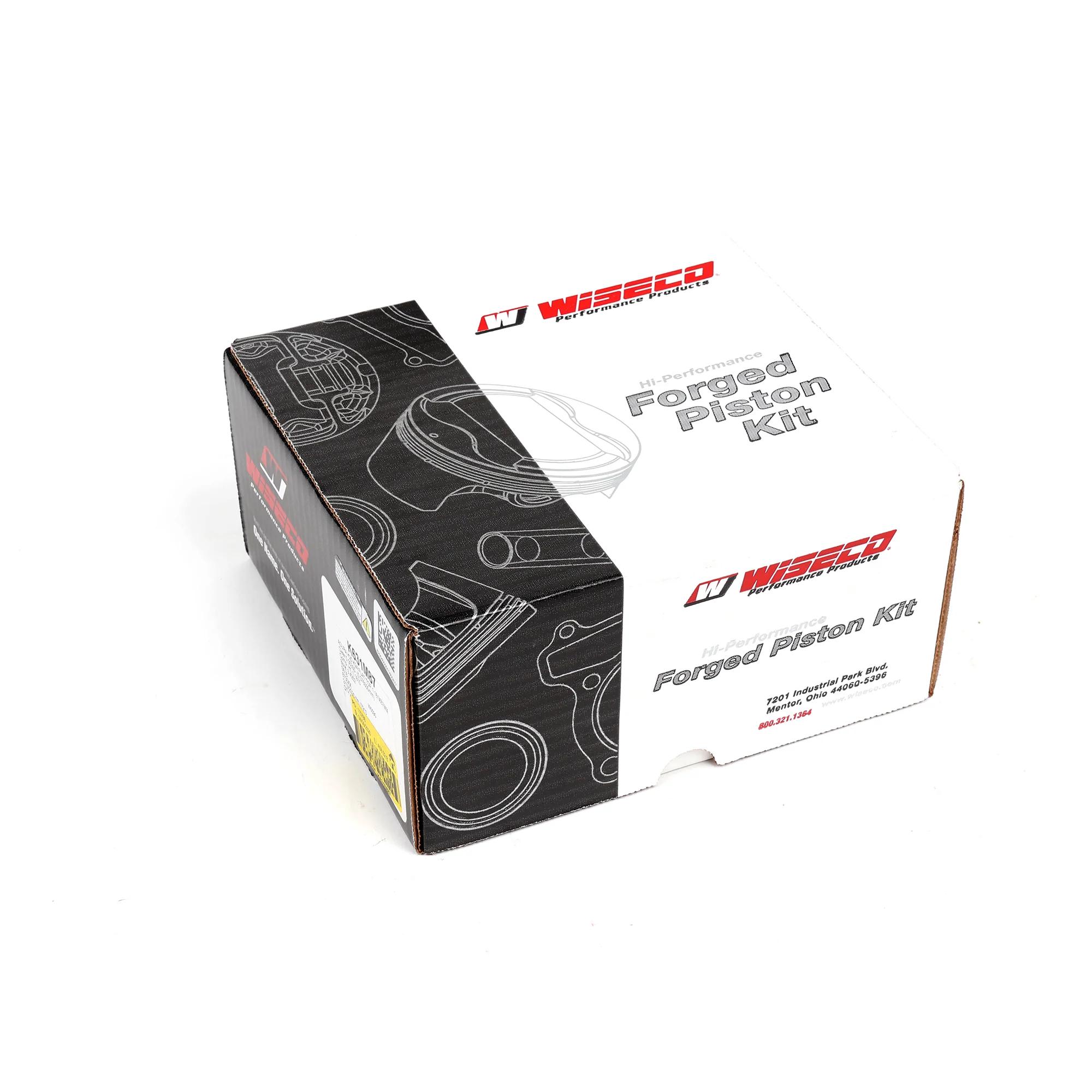
(4) Pistons(4) Wrist Pins(4) Wrist Pin Locks(4) Rings




Description
- Multiple Compression Ratios Available
- 87mm bore Pistons
- Piston Rings and Wrist Pins Included
- Perfect for K20/24 Setups
- Description
- Vehicle Fitment
- Technical Data
- Included
-
Wiseco K20/K24 Forged Pistons - 87mm Bore
You're building a K24/K20 Frankenstein motor and you need pistons that aren't going to crack when you're making serious power. Wiseco's 87mm forged pistons are built for K series race motors, specifically K24 block with K20 head setups. These are 2618 aluminum forgings, not cast or hypereutectic pistons. The 2618 alloy's got way higher tensile strength than the stuff Honda uses in stock pistons so they handle detonation and high cylinder pressures without cracking. Wiseco makes these pistons in five different compression ratios, 11.1:1, 10.2:1, 13.7:1, 12.5:1, and 14.2:1, so you can dial in your compression based on whether you're running all-motor, mild boost, or big turbo. If you're building a motor that's going to see sustained high RPM or serious boost pressure, you need forged pistons. Stock cast pistons will crack.
Here's Why 2618 Aluminum Matters
Stock K series pistons are cast aluminum. Cast pistons are cheap to make and they work fine for stock power levels but they're brittle. When you start making serious power, whether that's from high compression and cams or from boost, cylinder pressures go up and cast pistons crack. The top ring land cracks, the skirt cracks, you're pulling the motor apart to replace broken pistons. Wiseco forges these pistons from 2618 aluminum. The forging process compresses the grain structure and makes the material way stronger. The 2618 alloy itself has higher tensile strength and better heat resistance than the 4032 alloy you see in cheaper forged pistons. That means these pistons handle detonation events without cracking. If you accidentally lean out and you get a little knock, the 2618 pistons absorb it. Cast pistons would crack.
ArmorGlide Skirt Coating
Wiseco coats the piston skirts with ArmorGlide. That's a friction-reducing coating that lets the piston move up and down the cylinder bore with less resistance. Less friction means less heat, quieter operation, and better seizure resistance if you ever lose oil pressure or your cooling system fails. The coating also helps the pistons survive initial startup when there's not full oil pressure yet. Stock pistons don't have a skirt coating so they're scuffing the cylinder walls every time you cold start the motor. ArmorGlide prevents that.
Anti-Detonation Grooves and Forced Pin Oiling
Wiseco machines anti-detonation grooves into the top of the piston. Those grooves disrupt the flame front during combustion and reduce the chance of detonation. They're not going to save you if you're running a garbage tune but they help. The pistons also have forced pin oiling. There's an oiling hole that directs oil to the wrist pin during the compression stroke. That keeps the pin and the small end of the rod lubricated under high loads. Better lubrication means less wear and longer life.
Pick Your Compression Ratio
Wiseco makes these pistons in five different compression ratios. Here's how to pick the right one for your build:
10.2:1: Low compression for high-boost turbo setups. If you're running 15+ PSI on pump gas or you're pushing serious boost on E85, this is the compression ratio you want. Lower compression gives you more room to add timing and boost without knocking.
11.1:1: Mild compression for street turbo builds or conservative all-motor setups. Works well for 8-12 PSI on 93 octane or for naturally aspirated motors that aren't running aggressive cams.
12.5:1: Higher compression for all-motor builds or very low boost applications. If you're building a naturally aspirated K series for VTEC crossover power or you're running a mild 5-6 PSI supercharger setup, 12.5:1 works.
13.7:1: High compression for serious all-motor racing. This is for motors running race gas or E85 with no boost. You're chasing every bit of compression to make power from displacement and RPM.
14.2:1: Maximum compression for dedicated all-motor race builds on race fuel. If you're running a built K series on the dyno pulling 9,000+ RPM on C16 or similar race gas, this is the ratio. Don't run 14.2:1 on pump gas or you're going to detonate immediately.
The compression ratio you pick depends on your fuel, your boost level, and your tuning. Don't just guess, figure out what compression ratio you need before you order pistons. If you're not sure, ask your engine builder or your tuner. Running the wrong compression ratio means you're either leaving power on the table or you're knocking.
What You Get
- Wiseco forged pistons for K20/K24 Frankenstein motors
- 87mm bore size
- 2618 aluminum forging for high tensile strength
- ArmorGlide skirt coating for reduced friction and seizure resistance
- Anti-detonation grooves machined into piston crown
- Forced pin oiling for wrist pin lubrication
- Precision-machined for tight tolerances
- Made in USA
- Available in five compression ratios: 10.2:1, 11.1:1, 12.5:1, 13.7:1, 14.2:1
- Sold as complete piston set (4 pistons)
Fits These Motors
- K24 block with K20 head (Frankenstein builds)
- 87mm bore (requires machine work on K24 block to achieve 87mm bore)
Note: These are 87mm bore pistons. The K24 block has an 87mm bore from the factory so these are stock bore pistons for K24 blocks. If you're building a Frankenstein motor with a K24 block and K20 head, these pistons drop right in at stock bore size. You'll need piston rings, wrist pins, and circlips separately, those aren't included. Make sure you order the correct compression ratio for your build. Higher compression ratios (12.5:1, 13.7:1, 14.2:1) are for naturally aspirated motors or very low-boost setups. Lower compression ratios (10.2:1, 11.1:1) are for turbo builds. If you're not sure which compression ratio you need, talk to your engine builder or tuner before you order. Running the wrong compression can cause detonation and engine damage. When you're assembling the motor, follow proper piston-to-wall clearance specs for 2618 aluminum pistons. 2618 pistons need more clearance than cast pistons because the material expands more when it gets hot. Check Wiseco's spec sheet for the correct clearance. Too tight and the pistons will seize when the motor gets hot. Too loose and you'll have piston slap and excessive blow-by. Get it right the first time.
-
2006-2011 Acura CSX2002-2006 Acura RSX2004-2008 Acura TSX2003-2007 Honda Accord (K24)2002-2011 Honda Civic Si2002-2006 Honda CRV2003-2011 Honda Element
-
Compatible with K24 Block and K20 Head Setups Only87mm Bore0.866 in. Pin Diameter
-
(4) Pistons(4) Wrist Pins(4) Wrist Pin Locks(4) Rings