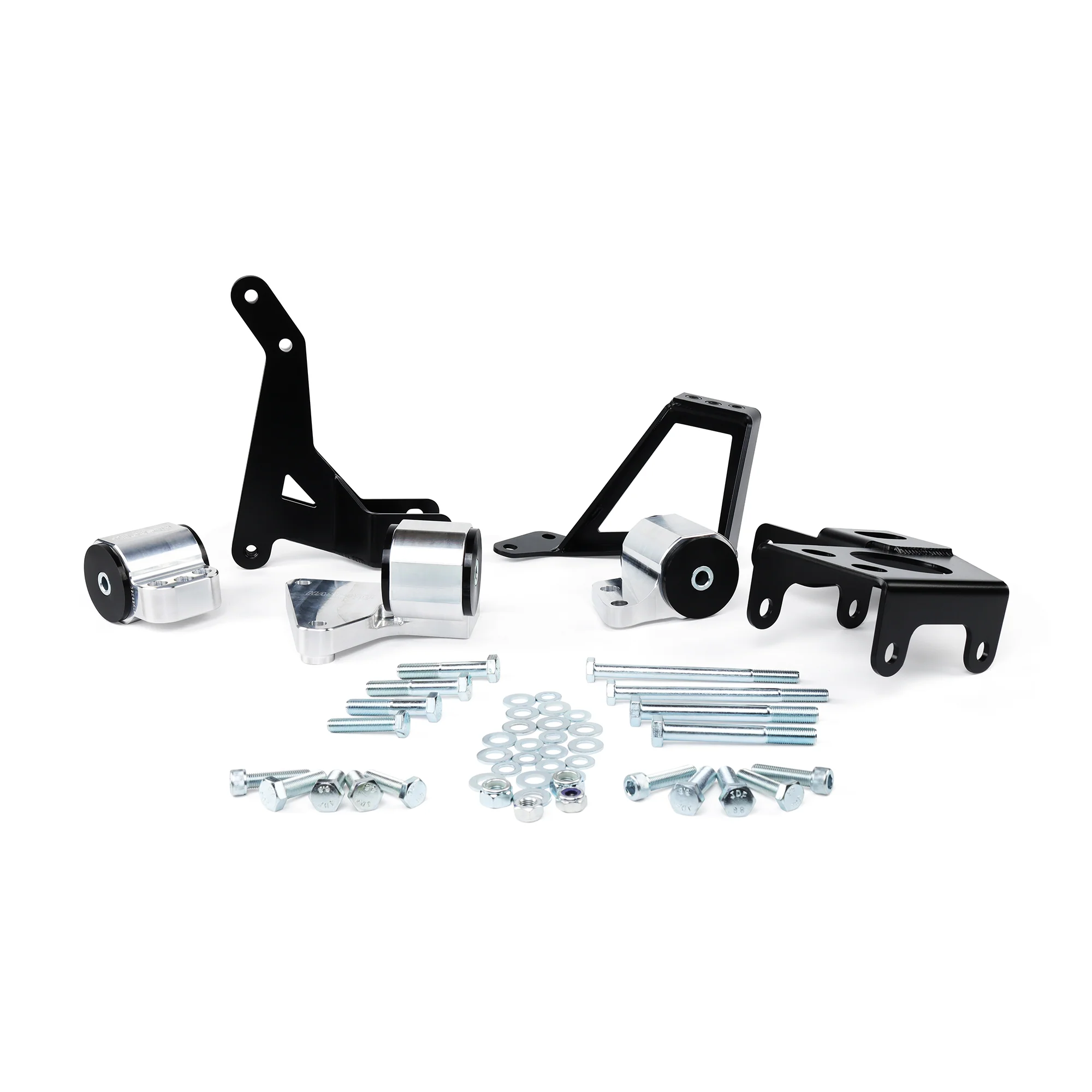
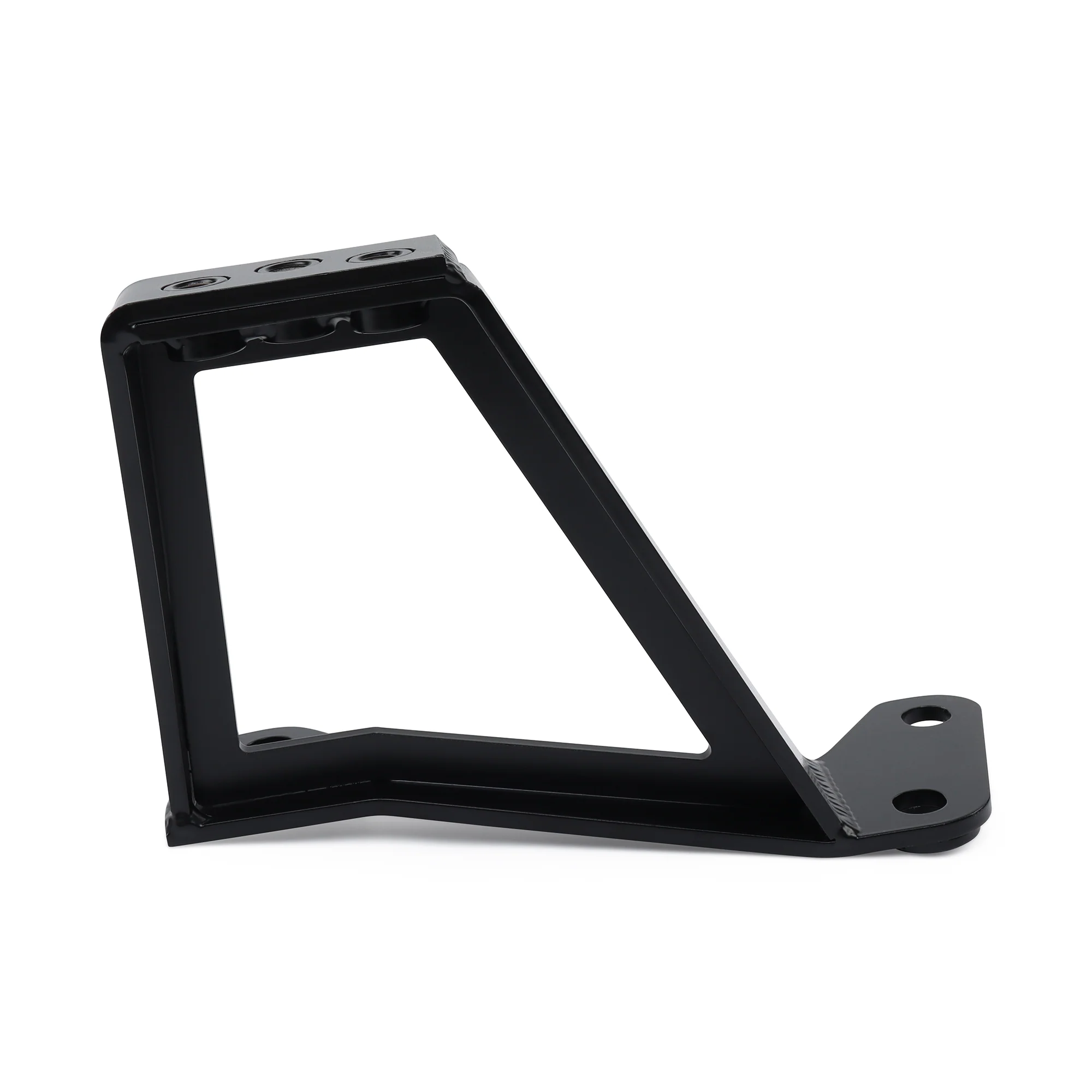
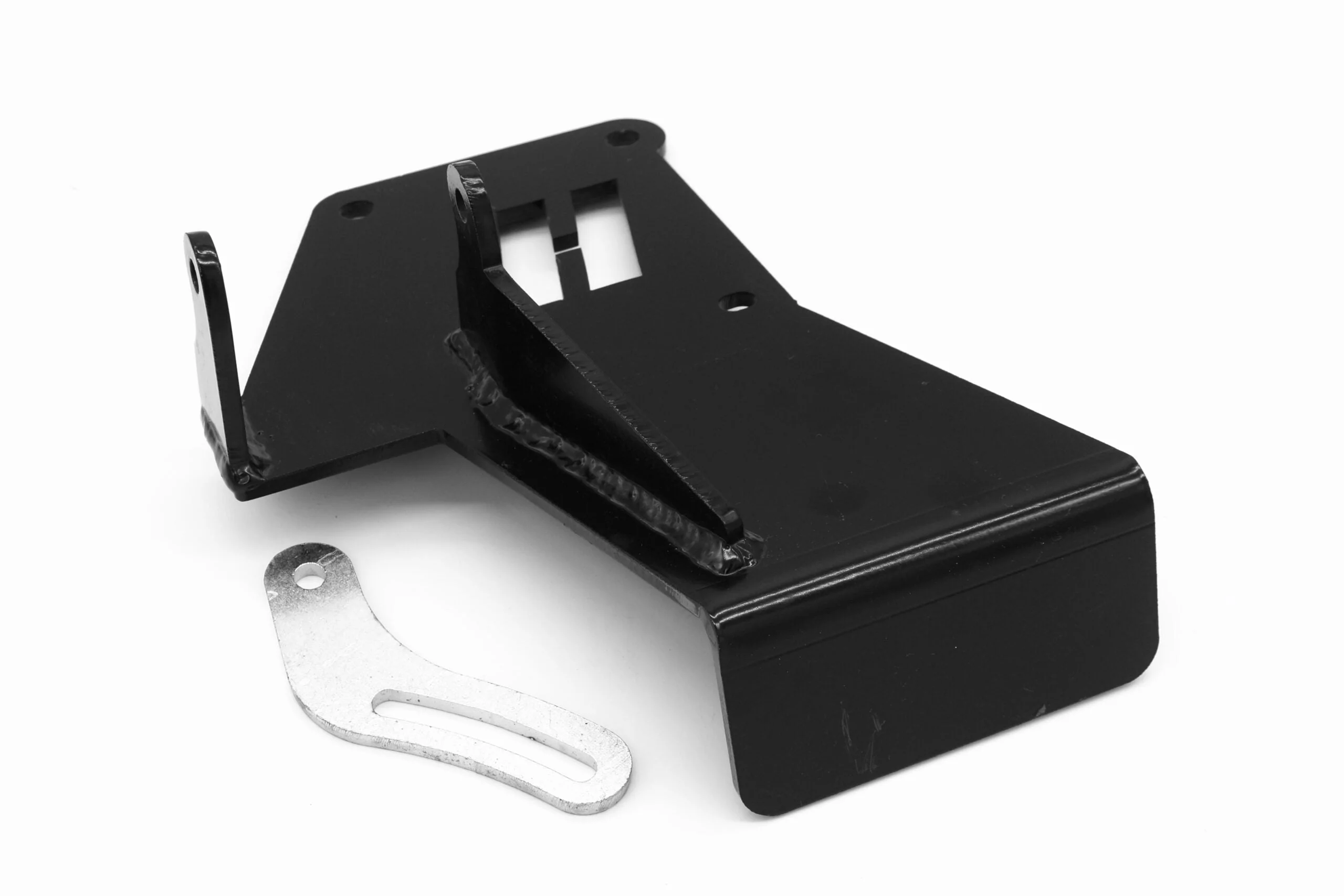
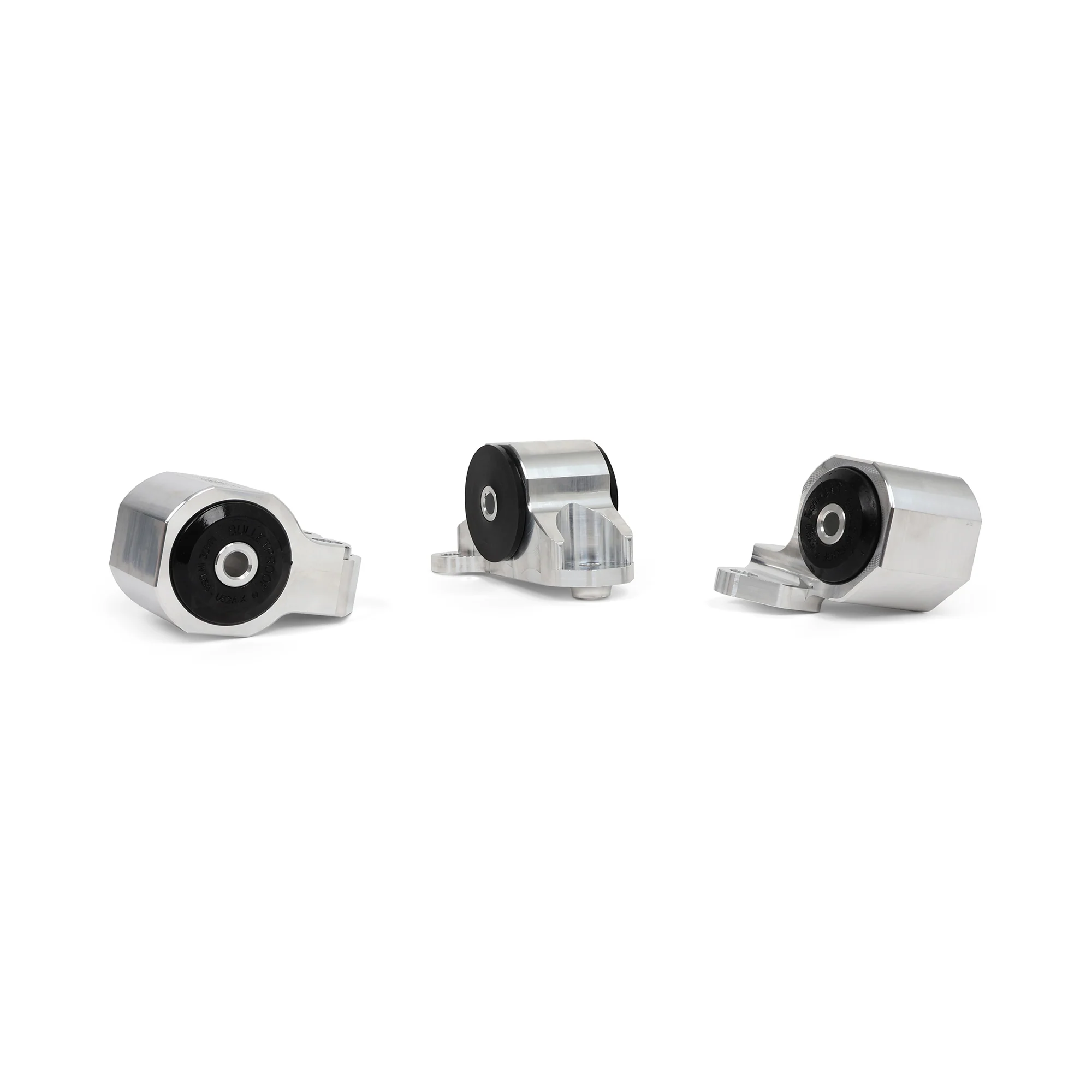
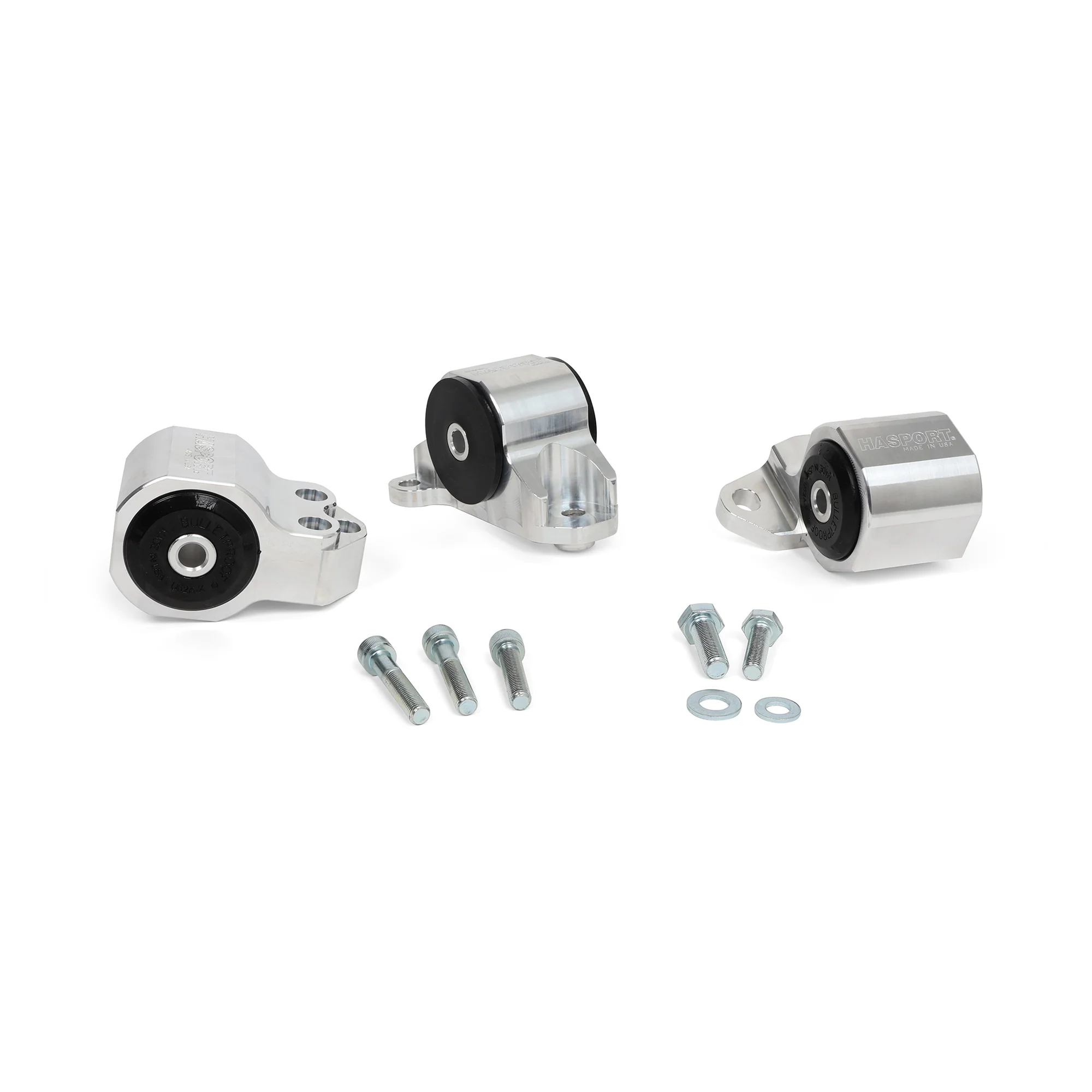
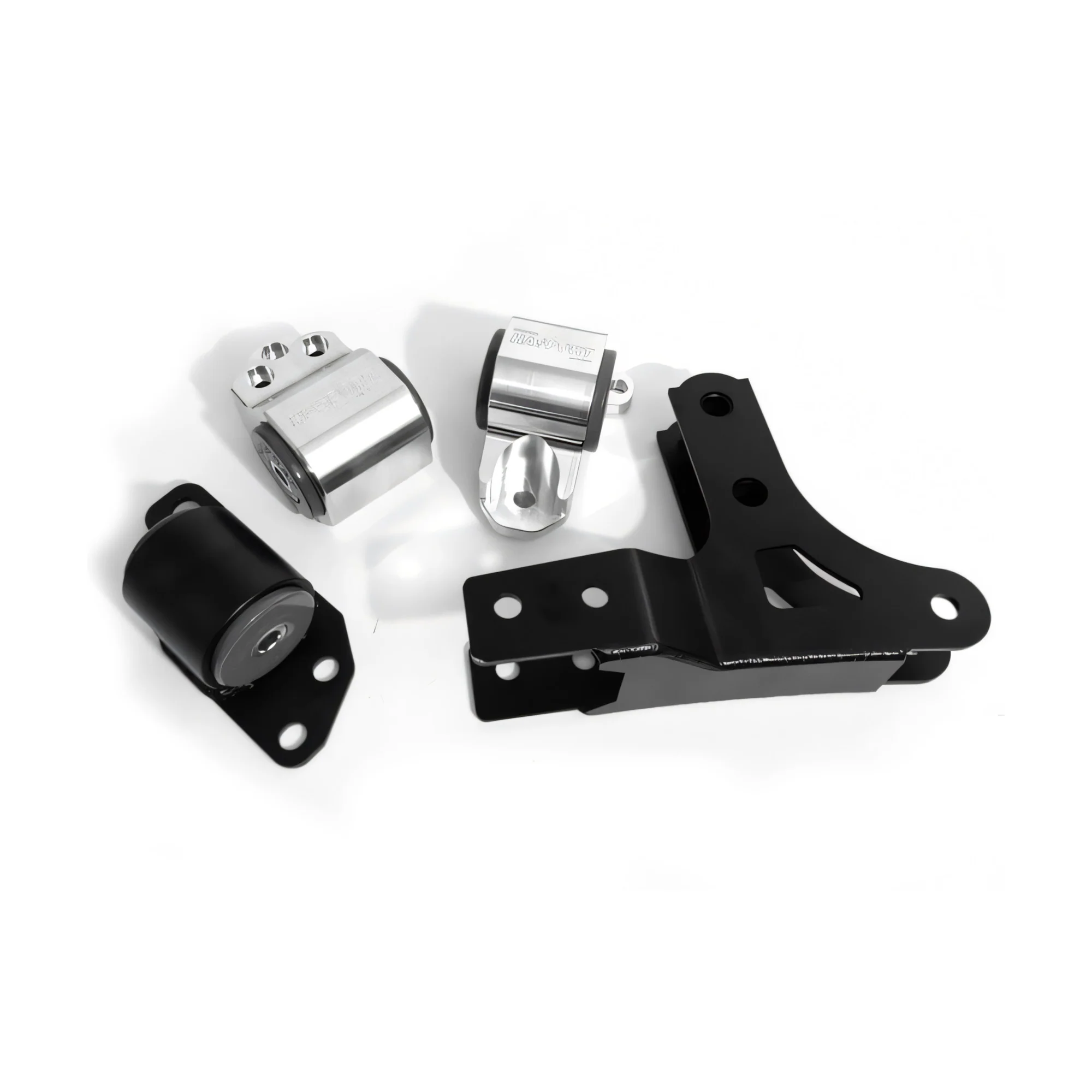
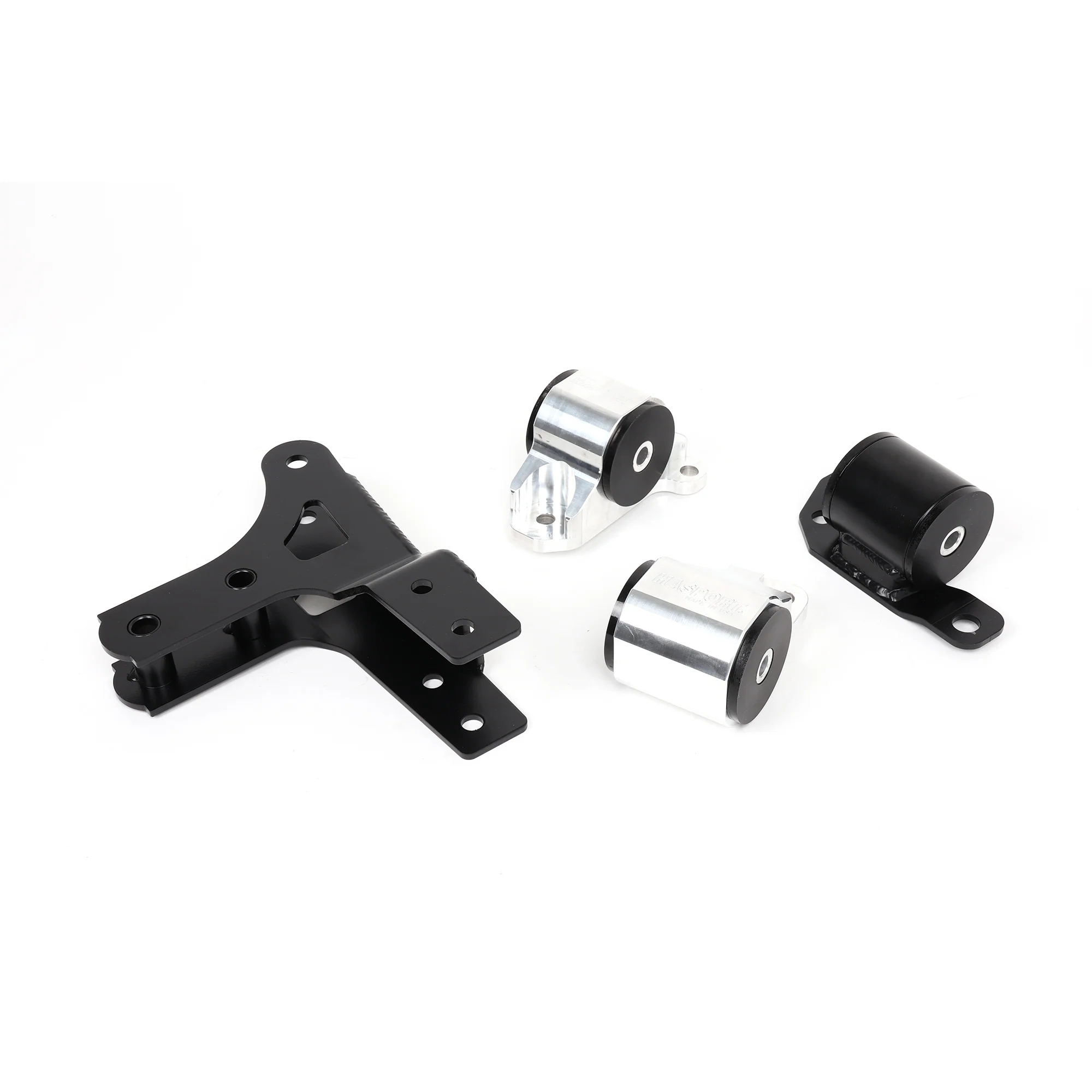
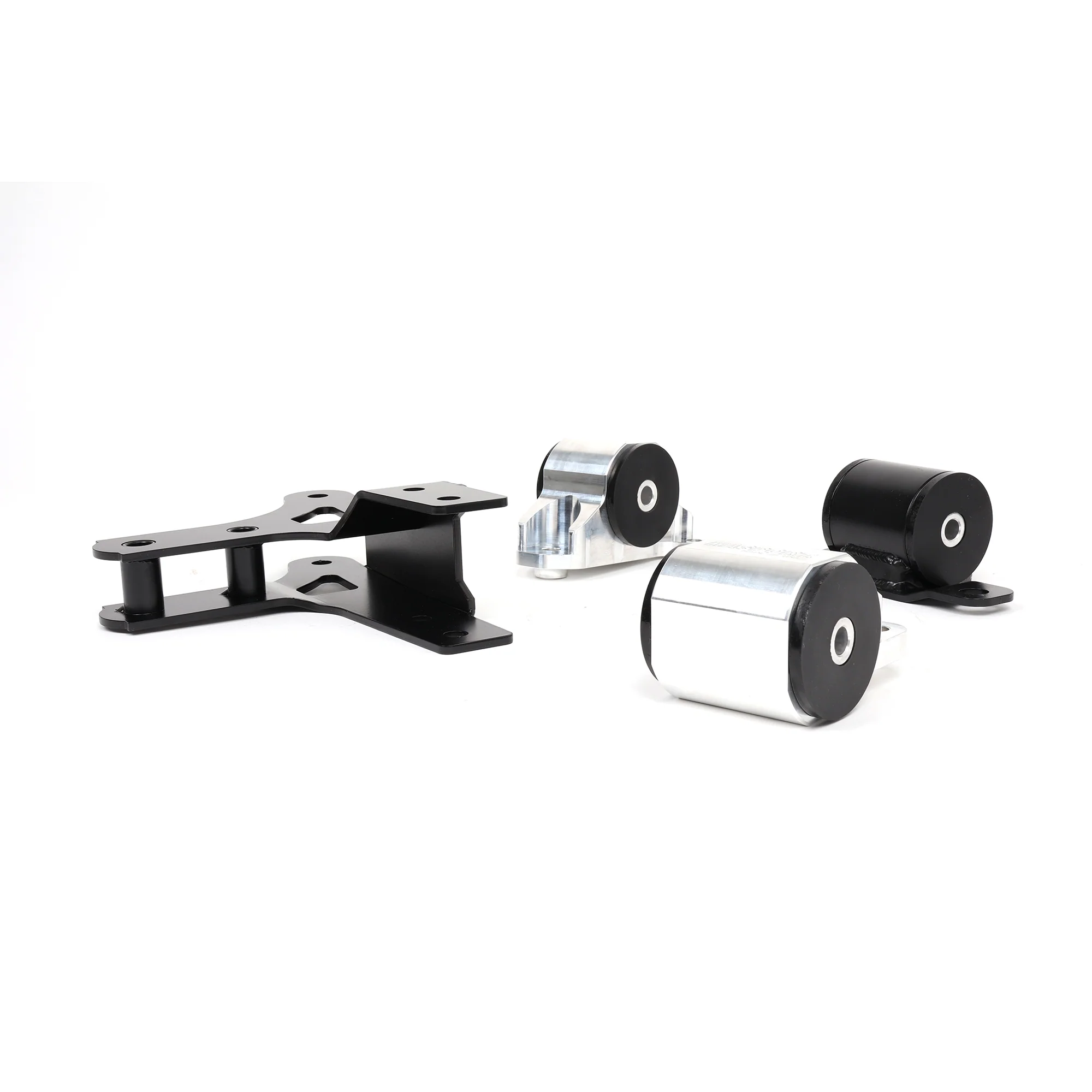
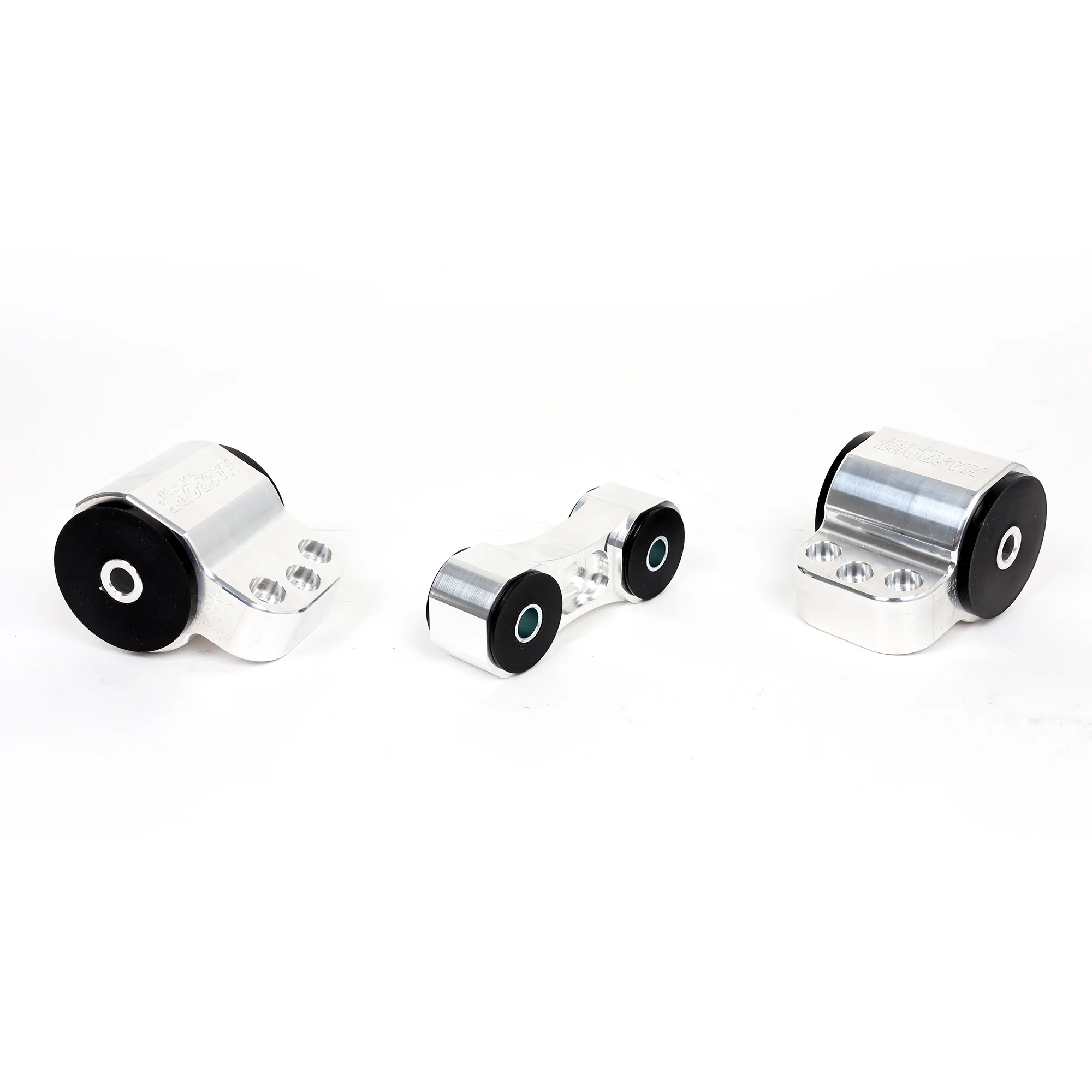
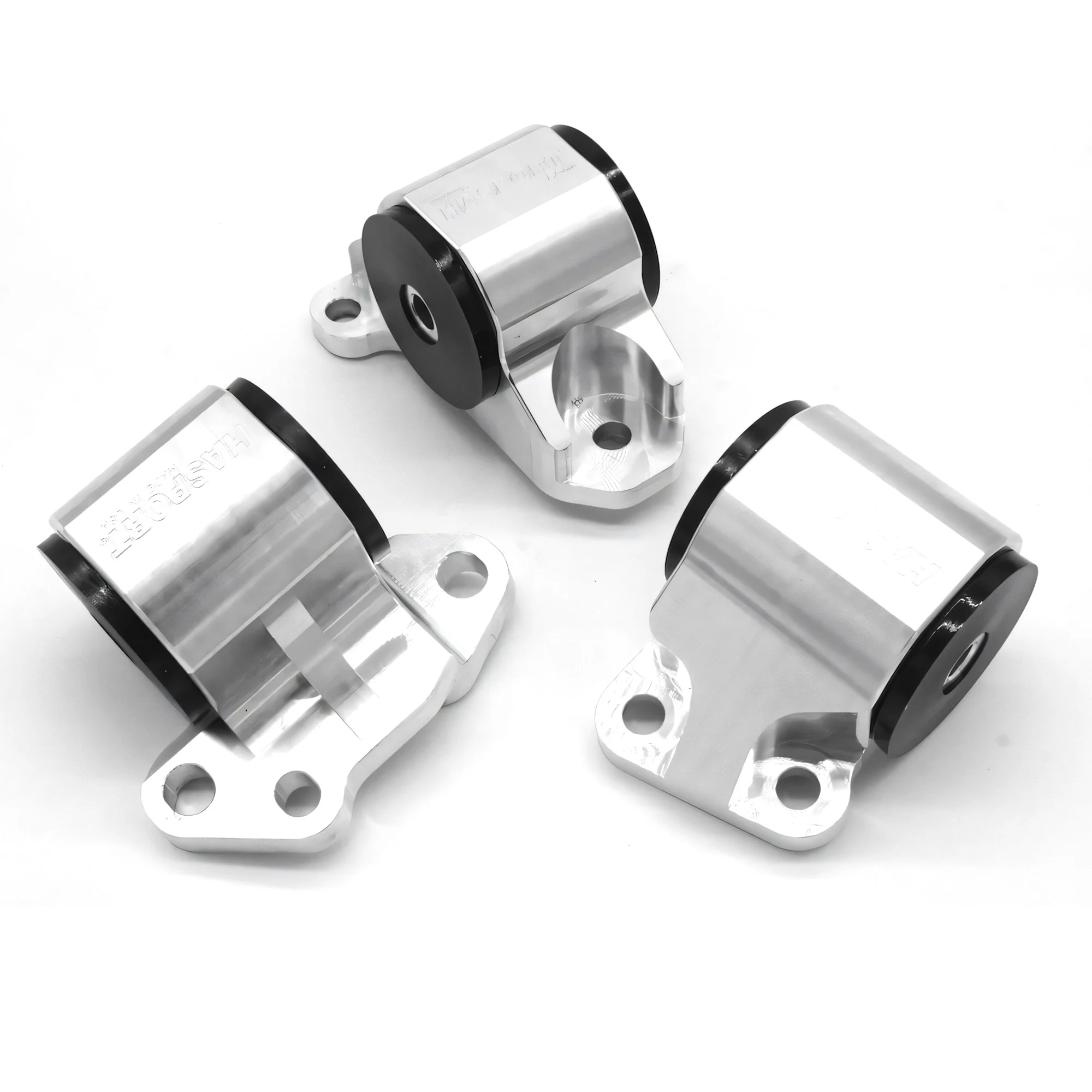
Hasport Torque Mounts for 92-00 Civic/94-01 Integra
- Unique No-Tear and Vibration Minimizing Bushings
- Small Modifications Needed to Fit Civic Chassis
- Multiple Durometers Available
- Torque Mount Set for 92-00 Civic & 94-01 Integra
- Description
- Vehicle Fitment
- Technical Data
- Included
- About Hasport
- Warranty
- Install Guide
-
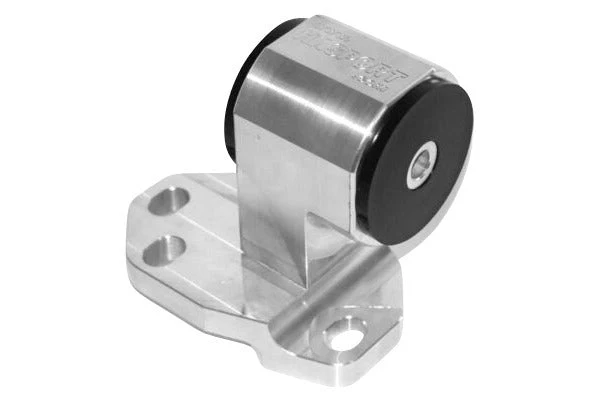
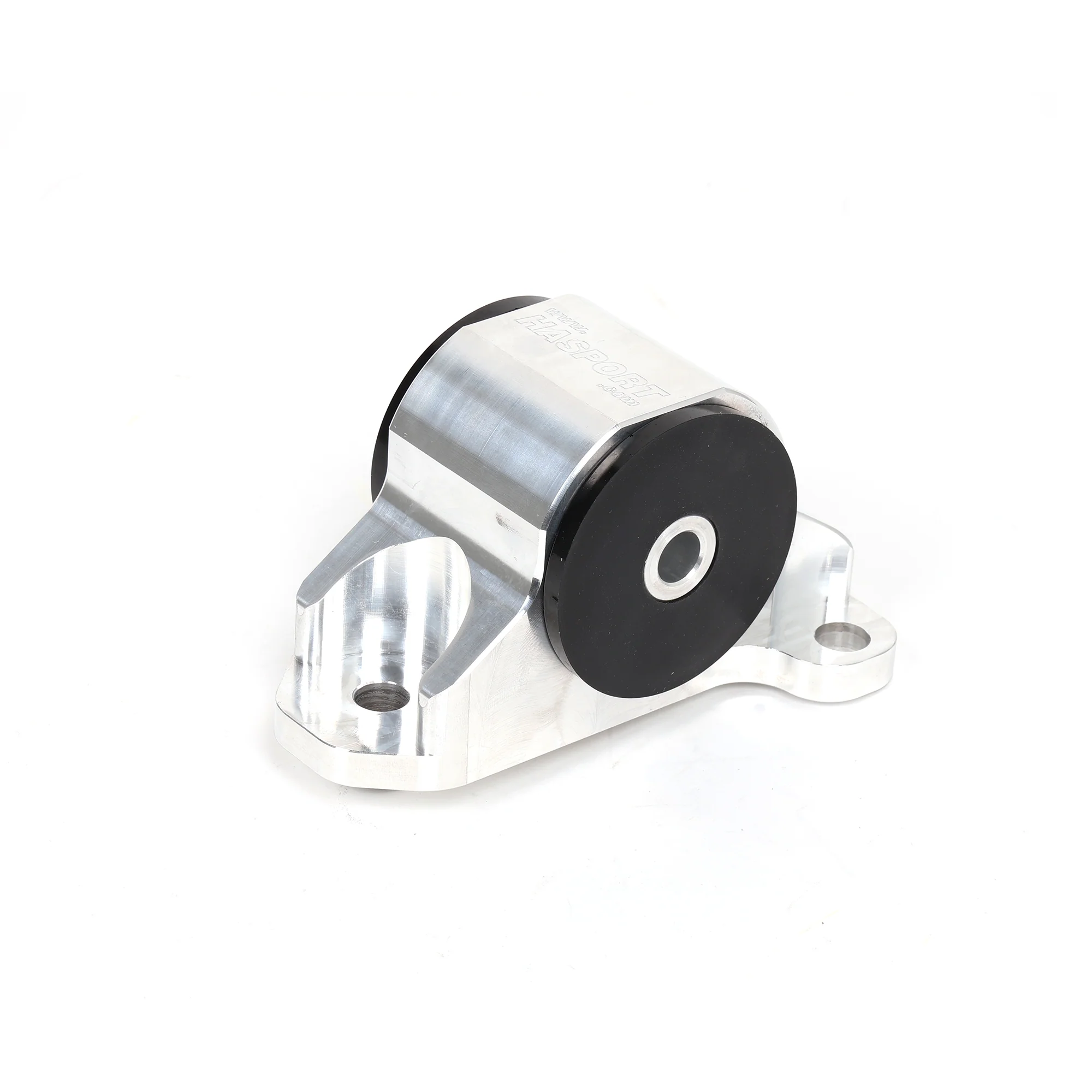
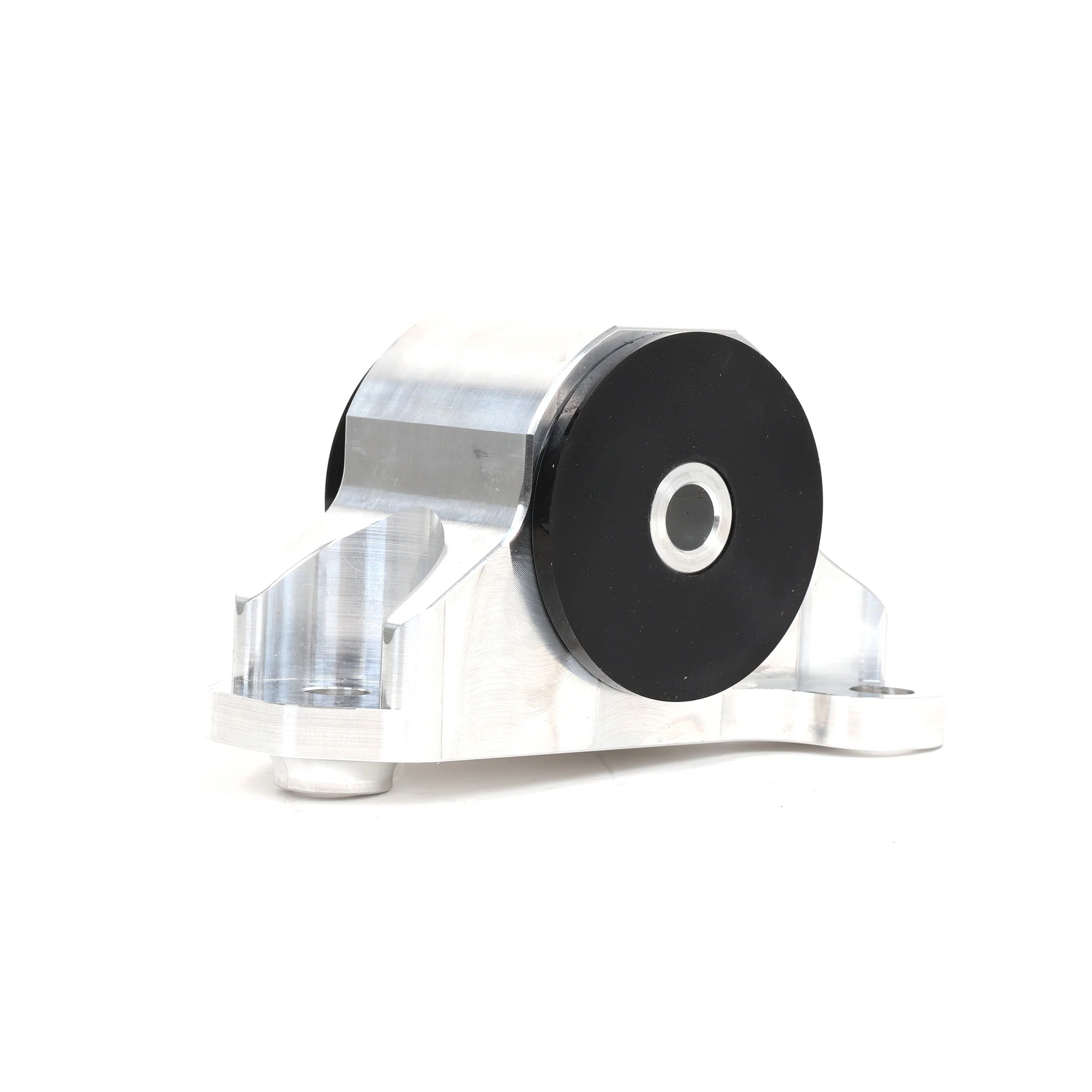
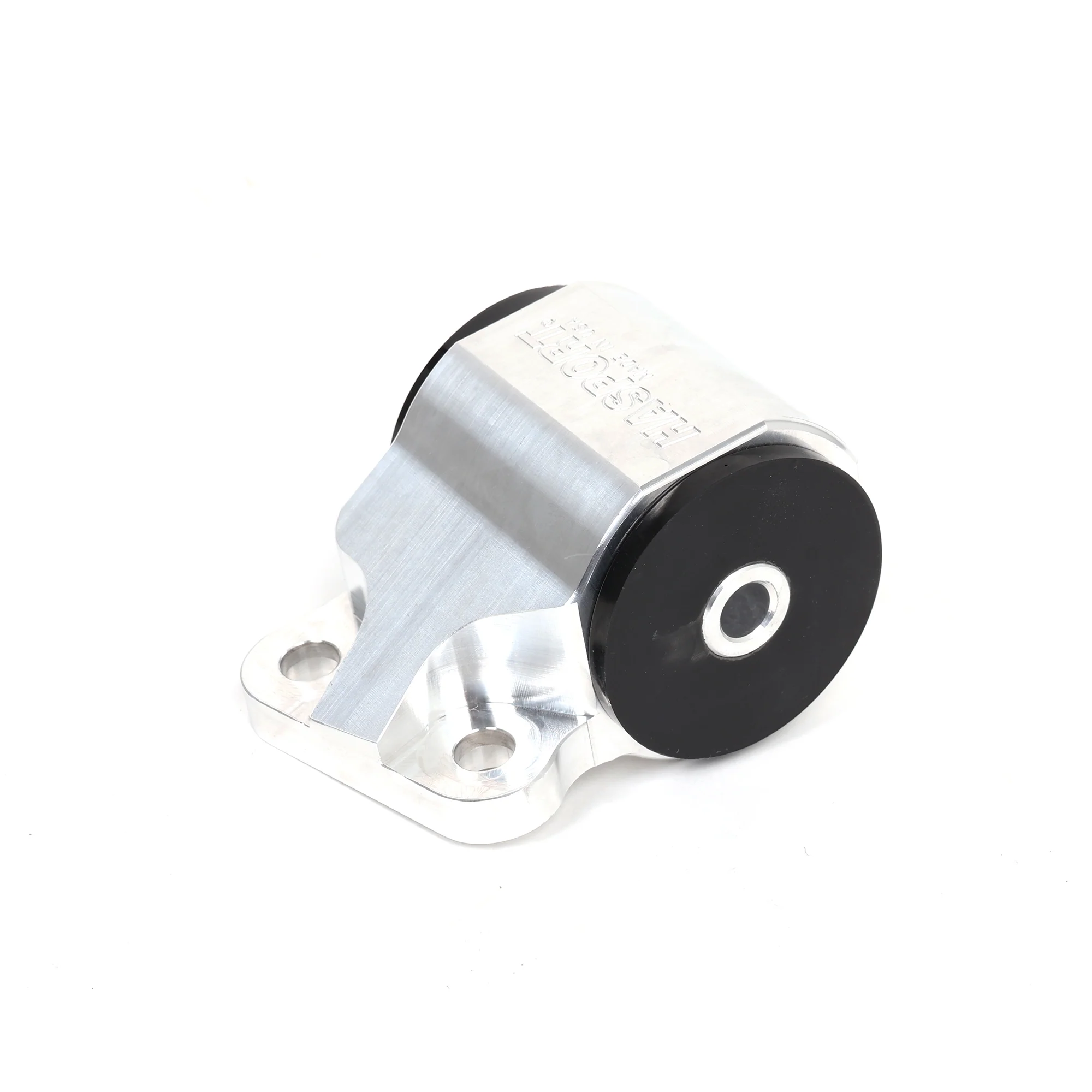
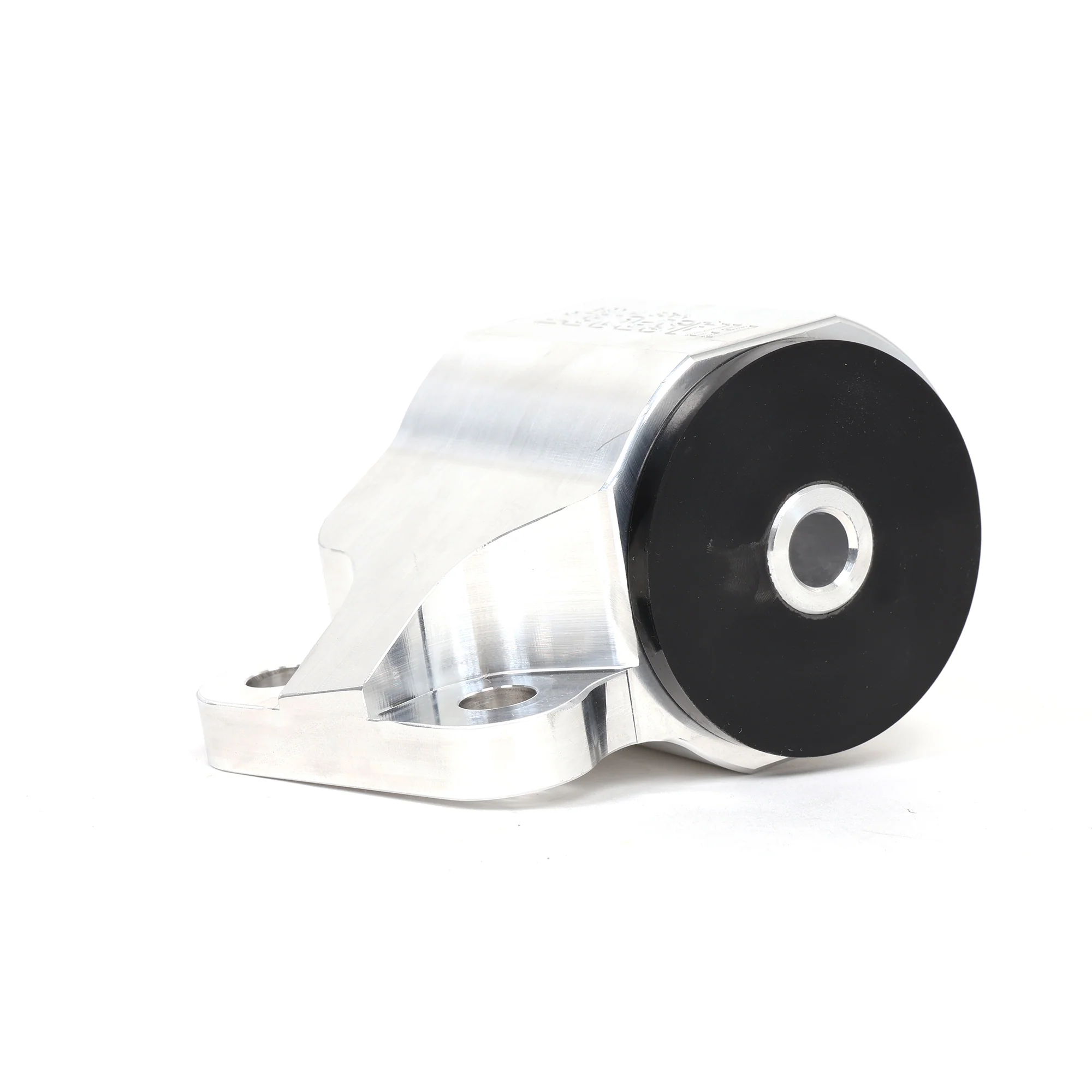
If you've got a B16, B18, B20, or D-series powered EG Civic or DC Integra (or the EK Civic that came after it), the front torque mount is the unsung component that decides how much of your engine's pitch reaction makes it into the chassis instead of getting wasted as engine flex. The factory rubber-and-fluid mount is fine for stock-power commuting, but as soon as you add boost, NA all-motor power, or even a clutch upgrade, that rubber starts moving more than you want it to. The engine pitches forward under throttle, lurches back on lift, and the result shows up as wheel hop on launch, sloppy throttle response, and a clutch that feels disconnected from the wheels. Hasport's DC2TM torque mount replaces the rubber with urethane, locks down the engine's torque axis, and puts the power back in your hands.
What This Actually Does
The front torque mount is the lower mount between the front of the engine block and the chassis sub-frame. It doesn't hold the weight of the engine (the side mounts do that). What it does is resist the rotational torque that the engine wants to apply to its mounts when you're on or off the throttle. With a stock fluid-damped mount, the engine pitches noticeably under load, and that motion translates into delayed throttle response, wheel hop, axle bind on launch, and harder gear engagement under power.
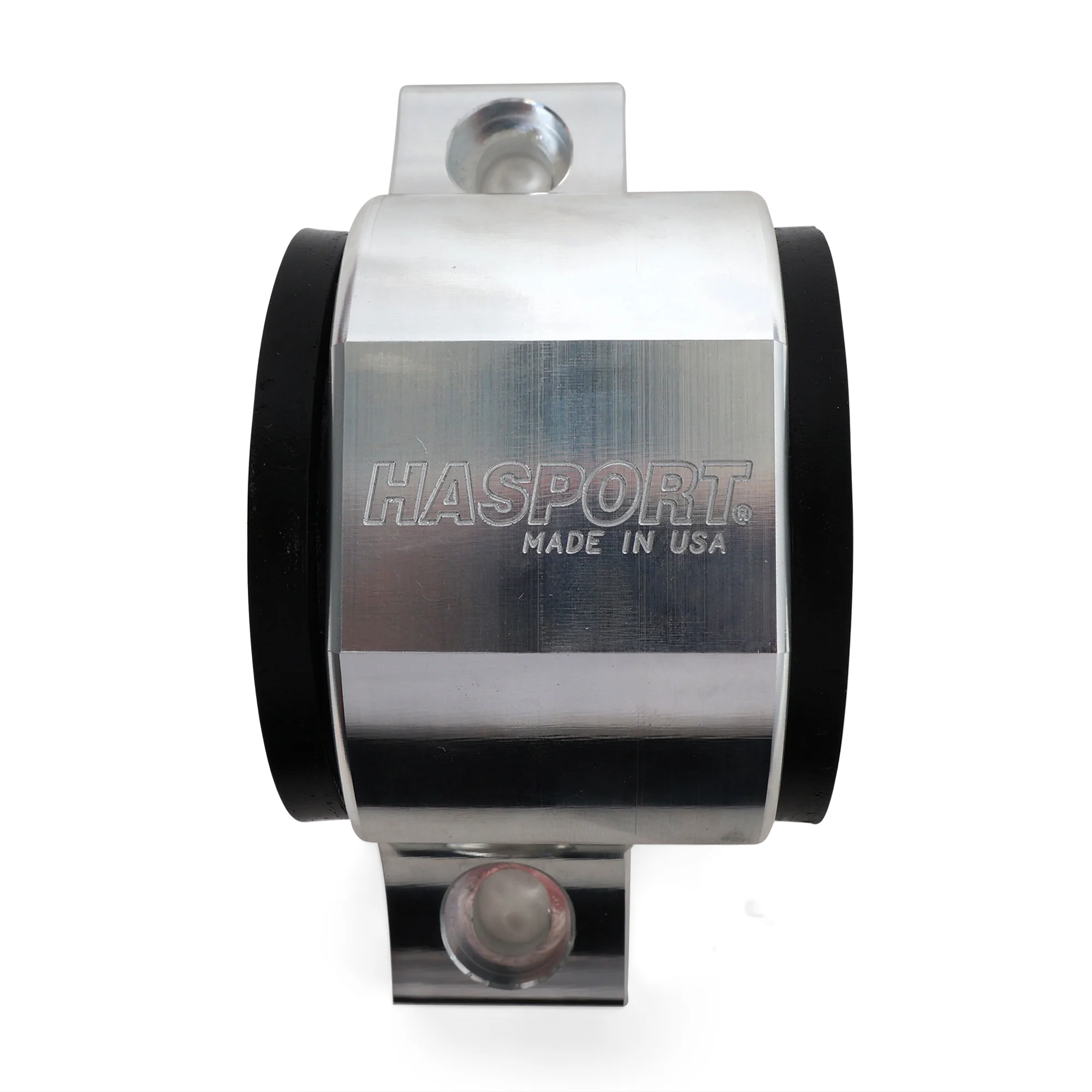
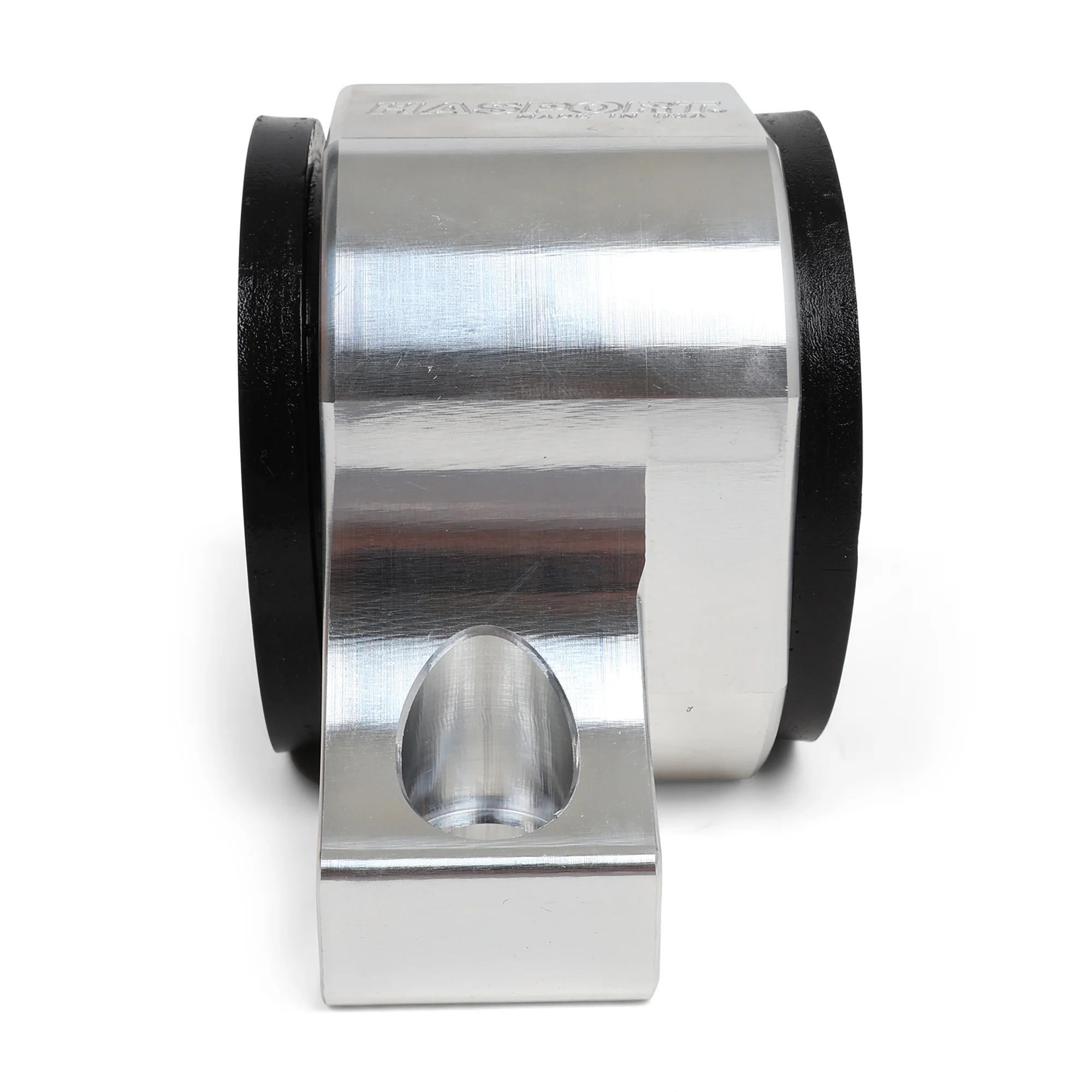
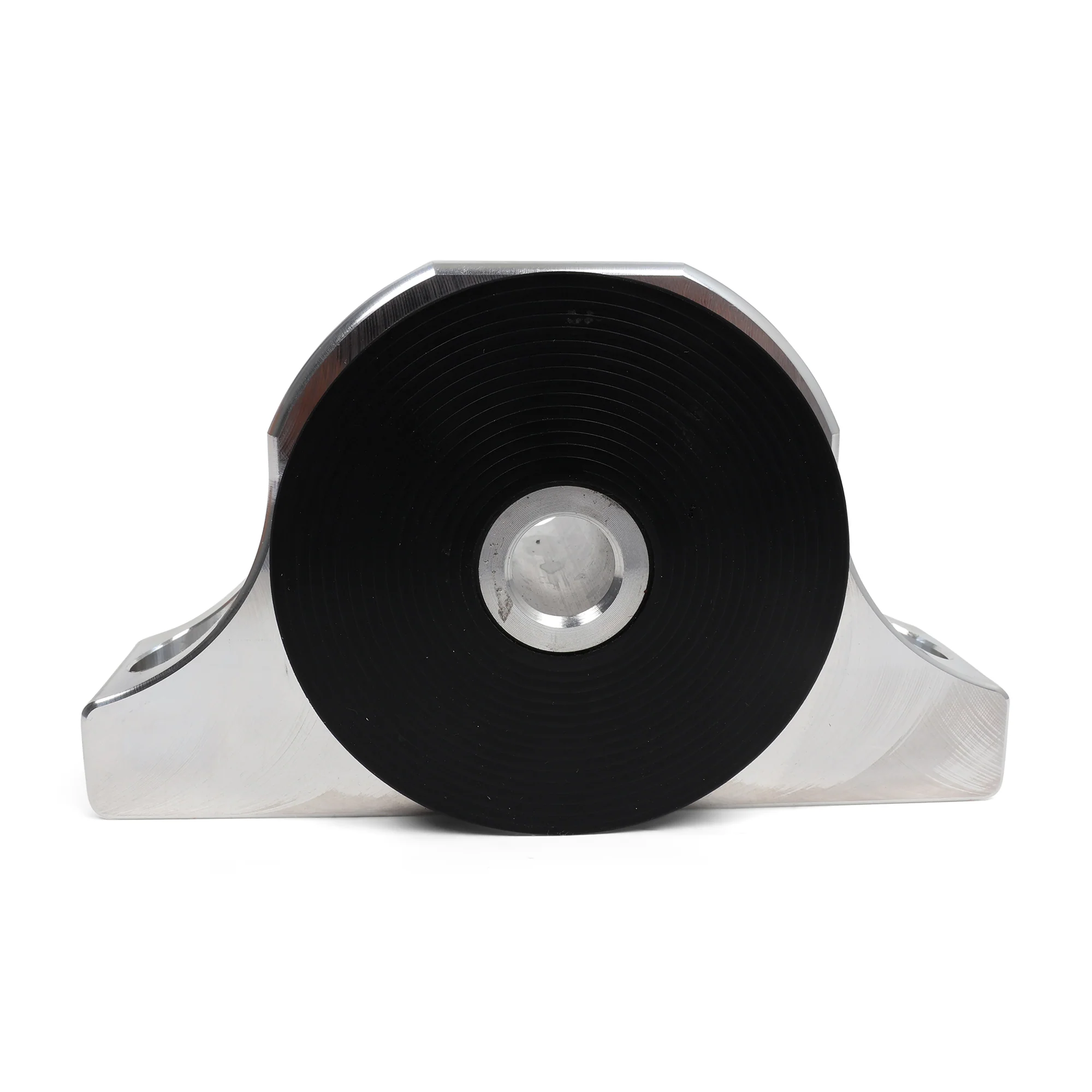
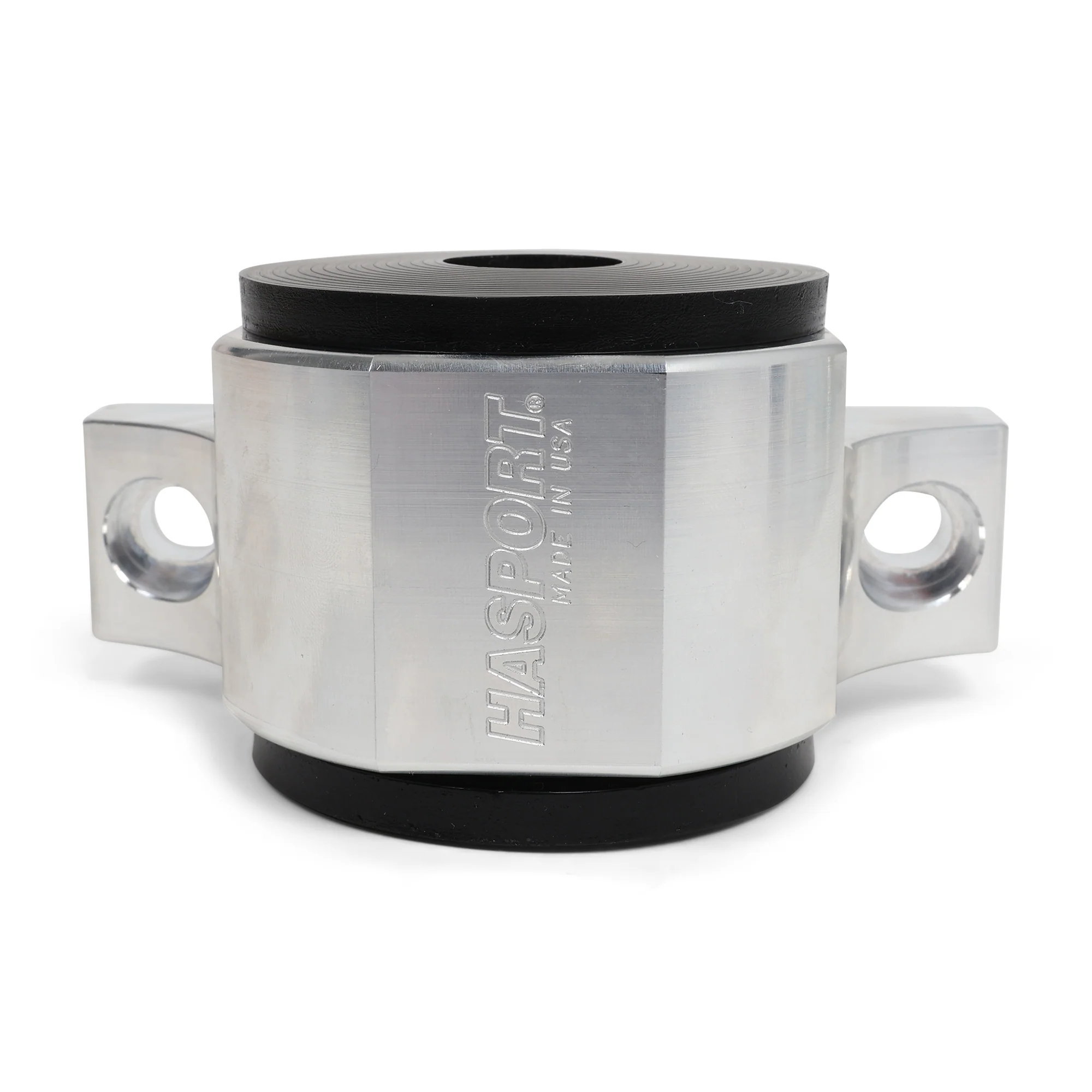
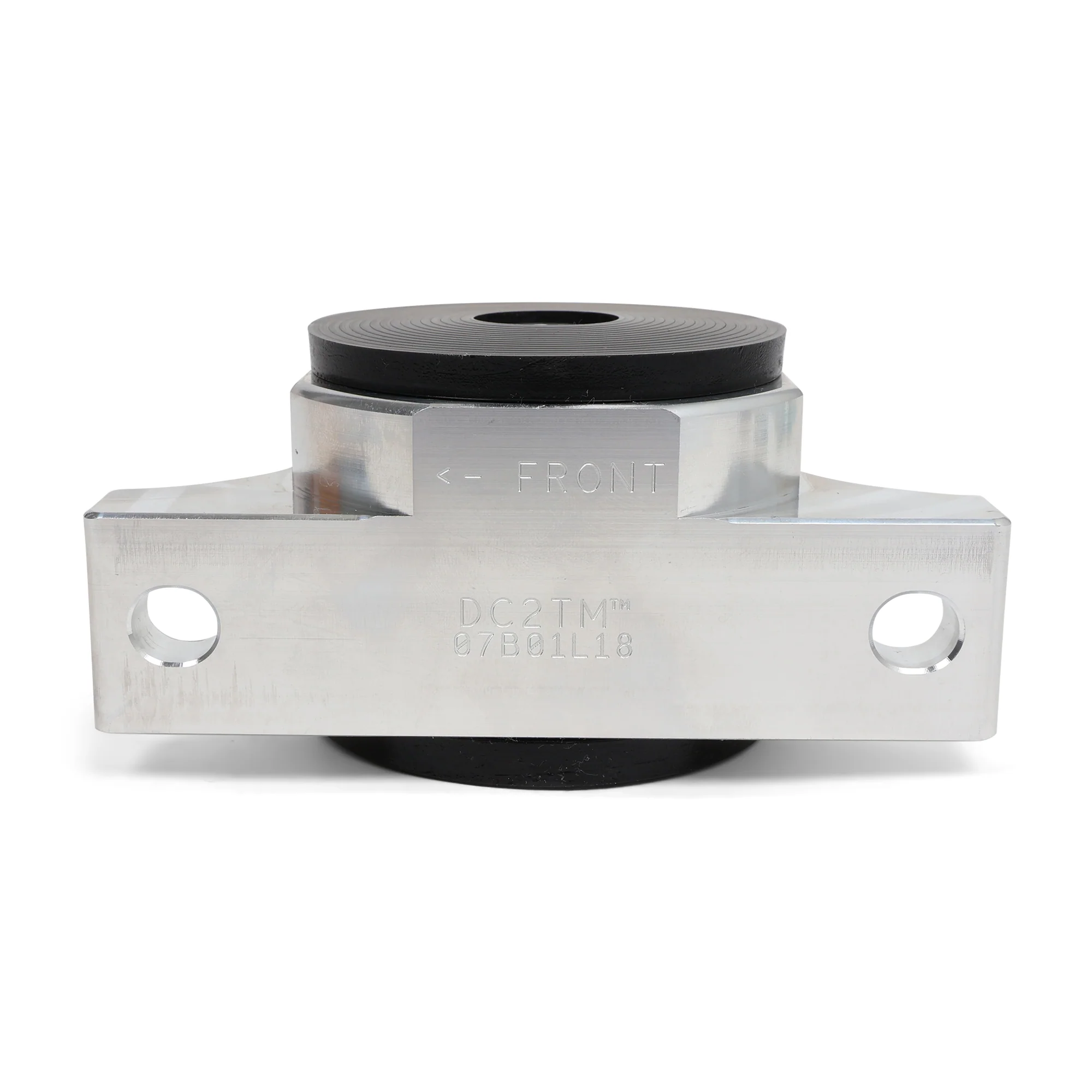
The Hasport DC2TM swaps the soft rubber bushing for urethane. Stiffer mount means less pitch under load, which means more of your engine torque actually reaches the wheels instead of getting wasted moving the engine around. You'll feel it in three places: throttle response is sharper because the chassis isn't absorbing engine motion as a delay, gear shifts engage cleaner because the drivetrain stays in alignment, and traction off the line is better because the engine isn't pitching forward and unloading the front tires. None of this is theoretical. It's why every B-series and D-series build Hasport ships to actually finds a home in customers' cars.
Specs
Manufacturer Hasport Performance Manufacturer Part Number DC2TM (62A, 70A, 88A, 94A by bushing hardness) Position Front lower torque mount (engine to sub-frame) Bracket Construction 6061-T6 billet aluminum, CNC machined in-house at Hasport Bushing Material Urethane (Hasport's no-tear, vibration-minimizing formula) Durometer Options 62A (Street), 70A (Race), 88A (Extreme Race), 94A (Most Extreme Race) Warranty Lifetime warranty against defects in materials or workmanship Engine Compatibility B-series (B16A, B17A, B18B, B18C, B20B/Z) and D-series (D15B, D16Y, D16Z, D16A6, D-series VTEC and non-VTEC) Picking the Right Durometer
The number is Shore A hardness. Lower number means softer urethane and more compliance (more like stock). Higher number means stiffer urethane and more chassis vibration trade-off. Stiffer mounts transfer more power but also transfer more engine vibration and noise into the cabin. Most customers want 62A or 70A. Almost nobody actually needs 88A or 94A unless they're racing the car for a living.
Durometer What It's For Vibration Trade-Off 62A (Street) Daily driver, commuter, occasional spirited driving. Stock mounts are getting tired and you want something stiffer that still doesn't make the car miserable to live with. Minimal. Closest to stock feel. Most customers' default choice. 70A (Race) Street car that occasionally sees track days, autocross, or canyon runs. Boosted street build that needs more engine control than 62A but still wants to be tolerable on a long highway drive. Moderate. Noticeable vibration at idle but smooths out at cruise. Popular for boosted street builds. 88A (Extreme Race) Dedicated track car or weekend race car that doesn't see daily duty. Time attack builds, full-prep autocross cars. Vibration is no longer the priority. Significant. Idle vibration is heavy, cabin noise increases. Live with it for the performance. 94A (Most Extreme Race) Drag car running 8-second passes, dedicated race-only chassis. Maximum drivetrain rigidity at the cost of any street comfort. Extreme. Don't put this in a daily. Real talk on durometer choice: if you're building a daily-driven 92-00 Civic or 94-01 Integra and you're not sure, go 62A. If your build sees track time or has forced induction making meaningful power, go 70A. Both stiffer options exist for cars that aren't asking the question because the builder already knows the answer.
Fitment and Engine Compatibility
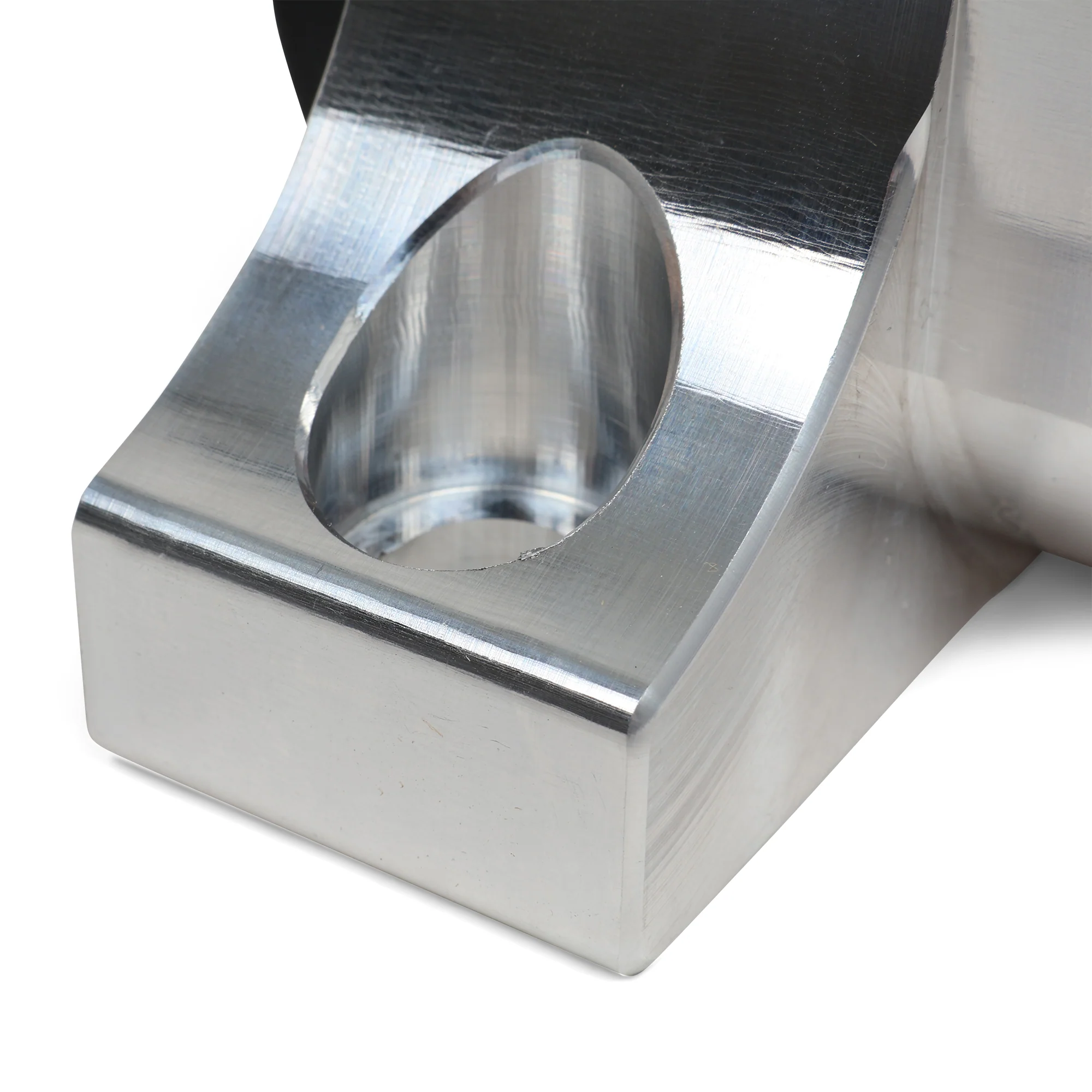
Hasport designed the DC2TM as a direct-fit replacement for the 1994-2001 Acura Integra (DC2/DC4 chassis). On the Integra, it bolts in to the factory torque mount location with no chassis modification. The Civic (EG and EK) shares the same general engine and chassis architecture but has slightly different clearance around the mount location, so Hasport's own statement is that the Civic chassis "requires small modification to fit." In practice, this typically means a small amount of grinding or clearancing on a chassis flange or mount tab to allow the billet bracket to seat fully. It's a five-minute job with a die grinder or a flap wheel, not a fabrication project. Plan to test-fit before you start the install and address any interference once the engine is supported.
Engine compatibility covers the full B-series and D-series engine families that came in these chassis or get swapped into them. B-series: B16A, B17A, B18B, B18C (Type R, GS-R, ITR, Si), B20B, B20Z. D-series: D15B, D16Y, D16Z, D16A6, and the VTEC variants. The mount bolts to the chassis sub-frame and the engine block at the front torque mount location, which is in the same physical position across the entire B and D engine family in these chassis. K-series swapped EG/EK/DC chassis use a different torque mount design specific to the K-swap mount kit, and DC2TM is not the part for those builds.
What to Know Before You Buy
Install with the front mount bolt loose. Hasport's recommended sequence for any mount work is to support the engine, loosen all the mounts, install the new piece without fully torquing it, then bring everything to spec in sequence so the mounts don't pre-load the engine into a position the chassis doesn't agree with. Pre-loading mounts is what causes premature bushing wear, so do it right the first time.
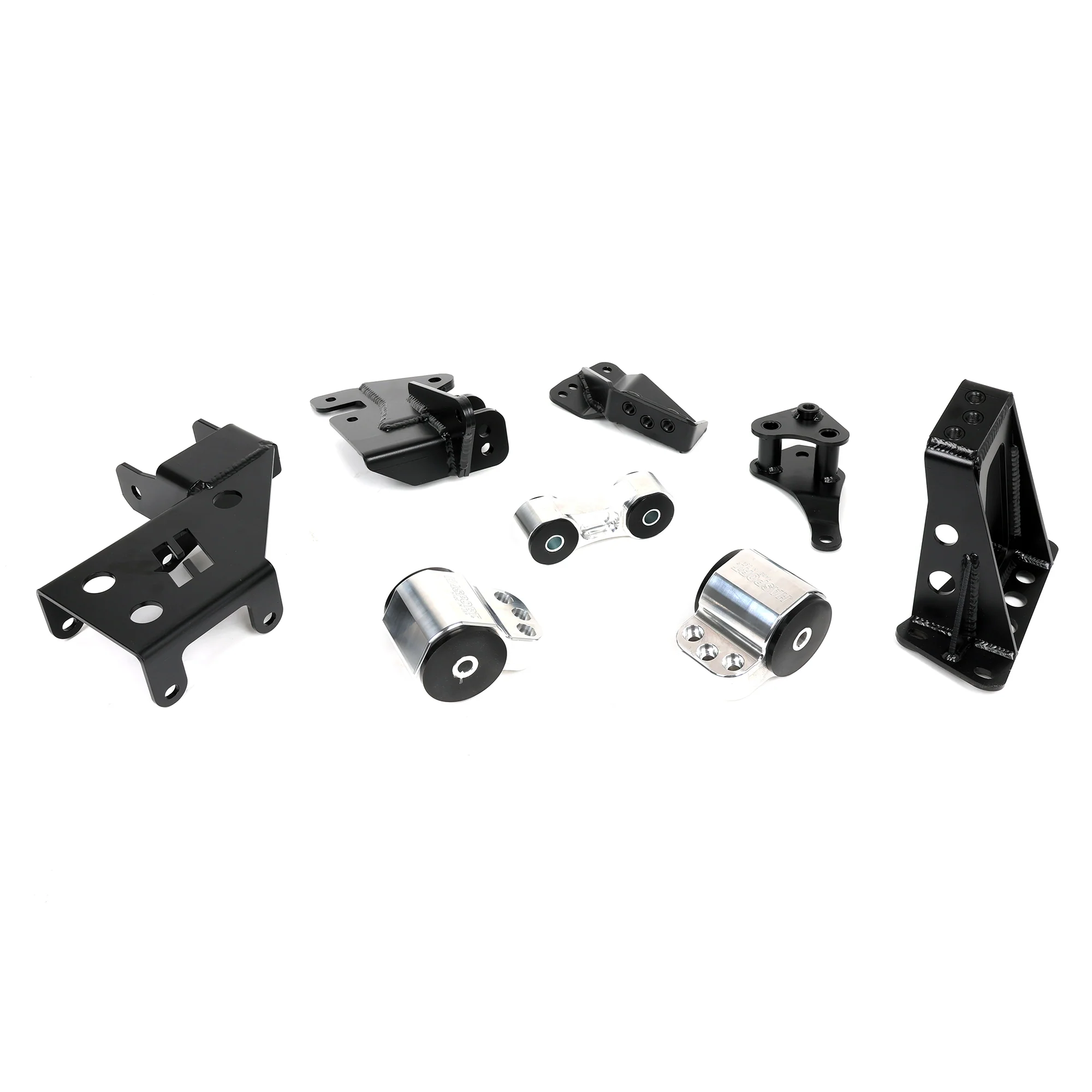
If you're replacing all four mounts at once (most B-series and D-series rebuilds eventually do), the front torque mount is the easiest one to start with because access is straightforward from underneath. Hasport's full mount kits (DCSTK for the Integra and EG B-series build, ECMK for EK B-series, EGMK for D-series EG, etc.) include the front torque mount along with the rear, left, and right mounts in a matched durometer. If you're already planning a full mount refresh, the kits are a better value than buying mounts individually. If you only need the front torque mount because the rear and side mounts are still in good shape, this individual mount makes sense as a targeted upgrade.
Pair this with the Hasport rear engine mount for 92-00 Civic and 94-01 Integra. The rear mount and the front torque mount work as a system: front controls engine pitch under torque, rear controls engine pitch under braking and shifting. Doing one without the other leaves you with mismatched mount stiffness and an engine that still moves more than you want under one direction of load. Customers who run the front torque mount alone usually come back for the rear within a few months once they feel how much movement is still left in the system.
HR carries Hasport because Hasport is the brand we'd run on our own cars. They started building mounts because they couldn't source good ones for the swaps they were doing in their own shop, and that origin story is still visible in how they think about their products. Each mount gets inspected before it ships. The lifetime warranty actually means something because they back it. We've never had to fight Hasport over a warranty claim for a customer, and that's worth more than a few dollars of MAP-priced margin difference vs the cheapest option on the market. Pair Hasport hardware with HR's swap support, and you've got a mount package that will outlast the engine bolted to it.
-
Years Make Model Chassis Install Note 1994-2001 Acura Integra DC2 / DC4 Direct fit, no modification 1992-1995 Honda Civic EG (all body styles) Minor chassis modification required 1996-2000 Honda Civic EK (all body styles) Minor chassis modification required -
Why we choose to sell Hasport mounts.Hasport is a leading manufacturer of engine swap mounts for Honda and Acura vehicles. Like Hybrid Racing, Hasport was founded out of the love for racing and the need for high-quality products. The company originally focused on swapping engines for customer cars and would source mounts from another company. However, the quality of these parts where not up to their standards. Being unable to purchase high-quality mounts, they decided to make their own.Hasport mounts are known for their use of high-quality materials, such as billet aluminum, and a unique formula for bushings. These mounts are designed to reduce engine movement and improve handling. This company has a reputation for attention to detail in their manufacturing process and has a commitment to quality control.Each engine mount is inspected and tested before it is shipped to ensure that it meets Hasport's high-quality standards. Additionally, Hasport is known for its dedication to ensuring that their customers are satisfied with their products with their excellent warranty.Whether you are K swapping an older Honda or replacing OEM engine mounts, Hasport is our recommendation. Hasport motor mounts are designed to improve handling and performance by reducing engine movement to improve traction and stability. They have developed a unique formula for creating their bushings. This makes the engine mounts less likely to lose their shape and support compared to other mount kits on the market. With Hasport's warranty paired with Hybrid Racing support, you can purchase with confidence.
-
This warranty covers any defect in materials or workmanship in your HASPORT engine mount kit.Damage to the engine mount caused by abuse, misuse, modification, or excessive force is not covered, as well as consequential and incidental damage.
This warranty lasts as long as you own the engine mount.
HASPORT will repair or replace the engine mount if it is defective at no charge but is not responsible for costs of removing or re-installing the engine mount.
You must return the engine mount to HASPORT for inspection and pay the shipping cost for the return. Proof of purchase is required when obtaining warranty service. If an engine mount is defective, HASPORT will repair or replace it within 30 days of receipt.
This warranty gives you specific legal rights, and you may also have other rights which vary from state to state.
Original: $141.11
-65%$141.11
$49.39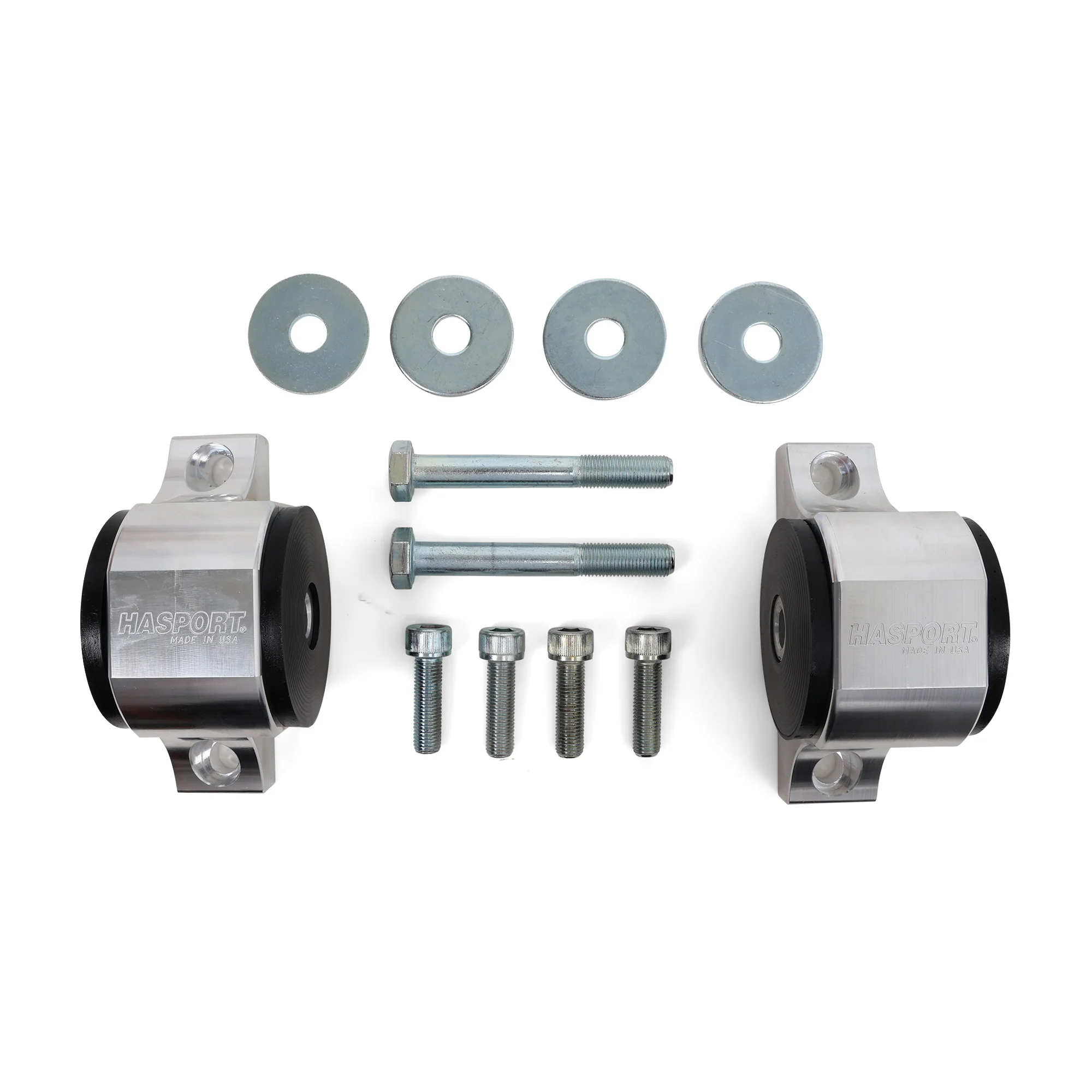
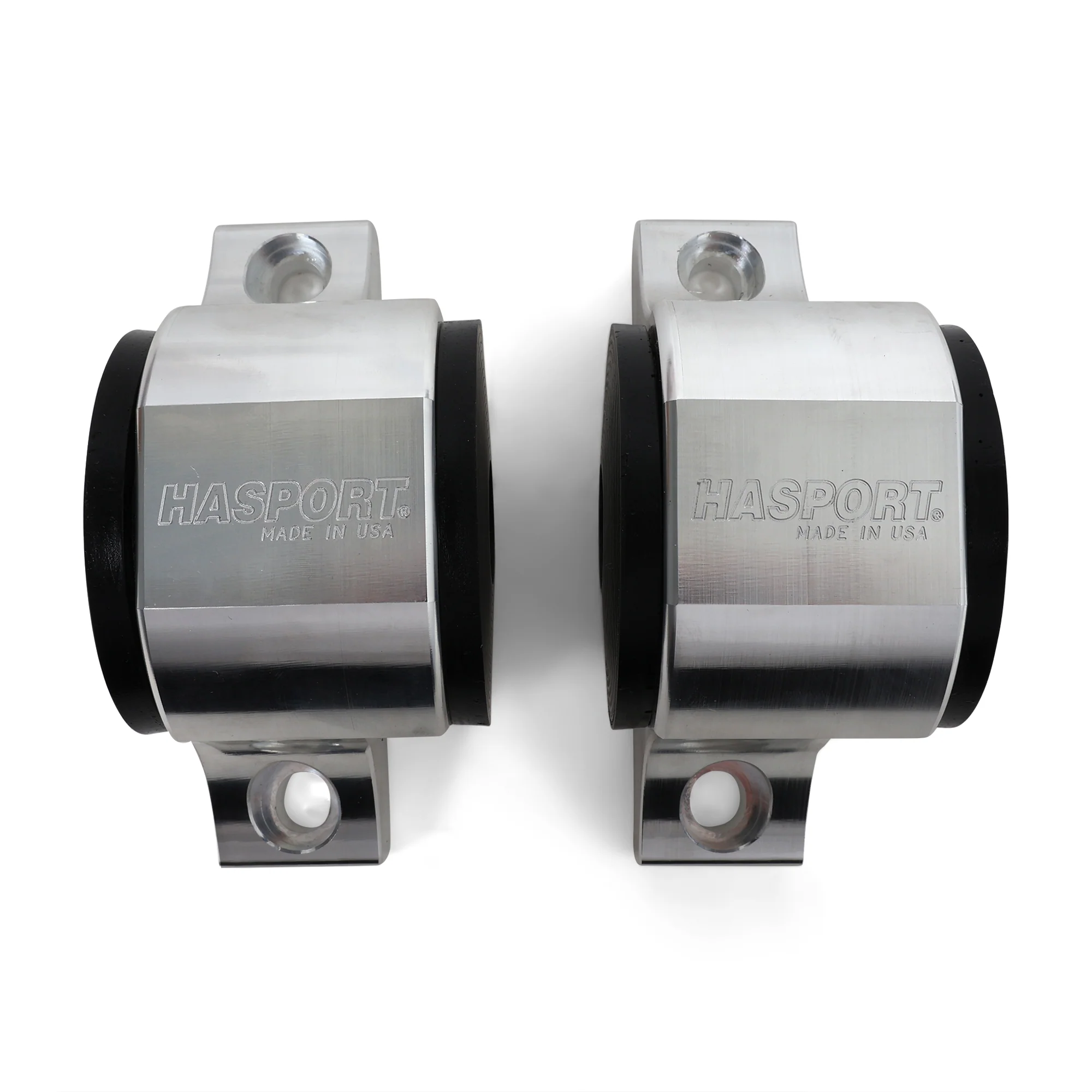
Description
- Unique No-Tear and Vibration Minimizing Bushings
- Small Modifications Needed to Fit Civic Chassis
- Multiple Durometers Available
- Torque Mount Set for 92-00 Civic & 94-01 Integra
- Description
- Vehicle Fitment
- Technical Data
- Included
- About Hasport
- Warranty
- Install Guide
-
If you've got a B16, B18, B20, or D-series powered EG Civic or DC Integra (or the EK Civic that came after it), the front torque mount is the unsung component that decides how much of your engine's pitch reaction makes it into the chassis instead of getting wasted as engine flex. The factory rubber-and-fluid mount is fine for stock-power commuting, but as soon as you add boost, NA all-motor power, or even a clutch upgrade, that rubber starts moving more than you want it to. The engine pitches forward under throttle, lurches back on lift, and the result shows up as wheel hop on launch, sloppy throttle response, and a clutch that feels disconnected from the wheels. Hasport's DC2TM torque mount replaces the rubber with urethane, locks down the engine's torque axis, and puts the power back in your hands.
What This Actually Does
The front torque mount is the lower mount between the front of the engine block and the chassis sub-frame. It doesn't hold the weight of the engine (the side mounts do that). What it does is resist the rotational torque that the engine wants to apply to its mounts when you're on or off the throttle. With a stock fluid-damped mount, the engine pitches noticeably under load, and that motion translates into delayed throttle response, wheel hop, axle bind on launch, and harder gear engagement under power.
The Hasport DC2TM swaps the soft rubber bushing for urethane. Stiffer mount means less pitch under load, which means more of your engine torque actually reaches the wheels instead of getting wasted moving the engine around. You'll feel it in three places: throttle response is sharper because the chassis isn't absorbing engine motion as a delay, gear shifts engage cleaner because the drivetrain stays in alignment, and traction off the line is better because the engine isn't pitching forward and unloading the front tires. None of this is theoretical. It's why every B-series and D-series build Hasport ships to actually finds a home in customers' cars.
Specs
Manufacturer Hasport Performance Manufacturer Part Number DC2TM (62A, 70A, 88A, 94A by bushing hardness) Position Front lower torque mount (engine to sub-frame) Bracket Construction 6061-T6 billet aluminum, CNC machined in-house at Hasport Bushing Material Urethane (Hasport's no-tear, vibration-minimizing formula) Durometer Options 62A (Street), 70A (Race), 88A (Extreme Race), 94A (Most Extreme Race) Warranty Lifetime warranty against defects in materials or workmanship Engine Compatibility B-series (B16A, B17A, B18B, B18C, B20B/Z) and D-series (D15B, D16Y, D16Z, D16A6, D-series VTEC and non-VTEC) Picking the Right Durometer
The number is Shore A hardness. Lower number means softer urethane and more compliance (more like stock). Higher number means stiffer urethane and more chassis vibration trade-off. Stiffer mounts transfer more power but also transfer more engine vibration and noise into the cabin. Most customers want 62A or 70A. Almost nobody actually needs 88A or 94A unless they're racing the car for a living.
Durometer What It's For Vibration Trade-Off 62A (Street) Daily driver, commuter, occasional spirited driving. Stock mounts are getting tired and you want something stiffer that still doesn't make the car miserable to live with. Minimal. Closest to stock feel. Most customers' default choice. 70A (Race) Street car that occasionally sees track days, autocross, or canyon runs. Boosted street build that needs more engine control than 62A but still wants to be tolerable on a long highway drive. Moderate. Noticeable vibration at idle but smooths out at cruise. Popular for boosted street builds. 88A (Extreme Race) Dedicated track car or weekend race car that doesn't see daily duty. Time attack builds, full-prep autocross cars. Vibration is no longer the priority. Significant. Idle vibration is heavy, cabin noise increases. Live with it for the performance. 94A (Most Extreme Race) Drag car running 8-second passes, dedicated race-only chassis. Maximum drivetrain rigidity at the cost of any street comfort. Extreme. Don't put this in a daily. Real talk on durometer choice: if you're building a daily-driven 92-00 Civic or 94-01 Integra and you're not sure, go 62A. If your build sees track time or has forced induction making meaningful power, go 70A. Both stiffer options exist for cars that aren't asking the question because the builder already knows the answer.
Fitment and Engine Compatibility
Hasport designed the DC2TM as a direct-fit replacement for the 1994-2001 Acura Integra (DC2/DC4 chassis). On the Integra, it bolts in to the factory torque mount location with no chassis modification. The Civic (EG and EK) shares the same general engine and chassis architecture but has slightly different clearance around the mount location, so Hasport's own statement is that the Civic chassis "requires small modification to fit." In practice, this typically means a small amount of grinding or clearancing on a chassis flange or mount tab to allow the billet bracket to seat fully. It's a five-minute job with a die grinder or a flap wheel, not a fabrication project. Plan to test-fit before you start the install and address any interference once the engine is supported.
Engine compatibility covers the full B-series and D-series engine families that came in these chassis or get swapped into them. B-series: B16A, B17A, B18B, B18C (Type R, GS-R, ITR, Si), B20B, B20Z. D-series: D15B, D16Y, D16Z, D16A6, and the VTEC variants. The mount bolts to the chassis sub-frame and the engine block at the front torque mount location, which is in the same physical position across the entire B and D engine family in these chassis. K-series swapped EG/EK/DC chassis use a different torque mount design specific to the K-swap mount kit, and DC2TM is not the part for those builds.
What to Know Before You Buy
Install with the front mount bolt loose. Hasport's recommended sequence for any mount work is to support the engine, loosen all the mounts, install the new piece without fully torquing it, then bring everything to spec in sequence so the mounts don't pre-load the engine into a position the chassis doesn't agree with. Pre-loading mounts is what causes premature bushing wear, so do it right the first time.
If you're replacing all four mounts at once (most B-series and D-series rebuilds eventually do), the front torque mount is the easiest one to start with because access is straightforward from underneath. Hasport's full mount kits (DCSTK for the Integra and EG B-series build, ECMK for EK B-series, EGMK for D-series EG, etc.) include the front torque mount along with the rear, left, and right mounts in a matched durometer. If you're already planning a full mount refresh, the kits are a better value than buying mounts individually. If you only need the front torque mount because the rear and side mounts are still in good shape, this individual mount makes sense as a targeted upgrade.
Pair this with the Hasport rear engine mount for 92-00 Civic and 94-01 Integra. The rear mount and the front torque mount work as a system: front controls engine pitch under torque, rear controls engine pitch under braking and shifting. Doing one without the other leaves you with mismatched mount stiffness and an engine that still moves more than you want under one direction of load. Customers who run the front torque mount alone usually come back for the rear within a few months once they feel how much movement is still left in the system.
HR carries Hasport because Hasport is the brand we'd run on our own cars. They started building mounts because they couldn't source good ones for the swaps they were doing in their own shop, and that origin story is still visible in how they think about their products. Each mount gets inspected before it ships. The lifetime warranty actually means something because they back it. We've never had to fight Hasport over a warranty claim for a customer, and that's worth more than a few dollars of MAP-priced margin difference vs the cheapest option on the market. Pair Hasport hardware with HR's swap support, and you've got a mount package that will outlast the engine bolted to it.
-
Years Make Model Chassis Install Note 1994-2001 Acura Integra DC2 / DC4 Direct fit, no modification 1992-1995 Honda Civic EG (all body styles) Minor chassis modification required 1996-2000 Honda Civic EK (all body styles) Minor chassis modification required -
Why we choose to sell Hasport mounts.Hasport is a leading manufacturer of engine swap mounts for Honda and Acura vehicles. Like Hybrid Racing, Hasport was founded out of the love for racing and the need for high-quality products. The company originally focused on swapping engines for customer cars and would source mounts from another company. However, the quality of these parts where not up to their standards. Being unable to purchase high-quality mounts, they decided to make their own.Hasport mounts are known for their use of high-quality materials, such as billet aluminum, and a unique formula for bushings. These mounts are designed to reduce engine movement and improve handling. This company has a reputation for attention to detail in their manufacturing process and has a commitment to quality control.Each engine mount is inspected and tested before it is shipped to ensure that it meets Hasport's high-quality standards. Additionally, Hasport is known for its dedication to ensuring that their customers are satisfied with their products with their excellent warranty.Whether you are K swapping an older Honda or replacing OEM engine mounts, Hasport is our recommendation. Hasport motor mounts are designed to improve handling and performance by reducing engine movement to improve traction and stability. They have developed a unique formula for creating their bushings. This makes the engine mounts less likely to lose their shape and support compared to other mount kits on the market. With Hasport's warranty paired with Hybrid Racing support, you can purchase with confidence.
-
This warranty covers any defect in materials or workmanship in your HASPORT engine mount kit.Damage to the engine mount caused by abuse, misuse, modification, or excessive force is not covered, as well as consequential and incidental damage.
This warranty lasts as long as you own the engine mount.
HASPORT will repair or replace the engine mount if it is defective at no charge but is not responsible for costs of removing or re-installing the engine mount.
You must return the engine mount to HASPORT for inspection and pay the shipping cost for the return. Proof of purchase is required when obtaining warranty service. If an engine mount is defective, HASPORT will repair or replace it within 30 days of receipt.
This warranty gives you specific legal rights, and you may also have other rights which vary from state to state.